
How Wexner’s desire for a city center led to a more fragmented Columbus
As the central Ohio retail magnate faces a larger public reconciliation owing to his ties with disgraced financier Jeffrey Epstein, a look back at how the Wexner name became so synonymous with the city.
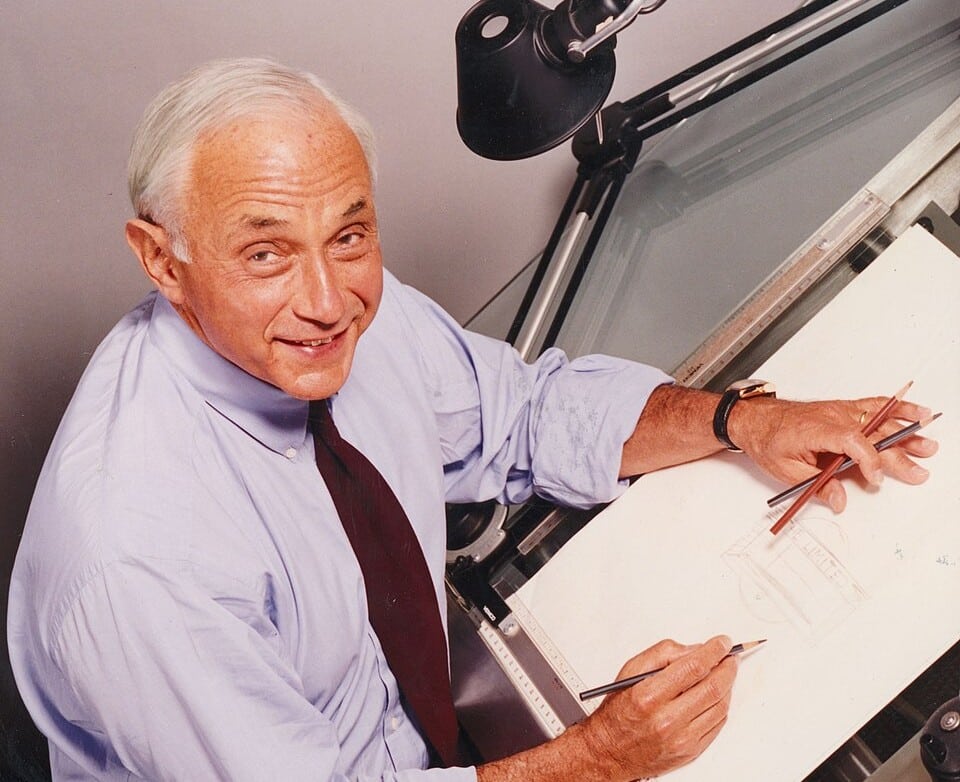
In a 1983 Columbus Dispatch interview, the retail mogul Leslie Wexner complained about Columbus lacking a vibrant downtown. “[T]here is no nucleus; there is no heart; there is no center,” he told the late Business writer Peter D Franklin. “You have a bunch of people just spread out.”
By 1980, American cities experienced a massive migration from city centers to the suburbs. With white flight, the construction of highways, and the beginning of deindustrialization, many white Americans moved to single-family homes outside of the city. In 1960, the percentage of suburban and city residents were closer to an even 50 percent. By 1980, the divide had widened, with more than 60 percent of Americans living in the suburbs.
That same trend unfolded in Columbus. Between 1977 and 1991, school enrolment rates in suburban districts such as Westerville, Dublin, Hilliard, and Worthington grew exponentially. According to the Franklin County Board of Education, the Dublin Local school district grew 344 percent.
A donation powers the future of local, independent news in Columbus.
Support Matter News
Talking to the Dispatch, Wexner blamed a lack of collaboration for the city’s fragmentation. He claimed that the city was “cooperating with individual segments, each going his separate way.” Wexner went on to say that cities should instead grow on a “collective wisdom” made up of “tax abatements, tax incentives, strong zoning, strong leadership in the private sector.” (His suggestions today have been codified into law.)
Asked why he hadn’t come forward with his criticisms earlier, Wexner responded: “First of all, nobody asked me.” Ever since then, he’s taken matters into his own hands, developing an entire suburb of his own, a massive mall, and investing heavily in Ohio State University. The direct result of these projects was not a more centralized city but rather a more fragmented one with clusters of commerce and luxury single-family homes spread around central Ohio.
Retail Origins
After getting his undergraduate degree at OSU in 1959, Wexner dropped out of the college’s law school to help run his parents’ clothing store, named Leslie’s after their son. It was there where Wexner studied the shortcomings of a business that barely made any profit, discovering that a majority of the revenue came from lower-priced shirts and pants. When his dad refused to take his advice, Wexner secured a $5,000 loan from his aunt in 1963 and opened a clothing store called The Limited.
As America’s economy shifted from industrial production to retail and service, Columbus was in a unique position to not only weather the transition but prosper from it. As a hub for insurance, banking, and government jobs, the city was not as strong of an industrial powerhouse as Cincinnati and Cleveland, which were both older cities built on strategic waterways. Columbus was able to leverage its monopoly on water to annex surrounding suburbs and protect its tax base. All of these factors combined to create a prime foundation for a retail empire.
The Limited was a success, and as it expanded Wexner grew his portfolio to include other retailers such as Victoria’s Secret, Abercrombie & Fitch, Express, and Bath & Body Works. He became the poster child for the American dream, going from a child of an immigrant to a billionaire tycoon. With Wexner keeping his retail empire based in central Ohio, the city became the third largest fashion hub in the United States behind New York City and San Francisco. With his newfound capital and influence, Wexner turned his focus to a different commodity: land.
The Rise of the Technoburb
In the 1980s, Wexner and his developer friend, fellow Bexley resident Jack Kessler, started searching “in the country” for a place to build a home. The two looked at Gahanna, but Wexner wasn’t sold on it. He told Kessler: “Gahanna is great, but we can’t do much to change it. It’s already built. New Albany, we can change.”
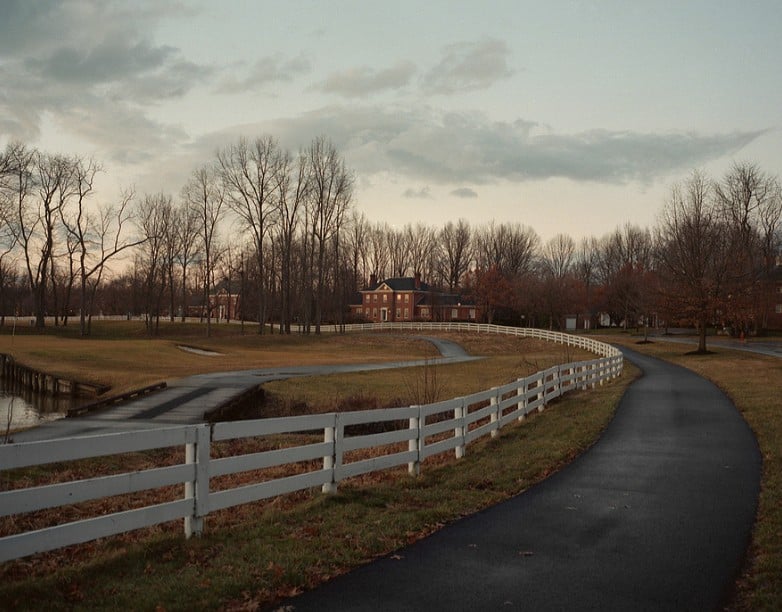
In 1986, Wexner and Kessler formed what would later be known as the New Albany Co. and began buying massive plots of land. (An early board member for the New Albany Company was Jeffrey Epstein.) Both Wexner and Kessler built their “country” homes in New Albany and began selling off lots to friends and people they identified as “leaders,” including Indianapolis 500 winner Bobby Rahal and John G. McCoy, the CEO of the former Banc One Corp. The development was initially dubbed “Wexley,” a combination of Wexner and Bexley that emphasized the centrality of Wexner in its development. (Most suburbs were slowly birthed through decades of uncoordinated development, not a centrally coordinated plan.)
The team collaborated with architects and planners from colleges across the country to design a suburb that, according to the New Albany Company’s original website, “avoid[s] the pitfalls of post-WWII suburban sprawl.” They found inspiration in the design of Cotswold, England, and made visits to Brittany, Williamsburg and the James River Plantations. The result was a suburb of “McMansions,” or standardized Georgian homes with brick exteriors and white columns. Its architecture evoked a romanticization of an agrarian past with its resurrection of those inequalities and hierarchies.

The suburb was constructed in line with New Urbanist planning that prioritized pedestrian-friendly design with historically-inspired architecture – see the utopian town in the 1998 film, “The Truman Show,” which was filmed in the New Urbanist neighborhood of Seaside, Florida. As the geographer David Harvey observed in his book Spaces of Hope, New Urbanism sells “small town nostalgia in a suburban setting to a very affluent clientele.”
New Albany’s affluence was not without public subsidies – the most controversial example being a lucrative deal to access the city’s water and sewage without being annexed into the city. “The last thing they wanted was annexation to the City of Columbus,” Kevin Cox writes in his 2021 book, Boomtown Columbus, “since this would have meant … Columbus schools.”
Despite the protests of the Columbus City School Board, the teachers’ union (Columbus Education Association), the NAACP, and the Apple Alliance, which threatened a citywide referendum to vote on annexing New Albany, the city caved in 1989. (A lawsuit brought by Columbus City School Board member Bill Moss accused Wexner of improper influence due to his investing in Columbus City Council President Jerry Hammond’s jazz club, the Major Chord. Wexner also donated thousands to Hammond and other Democratic councilmembers’ campaigns in 1987.)
New Albany grew into a city of its own, exploding both in land (largely annexed from Plain Township) and population, growing from fewer than 500 residents in 1980 to almost 4,000 by 2000 – a number that grew to around 11,000 by 2020. The development of single-family homes accompanied the growth of office buildings and the New Albany Business Park. The suburb became a self-sufficient organism.
As the McMansions were bought up and corporate headquarters reached capacity, larger facilities such as data centers and the massive Intel plant were introduced, leading New Albany to annex more of their surrounding area to keep these industries in their tax base. It was becoming a “technoburb,” a suburb that “contains both work and residence in a single decentralized environment,” as historian Robert Fishman put it in his 1987 book Bourgeois Utopias: The Rise and Fall of Suburbia. By 2015, New Albany’s Business Park had more than 3 million square feet of office space, overshadowed in the area only by Polaris Centers of Commerce and another one of Wexner’s projects: Easton Town Center.
A Walkable Mall
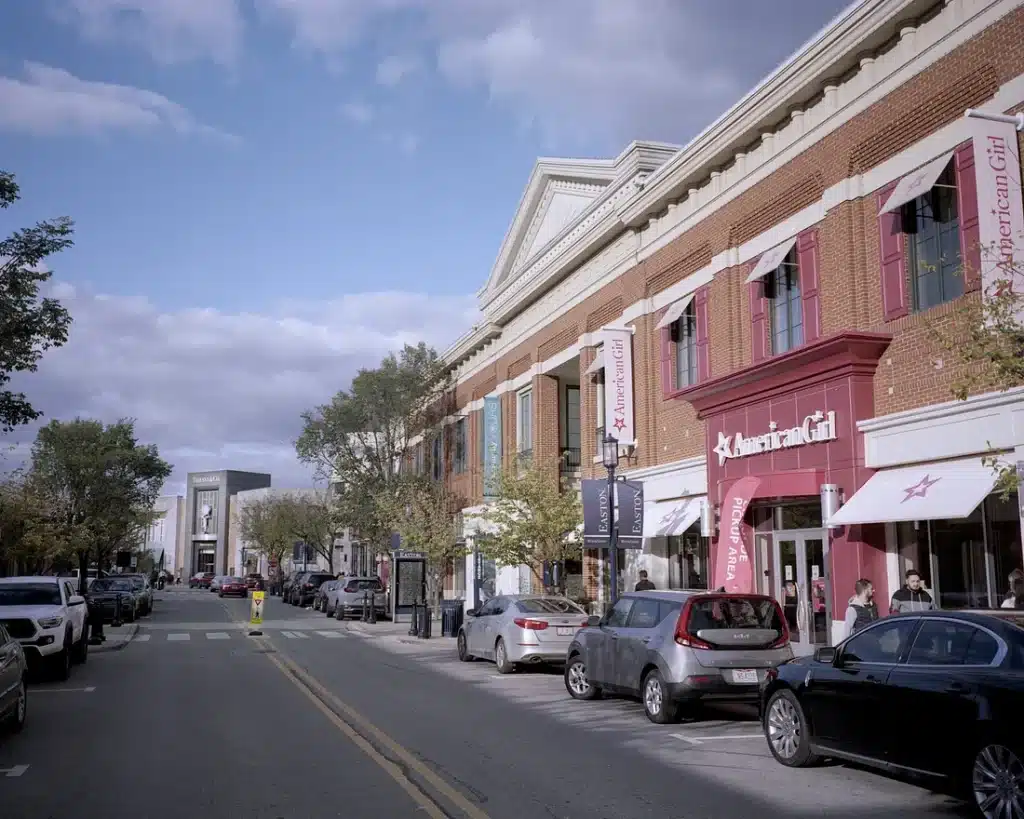
After starting the New Albany Company, Wexner began buying up land southwest of New Albany for an L Brands campus and distribution center. In the 1990s, he pivoted to the idea of building a massive mall instead. Bringing in the Georgetown Company to help develop the project, Wexner and Georgetown CEO Adam Flatto dreamed up an open-air “town-center” that felt more like a walkable town than an indoor mall. “It was one of the first efforts at placemaking,” said Yaromir Steiner, the architect behind Steiner + Associates who Wexner hired to plan Easton after seeing his work in Coconut Grove in Miami. “We wanted trees, fountains, squares. I was inspired by Boston, where you have interesting places strung together like pearls.”
Located at the interchange of I-270 and Morse Road, the $128 million mall was another microcosm of a centrally organized community, this one dedicated to consumer chain stores and only a short highway journey away from New Albany. The architecture is a pastiche of a variety of styles, placing 20th century art deco next to 19th century European buildings, delivering a historical feel to the shopper without any of the ideology or historical meaning. The bridge over the highway hosts a series of old lamps and the blue lettering spelling out “Easton.”
“It’s not dissimilar from New Albany with its white fences,” Flatto told the Dispatch in 2009, “which give you the notion as you’re arriving that New Albany is a special place.”
Like New Albany, Easton was not without its controversial public subsidies. The highway exit including the blue “Easton” signage was built ahead of a handful of other publicly funded highway projects. Despite the Mid-Ohio Regional Planning Commission (MORPC) ranking two projects ahead of Easton’s exit, MORPC was overridden by the Ohio Department of Transportation. A 1994 article in The Other Paper suggested that Wexner’s excessive donations to former Gov. George Voinovich ($55,000 between 1990-94) helped the project in jumping the queue. (This was later supported by a 1995 article in Columbus Monthly titled “Where the Road Money Went.”)
By the dawn of the 21st century, Wexner had permanently transformed the northeast section of central Ohio. Despite Wexner’s desire for a stronger center, the city’s suburbs were growing while the city itself shrank. As it happened, using his retail wealth to build a technoburb and a mall did little to spark an urban renaissance.
Related Articles
‘I am not going to stand before God and say, well, I chickened out’: Reflections on building caring coalitions
More than three years after the City of Columbus bulldozed Camp Shameless, one of the founders of the encampment offers their perspective on the housing crisis and the people working at the grassroots to give aid to those routinely left behind.
New affordable housing investments may leave Columbus’ most vulnerable properties, and tenants, behind
Even as new bonds approved by voters hope to transform housing development for years to come, a desperate shortage of affordable units continues to push low-income renters into the lowest-quality homes.
Columbus City Council meeting debates the local impact of data centers
‘This is the beginning of a conversation,’ councilmember Christopher Wyche said of the four-hour meeting, during which reps from the data center industry, labor unions, and environmental groups joined residents to debate everything from data center water usage to the number of jobs these massive facilities actually create.