
On Development: Cities and schools need to be on the same page
There is a savings associated with closing schools. But there also is a cost.
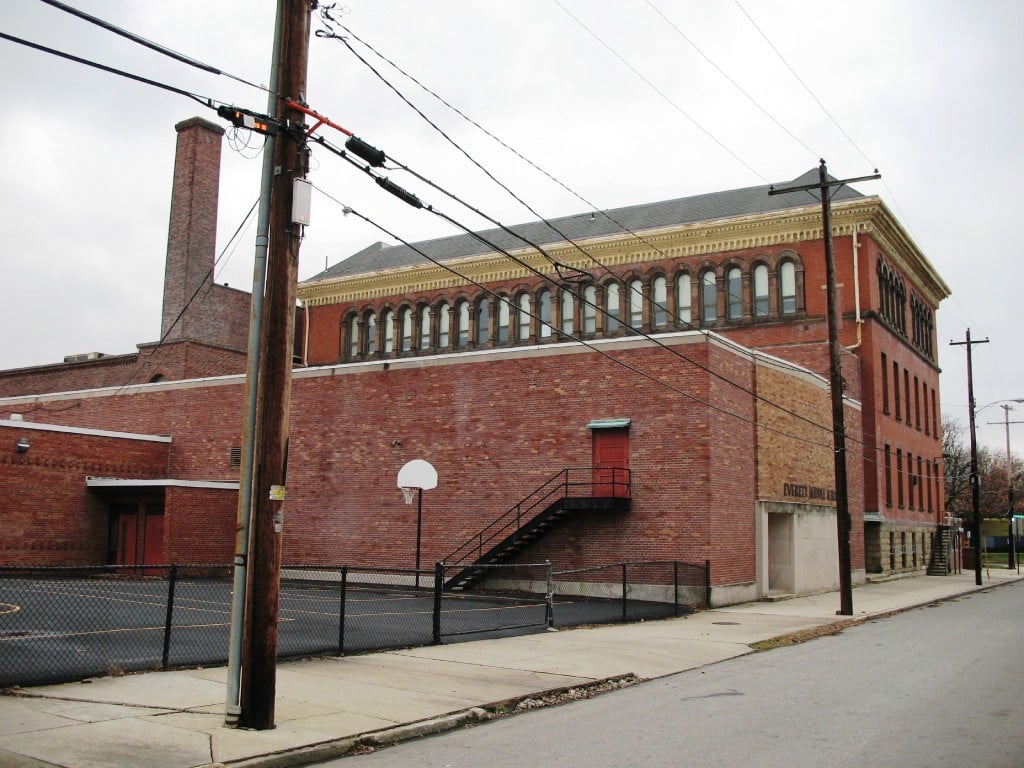
In the 1970 U.S. Census, the population of Columbus was 539,677, and the Columbus City Schools enrollment was on its way to a record-high 110,725 students. Today, 55 years later, the city has almost 400,000 more people, while school enrollment has dipped below 46,000 – substantially less than half of the 1971 enrollment.
Though these figures are like apples and oranges for several reasons, the trends are still alarming. There are three major factors in the decline of Columbus City Schools enrollment:
- From 1979 until 1996 – owing to patterns of racial segregation in Columbus neighborhoods – a federal court ruling required a system of busing in order to balance the racial makeup of schools. As a result, many families fled the city for suburban districts, while others opted for parochial and other private schools.
- As Columbus annexed land in adjacent townships, there were two decades of debates over how to assess taxes on property in the city, but in a separate school district.. Beginning in 1986, the Columbus schools and nine suburban districts forged a so-called “win-win” policy that allowed families living within the growing city limits to be within the boundaries of those suburban districts. Thus, children who were part of the city’s population growth were not part of the city school district.
- Since the late 1990s, Ohio legislators have done everything they can to flout the Ohio Constitution and send state funding to private and charter schools. Lawmakers have reduced oversight of private and charter schools and home schooling; and – ignoring Ohio Supreme Court rulings – have done essentially nothing for the public schools that the vast majority of Ohio children attend.
A donation powers the future of local, independent news in Columbus.
Support Matter News
Compounding these factors are municipal governments that pay little attention to the public schools within their boundaries.
Columbus has been very generous with tax abatements for housing developers and for companies that build facilities in the city and, far too often, fall short of creating the number of jobs promised in return for abatements.
The school district recently announced $50 million in cuts along with the decision to close four schools. A few days later, a report released by the Franklin County auditor showed that the district received $84 million less in tax revenue in 2025 than it would have received if not for city tax abatements. On Dec. 1, The Columbus Dispatch reported that “since 2015, Columbus City Schools has added nearly 400 teachers and 150 administrators, even as its enrollment declined by over 3,000 students.”
There are a lot of numbers here that don’t add up. The school district is focused on shrinking while the city is embracing growth. Tax breaks are deemed necessary to accommodate economic growth. But the abatements lead to economic uncertainty in a school district that appears resigned to contraction.

When a school closes, the surrounding neighborhood can become less stable. Elected city officials, planners, and others should be aware of that. While young, childless job seekers make up much of the population growth, the city needs to develop a strategy to encourage most of those young workers to stay in the city if they start families. Columbus must compete with suburbs to keep those families in the city. The same with another cohort of population growth – immigrant families with children.
But more important than perfectly adding up the numbers is the fact that the City of Columbus and Columbus City Schools need each other. Columbus cannot be a truly strong city without strong public schools. City and school district officials need to build a partnership for long-term growth. That doesn’t mean the city needs to absorb the district.
When you manage schools separately from the rest of the city, those schools become an economic unit rather than a civic resource that benefits a neighborhood far beyond just the students who attend classes there. It’s bizarre that it’s considered smart to close schools to save dollars, even if those schools were close and convenient for the families and children they used to serve, and even if those schools were a haven of stability in a destabilized neighborhood.
Instead of closing schools to save dollars today, why not invest in the neighborhoods around the “failing” schools? Neighborhoods with “failed” schools tend to be in neighborhoods that have struggled with disinvestment – where urban highways cut through communities, and where federal housing policies redlined vast swaths of the city in decades past.
There is a savings associated with closing schools. But there also is a cost. When things don’t seem to add up, we need to look at the schools in the context of the broader community.
Brian Williams is a semi-retired planner and journalist
Related Articles

The Ambry Library prepares to open its doors to the Linden community
Opening Saturday, the arts-focused space will serve as an intimate concert venue, a gallery, and a library, as well as a center for community gathering and education.

On Development: Cars can’t take us where we need to go
The billions of dollars of new road improvements cited in MORPC’s analysis 26 years ago have already been spent, and now we’re still looking at the same challenges with more people and more roads.

Even cities as auto dependent as Columbus can imagine ‘Life After Cars’
There’s certainly some irony in a visit from ‘The War on Cars’ podcast hosts Sarah Goodyear and Doug Gordon being canceled by a Level 3 snow emergency that prevented drivers from taking to the road on Sunday.