
On Development: Private equity is inequitable
Mom-and-pop landlords own a steadily shrinking share of American apartments. The increased concentration of rentals in the hands of absentee private equity firms damages our communities.
English is a funny language. To wit:
Equity – the quality of being fair or impartial; that which is fair and just.
Equity (in economic terms) – the interest of the owner of common stock in a corporation; the excess of the market value of the securities over any indebtedness.
A donation powers the future of local, independent news in Columbus.
Support Matter News
Language gets even more complex when we talk about “private equity” – as in the category of companies that “invest” in factories (such as Anchor Hocking in the 1980s and ’90s), single-family homes lost by victims of the 2008 recession, and increasingly large apartment complexes across the country.
While they call it “investing,” they’re really buying properties and harvesting dollars from these acquisitions by raising prices or rents; reducing maintenance, services and wages; and then quickly flipping the properties as the higher rents jack up the market value (but before the deterioration of the buildings can reduce the actual value).
They call it “efficiency.” But their efficiency means a reduction in their costs, which are never passed on to the customer. It reveals the chasm between the words “efficiency” and “effectiveness.”
News item: Rents skyrocketed after January fires in the Los Angeles area increased demand for housing. Owners decided to get what they could. Supply is down; demand is up. Get a top-dollar windfall from those who can pay for it. Charge what the market will bear. But, hey, that’s capitalism.
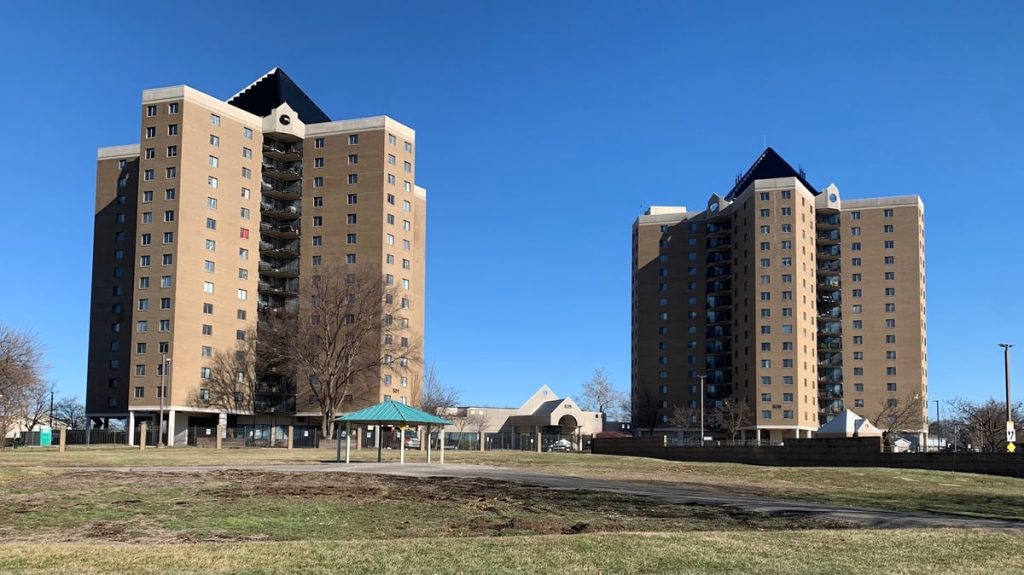
News item: Latitude Five25, the Near East Side apartment towers with 392 units vacant since December 2022, is for sale again. The former Columbus Metropolitan Housing Authority’s affordable-housing project, built more than 60 years ago, has had a parade of owners and names attached to it in recent years. The most recent operator, Paxe Latitude, an arm of a New Jersey-based real-estate investment firm, purchased the property in 2021. By the following year, deterioration continued: lack of heat and air, the presence of rats and roaches, regular breakdowns of elevators, etc. In March 2024, a city spokesperson told the Dispatch they believed the property was owned by Apex Equity LLC, which is the same company responsible for the equally troubled (and similarly shuttered) Colonial Village apartment complex on the East Side.
News item: Galloway Village – 315 units in Prairie Township owned by New York City-based Chetrit Group LLC, was shut down a year ago by the township, which declared it “uninhabitable.” The company, which owes the township $500,000 in fines and penalties, is fighting the township’s actions.
News item: Life at Edgewater Landing – a pretentiously and inaptly named apartment complex with 740 units located in more than 40 buildings on the Southeast Side of Columbus – had 49 units vacated in January, due largely to boiler problems and lack of heat. The complex has been cited for 170 code violations in the past two years, with 51 still outstanding. It also logged 1,100 police calls in the same stretch of time. (The complex was purchased in 2021 by Olive Tree Holdings, a New York-based private equity firm.)
Three years ago, ProPublica sounded the alarm about private equity’s growing role in the national rental market. At that time, ProPublica’s analysis of National Multifamily Housing Council data showed private equity as the dominant form of financial backing among the 35 largest owners of multifamily buildings. Over a decade, the percentage of apartment units controlled by those large companies jumped from about one-third to half.
Private equity started its housing spree by capitalizing on the misery of millions who lost their homes through the 2008 crash, buying up millions of single-family houses and turning them into high-dollar rentals. A single company controlling 75,000 rental units is not going to have much incentive to maintain any particular one of those. Nor is it likely to know who is managing a given building, or who that manager contracts with for maintenance. Your home is an abstract widget in another state.
ProPublica quoted a major private-equity investor who sneered that many of the buildings his business buys haven’t “been focused on the bottom line” – insinuating (heaven forbid!) that prior owners wasted time and expense serving their customers. Private equity instead chooses to invest in eviction lawyers.
Meanwhile, mom-and-pop landlords – smaller and local individuals and companies – tend to seek steady rental income to recoup their investments and maybe buy another double or fourplex down the block. But such landlords own a steadily shrinking share of American apartments. In 2015, apartments owned by individuals dropped below 50 percent of the U.S. total. More recently, their share fell again – to 40 barely percent.
Concentration of ownership in housing stock – like concentration of ownership in supermarkets, pharmacies, or just about anything – is not healthy for communities or people.
Brian Williams is a semi-retired reporter and planner.
Related Articles
The Coming Out Party for the Country’s Largest Gas Power Plant (Serving the Largest Data Center) Was Surprisingly Quiet
A developer hosted the first open house for a gigantic Ohio project, with no signs of organized resistance.
On Development: The cloud is still made of concrete
The ongoing data center construction boom has our columnist asking himself some questions.
Opinion: To meet climate goals, Columbus leaders must address data centers
With the City Council presenting its draft proposal for municipal data center policy this week, residents must seize the moment to demand meaningful safeguards that will actually minimize the climate impacts of data centers.