
Federal changes fuel anxieties among Columbus immigrants
The Trump administration is stripping refugees of access to federal benefits while drastically increasing fees on those seeking asylum.
After fleeing her war-torn home in Ethiopia, Saeda spent seven years living in Egyptian refugee camps before immigrating to Columbus with her two young children in mid-January. In the months since, Saeda, who holds down a part-time job as a daycare provider, has worked to establish her footing with federal help and added assistance from Community Refugee & Immigration Services (CRIS).
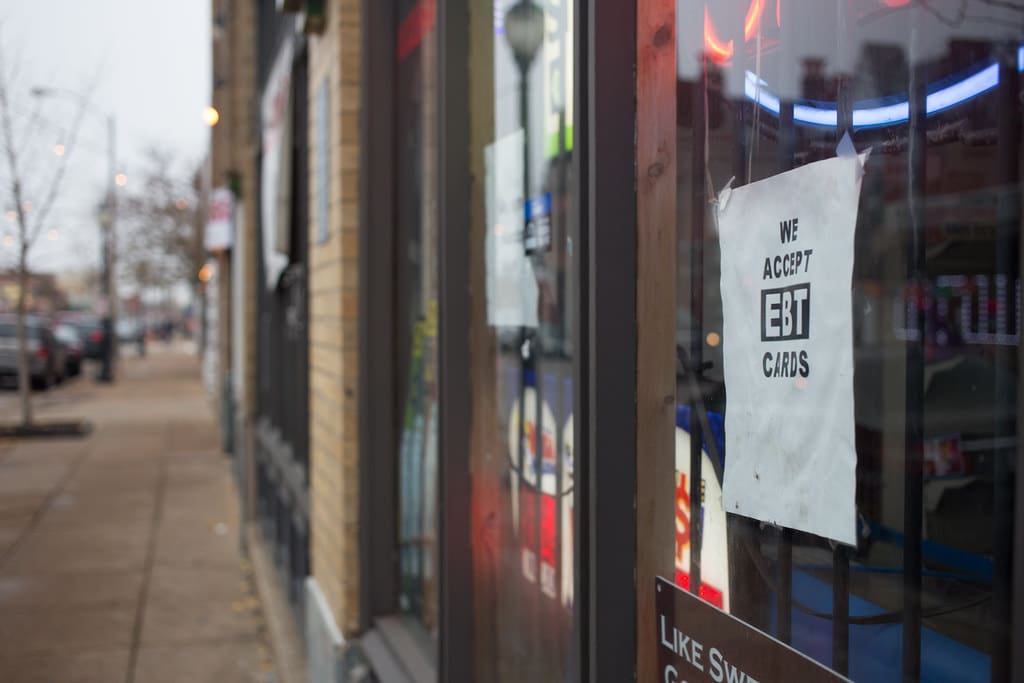
Recently, however, Saeda received a letter from federal authorities informing her that the benefits she had been receiving via the Supplemental Nutrition Assistance Program (SNAP) would end in October. The cuts stem from a provision in President Donald Trump’s budget law, which Republicans call the One Big Beautiful Bill Act, and which slashed $187 million from the federal budget for SNAP through 2034. The law also blocks refugees and other immigrants who are in the country lawfully from accessing SNAP – a provision rolled out at the same time the federal work stoppage prevented program recipients nationwide from receiving their expected benefits.
“The refugee [benefit] termination has been sort of clouded by this government shutdown,” said CRIS executive director Angela Plummer. “Whenever the government resumes functioning, many people will see their SNAP restored, but not those refugees who haven’t gotten a green card yet.”
A donation powers the future of local, independent news in Columbus.
Support Matter News
This includes Saeda, who asked that her last name not be used owing to fears of deportation or potential harm to her refugee status. In October, Saeda said she received $479 in SNAP benefits – an amount reduced to reflect the additional financial assistance she had been receiving from CRIS. These benefits would have expanded to nearly $900 for November – crucial support for a single mother working part-time while caring for her children, aged 4 and 5. As a result of provisions in the Republican budget bill, not only will the single mother immediately lose access to this federal aid, but she will also be subjected to a five-year waiting period to reapply for benefits once she receives her green card. (Saeda’s children would be eligible to receive benefits immediately upon receipt of their green cards.)
“I was not on [SNAP] for a long time, but it’s been helpful for me to get food as I work to become self-sufficient,” Saeda said via an interpreter in late October. “But with [benefits] being discontinued next month, I’m very much afraid of what will happen. … I work five hours, six hours when my children are in school. And I cannot do more than that, because I’m the only parent and I have to be with the kids. And the difficulty is that rent and bills are expensive and getting more expensive this year. … If I’m not getting supplemental benefits, then I may not be able to cover basic expenses. And what that means is that we may end up being homeless, because in this country, you cannot be late with your rent.”
The loss of benefits to immigrant communities coincides with federal fees that have recently been phased in on those seeking protection in the United States, including a newly implemented $100 fee to file an application for asylum. “The issue with asylum is that it’s a constitutional right protected under due process,” said Vincent Wells, an immigration attorney with CRIS. “And what we’re seeing for the first time in history is that constitutional right being limited with a $100 fee.”
Wells said the administration has also instituted an annual $100 processing fee, payable each year that an asylum case is pending. “So, you file your case with the $100 fee, and then on your anniversary you owe the federal government another $100 basically for just holding your application,” said Wells, who added that the typical wait time to have an asylum case heard is nearly eight years.
The way in which this information has been communicated by the administration has further stoked anxieties among those waiting to have their cases heard, Wells said. In late September, federal authorities sent a letter to asylum seekers announcing the institution of the new annual processing fee, indicating that a follow-up letter would be sent with details on how this fee could be paid.
“And I’ve yet to see a single letter from the federal government on how we should pay those asylum fees,” Wells said. “But they said that the penalty for not paying is the potential termination of your asylum case. So, you’re talking about people who this is their only status in the U.S., and some of them have had applications pending for six years. And on September 30 they were told that if you don’t pay this $100 fee, we might terminate your asylum. And it caused mass panic, because there was no way to pay the fee.”
Other newly introduced fees have proven even more restrictive, including a work application fee of $540 per person previously available at no charge. This means that a family of four seeking asylum is now required to pay upwards of $2,160 to receive work authorization cards, which Wells described as a necessity even for children, owing to the increased presence of Immigration and Customs Enforcement (ICE) in our city and schools. “People want their 5-year-old to have an ID, or they want to send a copy to their school,” he said, “because it’s the only way for people to know the child has legal status.”
The targeted introduction of new fees can have wide-ranging impact, potentially dissuading some asylum seekers from staying in the United States while simultaneously creating a tiered, pay-to-play system for those seeking refuge. This past year, the Trump administration revoked the protected legal status of certain immigrant groups while also dramatically increasing fees on those from exempted countries. (Adding to the challenge, the government stopped accepting money orders and began requiring electronic payment for all fees – a massive hurdle for a community whose members often lack the documentation needed to open a bank account.)
“So, what they’re saying is that if you fall into one of the exempted categories for humanitarian parole or temporary protected status … the cost to do that is now double or triple what it used to be,” said Wells, who has seen the impact fall heavily on the local refugee population from Ukraine, with individuals paying nearly $1,500 to renew their parole, up from $700. “We’re seeing these hard-working families who before might have paid $1,500 to renew their temporary parole status now paying around $10,000, which might be a third of their annual income. … It’s saying, fine, we’re not going to terminate that status, but now it’s a pay-to-play model.”
The rate at which the Trump administration has continued to make changes to the immigration system, cutting benefits and introducing new fees, has at times left the staff at CRIS reeling, with Plummer acknowledging the challenges inherent in serving people when you don’t know what the rules are going to be on a given day. As word spread within immigrant communities about the termination of SNAP benefits, Plummer said CRIS began fielding daily emails from people seeking more assistance, and the organization is currently working with partners to find new ways to meet the needs of its clients.
“And we have churches and welcome teams that we’ve worked with that are eager to step in and help, but it’s such a huge loss that we can’t make up for that gap,” Plummer said. “And even getting to food pantries, it’s not as easy as simply hopping in a car, because many of them don’t have cars.”
This is true of Saeda, who said she struggled with loneliness in the early months she lived in Columbus, her isolation fueled in part by a limited access to transportation (she had started to save to purchase a car prior to learning about the SNAP cuts). And yet, in spite of the challenges she now faces, Saeda said it was important to speak up and make her voice heard in this moment.
“I want to tell the people out there, this is not a refugee problem, this is an American issue,” she said, going on to draw attention to the essential lifeline SNAP provides to low-income families across demographic lines, and especially to single parents with children. “This support is definitely meant to be temporary, but for those of us who … maybe have other barriers, it can help to steady us.”
Author

Related Articles
Waiting for judgment in Springfield, Ohio
Harsh times for America’s most famous Haitian community.

The Ambry Library prepares to open its doors to the Linden community
Opening Saturday, the arts-focused space will serve as an intimate concert venue, a gallery, and a library, as well as a center for community gathering and education.

On Development: Cars can’t take us where we need to go
The billions of dollars of new road improvements cited in MORPC’s analysis 26 years ago have already been spent, and now we’re still looking at the same challenges with more people and more roads.