
What two Canadians can teach us about the United States’ broken drug policy
What Jeremy Kalicum and Eris Nyx did was a legit shot across the bow and a reminder that there are ways to save lives other than arresting people or blowing up boats.
It was a fancy awards ceremony at a drug policy conference, and Jeremy Kalicum was perhaps the most nonchalant, non-descript person at my table. He was dressed in a T-shirt and sneakers, and the friend he arrived with wore a bathing suit and no shoes.
In a room full of nattily dressed folks, Kalicum was the picture of no big deal – despite the fact that he would be getting an award.
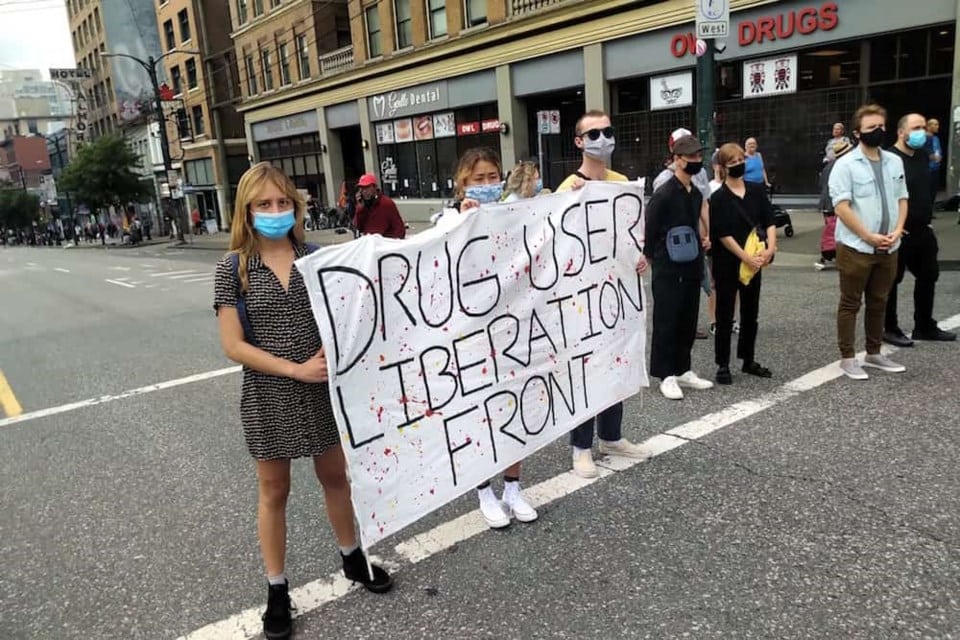
It was October 2023, and at that point, Kalicum and his colleague, Eris Nyx of the Drug User Liberation Front (DULF) in Vancouver, Canada, had been giving away clean, tested heroin, methamphetamine, and cocaine. Purchased on the dark web with donations, the two dispensed them through a compassion club they had established. (Think, Dallas Buyers Club.)
A donation powers the future of local, independent news in Columbus.
Support Matter News
They argued that the best way to stop soaring overdose deaths was to address the supply. Kalicum and Nyx told government officials, the police, and the media what they were up to, and then demonstrated through peer-reviewed research that it was saving lives.
Both had watched people struggle with substance use disorder and overdose. Their eyes were open to what was happening around them.
When Kalicum was finally called up to the stage to receive an award honoring DULF’s innovative work, he was kind and self-deprecating, thanking the organizers while turning down the award. Kalicum said that he shouldn’t get an award for doing what’s right.
Weeks later, on Oct. 25, 2023, Vancouver police raided the homes of Kalicum and Nyx, shut down the compassion club, and arrested the pair. In early November of this year, they were both found guilty by the BC Supreme Court on three counts each of possession of heroin, cocaine, and methamphetamine for the purpose of trafficking.
Justice Catherine Murray said in her ruling that what they had done worked. And Murray noted that everyone knew what they were doing but that things changed “as soon as politicians started complaining.”
A year prior, in 2022, DULF made a request to Health Canada, the country’s national health agency, requesting an exemption to run the program with the support of local health agencies and the Vancouver City Council. The request was denied. But there were no arrests and DULF moved forward with the work, continuing to produce research that demonstrated the program’s effectiveness.
Now DULF is challenging Canada’s constitution on the grounds that rights were violated when the compassion club was shut down. If the challenge is successful, charges could be dropped and it could overturn Canada’s Controlled Drugs and Substances Act.
DULF might be considered radical by some, but its work is underscored by research and the reality of an overdose death crisis. In the United States, we seemed to be refocusing on supply side interventions.
The 43 people enrolled in the compassion club that Kalicum and Nyx created did not die. They also had fewer nonfatal overdoses, according to peer-reviewed research conducted on the club. They kept people from accessing a dangerous, illicit drug supply and pointed to a solution – a real safe supply.
“This court case is a pretty important moment for all of us,” drug policy activist Garth Mullins told Drug Data Decoded. “While two of our brave leaders are on trial, really it’s the whole apparatus of prohibition that should be on the dock.”
Prohibition is the tip of a brutal spear. It is fierce and bloody and determined. It fuels hawkish leaders who call for the murders of alleged drug-runners in boats. It means tax dollars spent on agencies that keep fighting a war they will never win. It means a drug supply that is constantly shifting and therefore dangerous to people who use drugs, to people with a substance use disorder.
An unregulated drug market is a market where the cheapest and strongest drugs will emerge. And they have. Ohio has essentially run a vast experiment testing this premise since the so-called pill mills were shut down in 2011.
It doesn’t have to be complicated, but instead we have turned the lives of people who use drugs into a crucible of stigma, criminal justice, and bureaucracy.
What Kalicum and Nyx did was a legit shot across the bow and a reminder that there are ways to save lives other than arresting people or blowing up boats.
What we do in the United States may not look like DULF’s compassion club. It could look like greater access to methadone and buprenorphine. It could look like hydromorphone or heroin assisted treatment. It could look like better ways to stabilize lives and support them.
Through their compassion club, DULF showed that a safe supply saves lives. And for this good deed, the group may be punished.
I didn’t record Kalicum’s speech, and I can’t remember with certainty every word he said. But I remember the gist of it. And that’s what stuck with me.
He turned that award down, he said, because you shouldn’t seek recognition for responding to a crisis, for respecting the dignity of others.
That’s just what you should do as a human being.
Author
Related Articles
On Development: Of salad greens and sensible growth
Many developers and sellers confuse demand for a certain type of housing and a willingness to buy. There are hundreds of thousands of people in central Ohio who prefer older houses and apartments.
Evolved Body Art wrestles with accountability
In interviews with Matter News, former staff members described what they termed a history of inappropriate behavior within the shop enabled and perpetrated by owner Nick Wolak, who said the business is ‘putting in the work to make Evolved Body Art better from the ground up.’
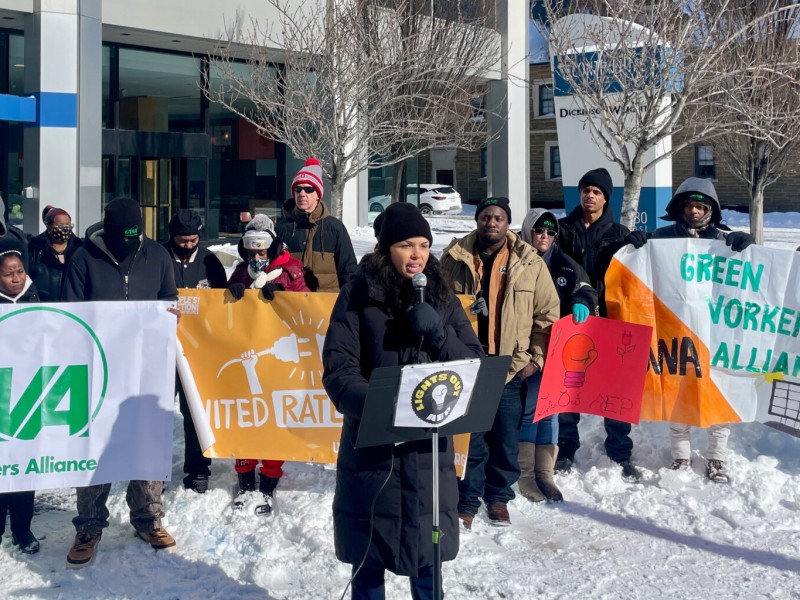
Why Electricity Bills Are So High—and How the Blowback Could Hit Trump
As Democrats and climate activists seize on energy costs as a political issue, new data shows electricity rates rose 5 percent nationwide in 2025. The figures were much higher in some states.