
Matthew Pitts is on a mission to make his inner child laugh
The Columbus poet, photographer and filmmaker said landing a pair of his pictures online at Vogue in mid-February served as an affirmation that he is on the right creative path.
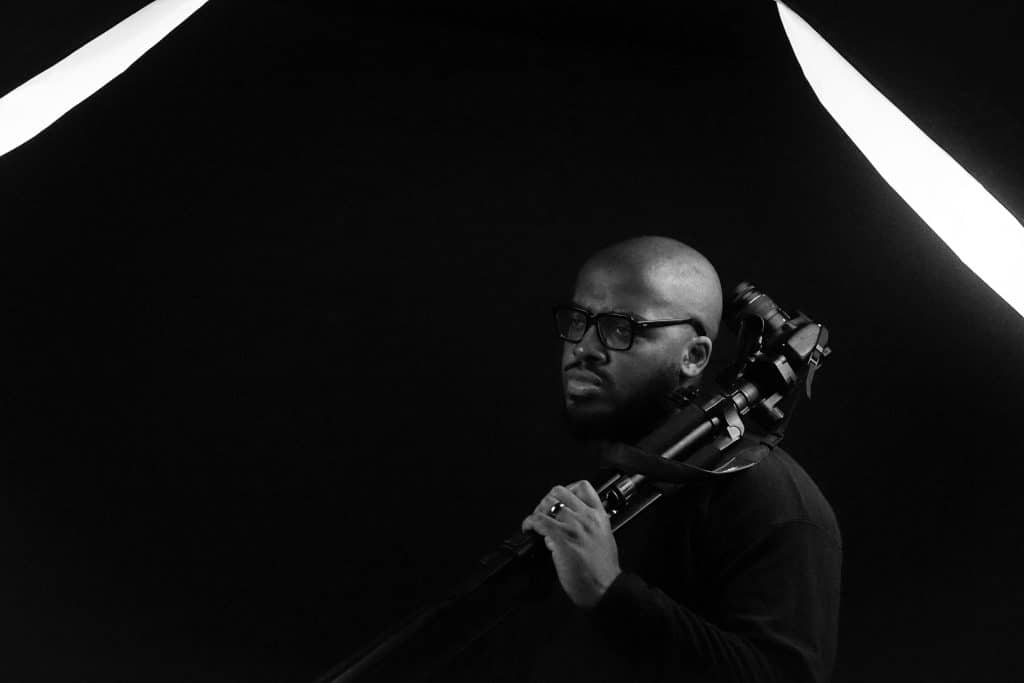
Dutifully and for months last year, Matthew Pitts would log onto the Vogue website every Monday morning and submit photos to the fashion magazine’s online open call, only to be met by near-automatic rejections.
“It’s a quick process where you submit something, see it uploaded, see the processor, and then nothing will happen and you’ll know, oh, I didn’t make it,” said Pitts, who eventually stopped submitting photographs toward the tail end of 2024.
But one Monday in mid-February, Pitts awoke early to his dog barking, noticed he had some time before submissions were due, and decided to give it another whirl, cycling through a series of pictures he had taken of model BUI in the courtyard at 83 Gallery on the Near East Side and uploading two of the images to the site. “And as I’m looking at it, there was a screen I had never seen before, which was this secondary drop down and a different processor, and it was like, wait a minute, is something happening?” Pitts said, and laughed. “It felt like I was looking at my lottery ticket as they were reading the numbers, like, do all these numbers really match up?”
A donation powers the future of local, independent news in Columbus.
Support Matter News
After a few minutes had passed, Pitts reloaded the Vogue website, searched for his name, and located both of the accepted photos, complete with the magazine’s logo set in the lower left-hand corner of each image.
While grateful, Pitts remained grounded in the aftermath, saying that he didn’t need Vogue’s stamp to validate his art. At the same time, he allowed that the experience helped introduce a sense of clarity that he was on the right path with his work. “It meant a lot in terms of letting me know the direction I want to take things with my photography,” he said, “and how I want it to interact with some of the other work I’m doing.”
These impressively multifaceted artistic aims center around everything from poetry to film, with his photographs often acting as a developmental step in the movie-making process. The pictures of BUI published online by Vogue, for instance, show the model portraying a sci-fi character named Aurora Sol that Pitts said could emerge in future short films. “In the still shots, Aurora Sol is this ethereal kind of being,” said Pitts, who hoped to create a goddess-in-the-garden vibe for the shoot. “That interior garden [at 83 Gallery] is so beautiful, with the way the light floods the space and hits off the brick. I was thinking of the way the sun cascaded off that brick and off of BUI’s skin, and how that brought out some of the character’s more regal nature.”
While Pitts has had a lifelong interest in movies, it’s only in recent years that he finally started to pursue the craft, beginning with still photography in the early months of the pandemic and gradually building toward creating short films. The artist attributed his early hesitance to having been raised a Jehovah’s Witness, which he said instilled in him a belief that everything done on Earth should be in exclusive service to the next life.
“And so, I didn’t aspire to a lot of things when I was in that faith,” said Pitts, 33, who left the church at age 24 – a difficult process that he said required him to break from his family and start anew with his wife, the poet and artist Ajanaé Dawkins. “One day, I was leaving the Kingdom Hall, and in my head I was like, ‘I’m never coming back to this place.’ I just knew it wasn’t the space for me. But because I was raised in that space, I didn’t realize how much it comprised my personality and the way I moved through the world. … And even now I’m still mentally leaving the faith. … In the last year, I’ve been doing a lot more writing about it, which can be therapeutic. And in the space of me writing about it and talking about it more, I’m learning about the ways I was still locked into the faith, and the ways I’m still escaping.”
Some of these adjustments have been small, including Dawkins’ insistence the couple celebrate his birthday each year – an opportunity he wasn’t afforded growing up. Others have required greater mental effort from Pitts, who has had to learn to not immediately brush aside professional opportunities when offered. “There’s this inner mechanism that’s like, ‘You don’t have to be the star,’” he said. “And I’ve had to learn how to shut that down and be like, ‘No, they want things from my craft.’ And I have to be open and willing to take that step and sort of push myself in those directions.”
In undertaking this process, Pitts said he has started to see aspects of his personality more fully reflected in his work, and in particular in his poetry, which has evolved in myriad necessary ways since he first took the stage at the now-defunct Writers’ Block Poetry Night and immediately found himself on the receiving end of some pointed jabs courtesy host and poet Scott Woods.
“To Jehovah’s Witnesses, if you can stand up in front of people and say something witty, people are going to clap, people are going to be impressed,” said Pitts, who recalled delivering a “super rhyming” poem and then returning to his seat content that he had absolutely crushed it. “And Scott, he dug into me, as he does with anybody who did what I did. And I didn’t understand, and I was like, ‘What are you guys talking about? I was rhyming! You weren’t even rhyming!’ But then I started reading more poets who aren’t Jehovah’s Witnesses, which is pretty much most of them, and I started seeing other poets perform, and I began to recognize, okay, what I’m trying is not necessarily the baseline in the poetry community.”
This cycle would continue to repeat in the years that followed, with revelations about approach and craft forcing Pitts to dig deeper and enabling him to step more fully into his own. At times, this meant questioning even his successes, with the poet recalling how he started to make a name for himself within the slam scene, only to realize he had been adopting a safely-by-the-numbers approach, giving audiences what he believed they wanted rather than pushing his own artistic limits.
“I was getting the acceptance that I thought I wanted, but I wasn’t creating things that meant something to me,” said Pitts, who recalled an early tendency to explore the more severe spaces in which he believed listeners wanted him to dwell. “And then a couple of years ago, I wrote a poem called ‘The Origins of Yelling Jesus Christ, By Jesus’ Younger Brother, Tanner,’ and it was something where I had never before written with that kind of freedom. … It’s a poem that brings me joy, and I don’t have to slog my way through it. And I just think I’m creating things now where my younger self, the child version of me, he would crack up if he heard it, even as he’d be like, ‘I know I’m not supposed to laugh at this.’ I’m in a space now where I want to make the things my younger self would have read but not been allowed to read. That’s the rebellion that I want.”
Author
Related Articles
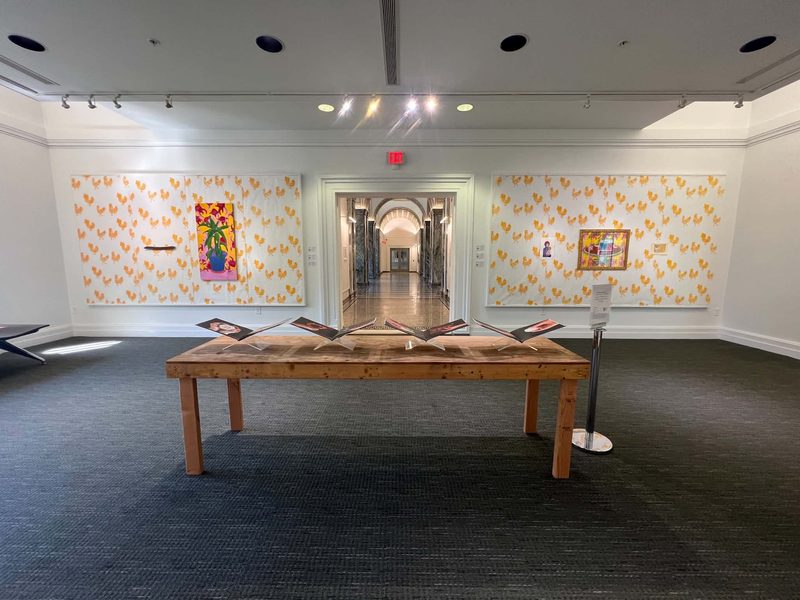
‘Immigration: A Journey of Belonging’ seeks deeper understanding
The new group exhibition, open now at the Losinski Gallery at the Main Library, will host a reception from 2-4 p.m. on Saturday, Oct. 3.
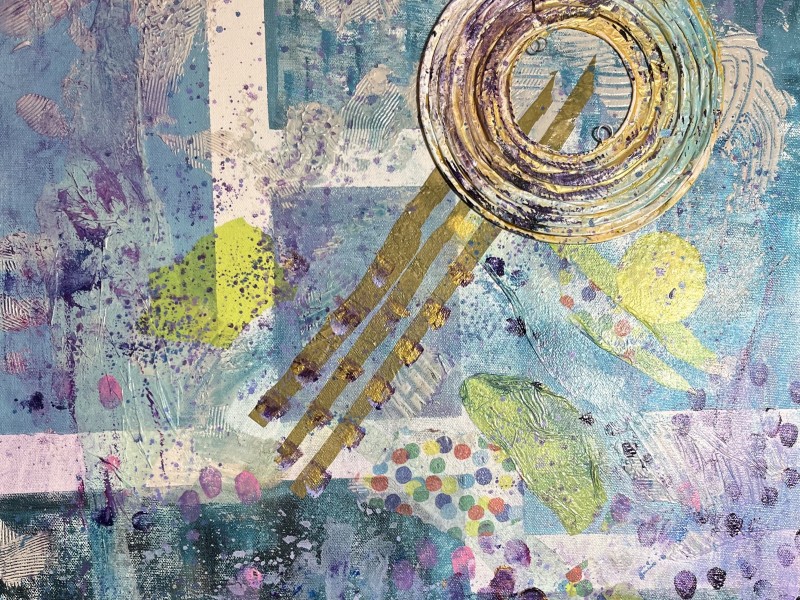
Deep conversations pave the way to ‘Chasing the Light’
A couple of years ago, Loren Bucek invited a group of artist friends to her Clintonville home. The gathering soon evolved into regular meetups that shaped the creation of a new exhibition opening this week at McConnell Arts Center.
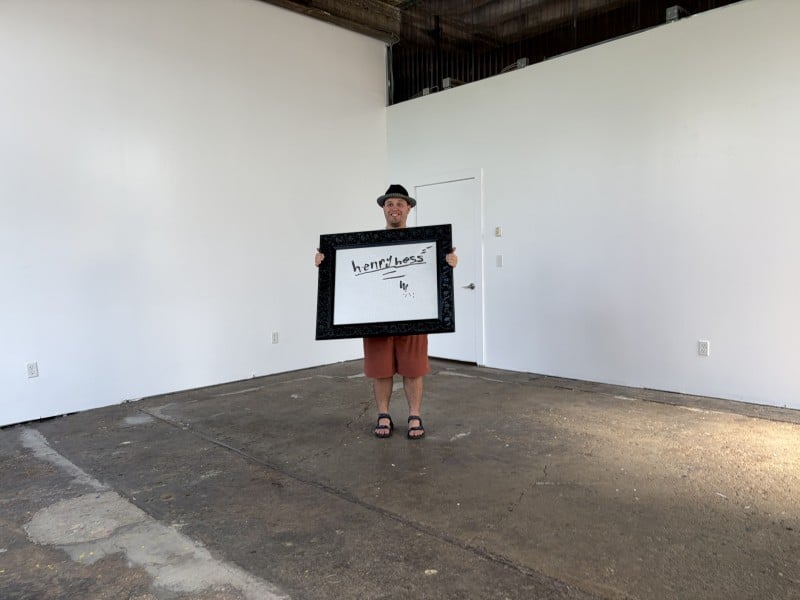
Henry Hess says goodbye to his longtime Chromedge studio
Faced with a rent increase of more than 30 percent, the Hess family opted to move on from the artist’s creative home of the last eight years. And while the next steps remain uncertain, they stressed that Henry would maintain a presence in Franklinton. ‘We’re not going anywhere,’ Sophia Hess said.