
The continued resilience of singer Dre Peace
The Columbus musician suffered a series of cardiac events in December during which his heart stopped twice – an experience that he planned to recount in concert at Natalie’s Grandview on Sunday, Jan. 26, health allowing.
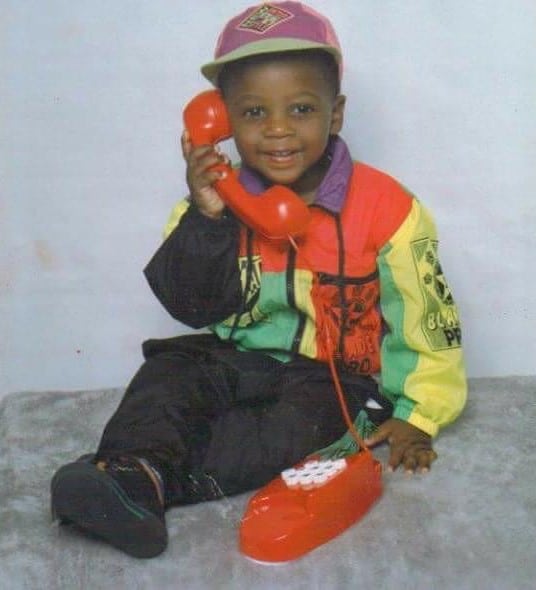
In the last month, Dre Peace has been forced to cancel a pair of concerts owing to a compounding series of health issues that left him in a place where he said he “just physically couldn’t do it.” The decisions have also taken a mental toll, with the singer expressing his concerns that the time away from the stage could lead to him being forgotten by Columbus audiences.
“You kind of feel like you’re disappearing,” said Peace, who was diagnosed with aplastic anemia in 2020 and in December suffered a series of cardiac events over a 48-hour period during which his heart stopped on two occasions. “I remember waking up and my legs and arms were strapped down. They have you restrained because they don’t want you to wake up and pull your ventilator out, right? And the vent sits between your vocal cords, so you can’t make any sound whatsoever. You can’t talk. You can’t even hum. And it’s the weirdest feeling ever.”
This experience was particularly jarring for Peace, who has been singing since almost before he learned to speak. The musician debuted in his church choir at age 5 and landed a contract with Disney at age 10, appearing on Broadway as young Simba in “The Lion King.” “There’s music constantly happening in him, and he’s just turning the dial, tuning in,” the singer Talisha Holmes said in January 2024.
A donation powers the future of local, independent news in Columbus.
Support Matter News
“I was telling my grandma, it’s funny they strap your legs and arms down, because for me that’s not the safety [issue]. For me, it’s my voice,” said Peace, who plans to recount his near-death experiences in concert at Natalie’s Grandview on Sunday, Jan. 26, health allowing. (Peace was readmitted to the hospital last week.) “When you’re trying to talk and no sound is coming out, the fear that consumes you is crazy. I was like, ‘Dude, screw the restraints on my arms and legs. Get this thing out of my throat.”
Days after being taken off the respirator, Peace began to talk. And then he began to sing, first lingering on the Richard Smallwood song “Healing,” which took on a more pronounced meaning in the weeks after his heart stopped beating for nearly three minutes, particularly the lines related to healing (“There’s healing for your sorrow/Healing for your pain”) and the promise of better days to come.
“I was just singing it this morning. It’s always stuck in my head,” Peace said. “It’s just so heavy, and the words just mean so much more to me than they did when it was just this earworm. Now it feels like a declaration that I’m singing to myself.”
Should Peace take the stage at Natalie’s this weekend, he intends to adopt a more relaxed approach to performance, eschewing his full band for a more stripped-down, three-piece lineup and leaning more heavily into storytelling as a means of conserving energy. Even the presentation will be minimal, said Peace, who planned to forego his usual assortment of masks, flashy jewelry and wigs, describing the concert as an opportunity for people to begin to see more of the person behind the colorfully outsized stage persona.
“I’ve realized how much people don’t know about me,” he said. “I don’t think some people even know the magnitude of my sickness, because of my spirit, because of the way I carry myself, because when I do the shows, I’m still wearing these wild clothes, or I’ve got this crazy wig on. … And this time, I want to not do that. I want people to see my face, and to see the scars from the ventilator that are still healing on my lip, on my cheek, on my forehead. … I still have a hairline fracture in my sternum from eight rounds of chest compressions. … It’s all a part of the story.”
Peace said he also wants people to better understand how essential music is to his existence, sharing that the rush of performance is as necessary to his general well-being as the kidney transplant on which he continues to wait. “That interaction with the crowd as it’s accepting and receiving and being transformed by your art, that’s medicine,” he said. “If I don’t do this, I die.”
The relentless series of health crises that Peace has navigated over the last four-plus years have given the singer a natural comfort level in discussing death, which he does so with equal parts forthrightness and gallows humor. “I mean, the shit I’ve endured, bro. My friend, she said to me, ‘You know, Jesus only died once,’ and I’ve died three times now,” Peace said, and laughed. “I’m tired of proving I’m resilient. It’s like, damn, another test? People will be like, ‘It’s a miracle. It’s this. It’s that.’ And it is, but it’s the ninth miracle, you know? When do I get a break? I want to go to the beach, not the emergency room.”
Initially, Peace refrained from sharing the visions he witnessed in the time when his heart stopped beating, saying that he wanted to save that story for the stage – a promise he held to for several minutes before excitedly relaying his full recollection of the hereafter. Prior to this dam breaking, however, Peace did offer that his near-death experience included none of the panic, fear and uncertainty that might have gripped those friends and family members who surrounded his hospital bed in those admittedly touch-and-go days. And that his ability to walk away from that time absent any memory of these various traumas could stand as yet another indication of the divine.
“I think it is a sign, because I was just asleep. And when I came to, it was just like waking up,” Peace said. “I’ll never forget. The nurse who was in the room, she was like, ‘Oh, he’s awake,’ and she ran out to get the doctor. And my grandma, she just raised up her arms and said, ‘But God.’”
Author

Related Articles
In a fraught time, TAKAAT fearlessly pushes toward the edges
Mdou Moctar members Mikey Coltun and Ahmoudou Madassane will perform together as a duo at Cafe Bourbon Street on Sunday, March 8, supported by Idioms and Winston Hightower’s Perfect Harmony.
Church of the Red Museum resumes service for Lost Weekend Records anniversary show
The sprawling Columbus band will bring its ramshackle murder ballads to the stage for the first time in 16 years when it performs at Natalie’s Grandview on Saturday, March 7.
Trek Manifest lives out the stages of grief onstage with ‘Tosca’s Boy Session Part 1’
The Columbus rapper’s new live album, the first in a planned trio, is out now on Bandcamp and hits the remaining streaming services on Monday, March 2.