
On Development: Cars can’t take us where we need to go
The billions of dollars of new road improvements cited in MORPC’s analysis 26 years ago have already been spent, and now we’re still looking at the same challenges with more people and more roads.
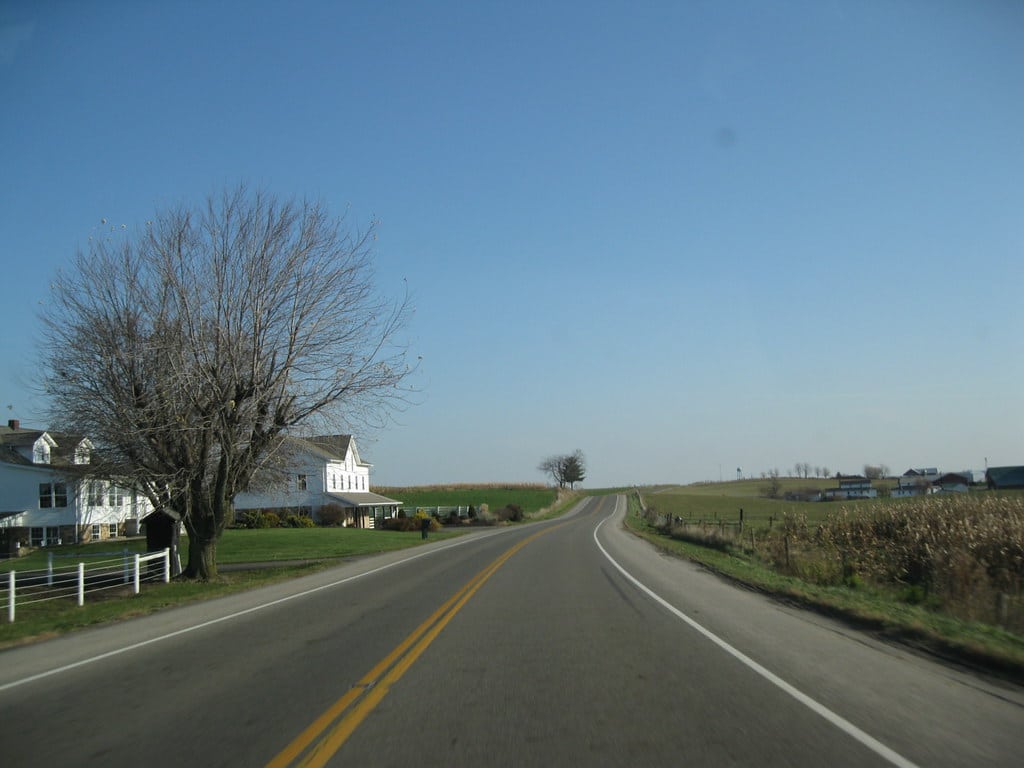
In February 2000, the Mid-Ohio Regional Planning Commission (MORPC) released an analysis for the City of Columbus showing growth trends and transportation needs. The report – released as ODOT was finishing $1.2 billion in Central Ohio road projects over a five-year period – focused on what the traffic impact would be if the regional population grew by 400,000 people (to a total of 1.4 million) by 2020.
The MORPC report said that keeping 2020 regional traffic congestion at 1995 levels would require more than doubling the amount spent in the previous five years. Because the growth patterns showed continued dispersal of jobs around an already sprawling region, MORPC estimated that the number of automobile trips across the region would increase by 35 percent and the miles driven would rise by 63 percent.
Some City Council members said development patterns should be more compact, and that the region needed better mass transit – starting with a rail network. At the time, Franklin County voters had just defeated a 0.5 percent sales tax for COTA to develop commuter rail.
A donation powers the future of local, independent news in Columbus.
Support Matter News
I raise this 26-year-old study because MORPC and its little brother, CORPO (Central Ohio Rural Planning Organization), are gearing up for a federally funded, $4.8 million initiative to make the region’s roads and highways safer as counties around Franklin County prepare for more cars, jobs, and construction in the coming decades. MORPC‘s partners in the endeavor include ODOT, Honda, Transportation Research Center, and Ohio State University.
The Coalition for Integrated Road User Safety (CIRUS), as the effort is named, might as well call itself the Coalition for Integrated Rampant Car User Safety (CIRCUS) – because we’re no closer to the much-needed modern transit network than we were 26 years ago. Columbus has already exceeded those earlier population projections, and now the region has expanded to include three counties – Knox, Morrow, and Marion – far beyond the borders of Franklin County.
The seven-county area that CORPO serves includes those three counties plus Fairfield, Pickaway, Madison, and Union counties. MORPC defines those seven as Central Ohio’s “rural area.” CORPO does not include Delaware and Licking counties, which are non-rural (or less-rural) counties, yet intertwined with the others both in terms of geography and the economy.
The giant Andural Industries defense manufacturing plant coming to Pickaway County expects to have 4,000 employees within 10 years. Regardless of what becomes of the Intel plans in Licking County, that area is poised for major job growth and other development. MORPC and CORPO expect the seven-county area to add more than 130,000 residents and 47,000 new jobs over the next 25 years.
Meanwhile, the “Circus” study will focus on, according to a news release, “road-safety audits, evaluation of advanced vehicle safety, and identification of high-risk rural corridors.” From a regional perspective, it will “focus on safer roads, safer speeds, safer vehicles and post-crash care.”
In other words, a continuing onslaught of workers driving alone across an ever-expanding region.
True, COTA is diving into its LinkUS plan with more-frequent service and major bus-rapid-transit lines. (Central Ohio voters are much more supportive of transit funding than they were in 1999.) But that predominantly will serve shorter commutes within Franklin County. With the new rural counties added to the region, however, buses will not be sufficient for longer commutes.
The billions of dollars of new road improvements cited in MORPC’s analysis 26 years ago have already been spent, and now we’re still looking at the same challenges with more people and more roads and more factories and subdivisions across the ever-growing region. Much of the I-270 outerbelt has been rebuilt at least once since that study. And the massive, $1.6 billion, I-70/I-71 interchange reconstruction is finally nearing completion – more than 20 years after planning started and at a cost that is $1.1 billion higher than the 2004 estimate.
The two Columbus council members who called for rail transit and compact development 26 years ago had the right ideas. Since then, Columbus has done a lot to support the density needed in an ever-more populous place. But despite significant improvements, transportation is falling short in Franklin and the surrounding counties.
As a region, we brag about our growth, but we have a small-town view of our transportation needs. Columbus remains one of the largest cities in the world without intercity rail connections – largely because of recent governors who were indifferent or even hostile to rail. More than a century ago, Columbus had interurban rail connections with Westerville, Gahanna, Lancaster, Newark, Zanesville, Delaware, Marion, Springfield, Circleville, and Chillicothe.
At some point, we need to look at the past to chart our future. We can’t be a truly great city without a great mass transit system that includes rail.
Brian Williams is a semi-retired planner and journalist
Related Articles
The problem with the CDC prohibiting ‘never use alone’
Officials from the Centers for Disease Control and Prevention reportedly told recipients of overdose prevention funding that they may no longer be allowed to promote the message that has become one of the pillars of harm reduction.
On Development: Of salad greens and sensible growth
Many developers and sellers confuse demand for a certain type of housing and a willingness to buy. There are hundreds of thousands of people in central Ohio who prefer older houses and apartments.
How Wexner’s desire for a city center led to a more fragmented Columbus
As the central Ohio retail magnate faces a larger public reconciliation owing to his ties with disgraced financier Jeffrey Epstein, a look back at how the Wexner name became so synonymous with the city.