
On Development: Keep Wall Street out of the Columbus housing market
The city’s tax abatements for apartment projects are, in effect, subsidizing the rapacious interest rates of the private equity and hedge fund ‘investors’ who help finance housing development.
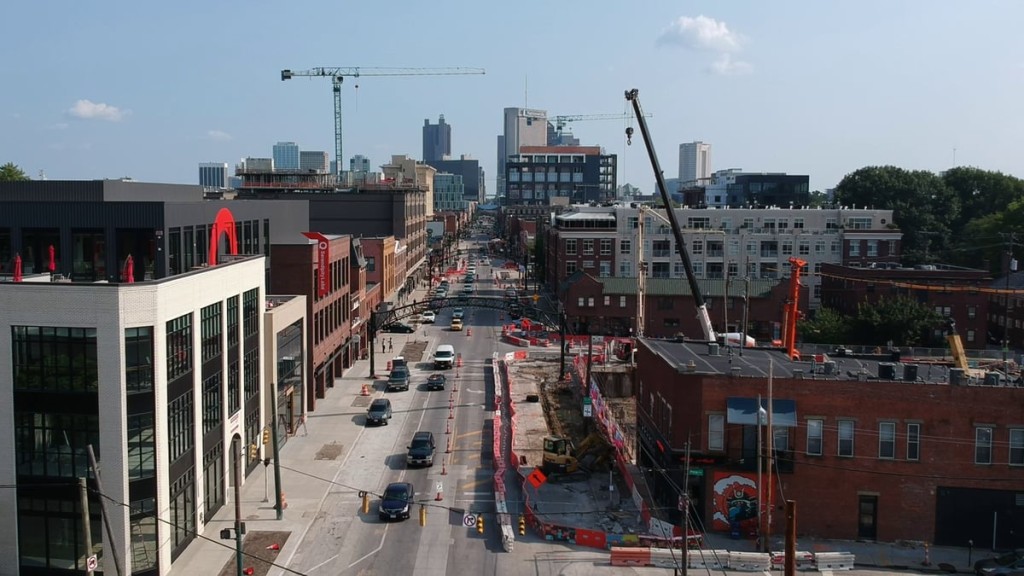
City Hall’s boo-birds often aim their catcalls at tax abatements for affordable (as well as unaffordable) housing. They view – understandably – the property-tax breaks as a giveaway to big developers and a burden on Columbus City School coffers and on other property owners who have to pay full freight as their home values rise.
But there are behind-the-scenes culprits that escape scrutiny and vitriol: private-equity firms and hedge funds, or Wall Street. The city’s tax abatements for apartment projects are, in effect, subsidizing the rapacious interest rates of the private equity and hedge fund “investors” who help finance housing development.
Here’s how it works and why, along with the alternatives we have.
A donation powers the future of local, independent news in Columbus.
Support Matter News
To be fair, city officials faced a difficult situation in the wake of Covid and the accompanying recession and rising interest rates. Homebuilding was in a slump, but the flow of new workers from elsewhere in Ohio and around the country continued, adding to the Central Ohio housing shortage.
Builders and developers typically would get about 70 percent of their financing in construction loans from banks and the rest from equity loans by such lenders as private equity firms. But skittish banks began cutting their investment to around 50 percent of project costs, which left developers even more dependent on expensive Wall Street funding that required them to repay loans at 20 percent interest. As a result, projects became more expensive – and a number of fully approved, shovel-ready projects were put on hold in recent years.
Almost a year ago, city officials decided to expand the Community Reinvestment Area program to make the entire city eligible for 15-year, 100 percent property-tax abatements on apartment projects. In return, developers would reserve 20 percent of units for those making no more than 80 percent of the area median income.
The city needed to do something. Actually, it needs to do many things all at once. And city planning and development officials take the challenge seriously. But depending on how you look at it, the abatement policy can be very aggravating.
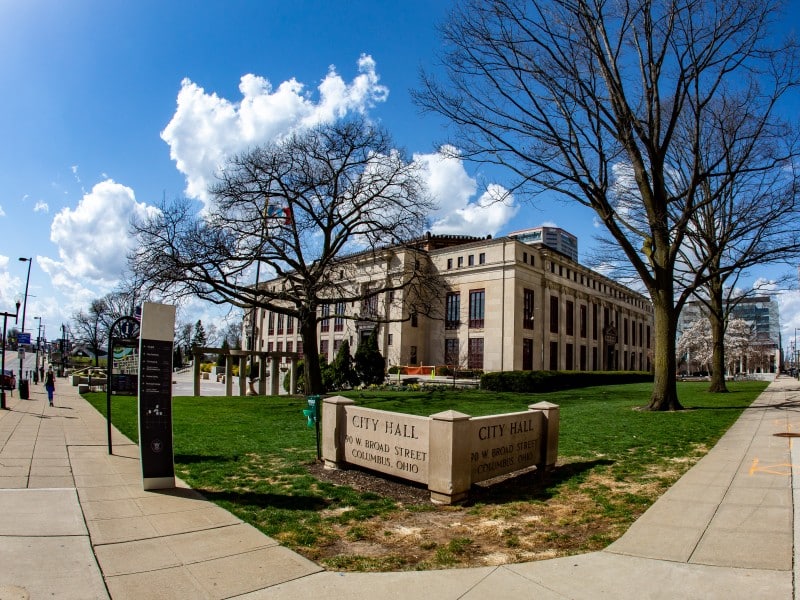
Yes, the abatements got the shovel-ready projects back on track. But maybe the city could be more directly involved by creating a fund to supplant the private-equity role. The city could be the equity lender – at a much lower interest rate – and would also own a significant stake when the apartment project is complete, allowing it to ensure a greater percentage of affordable units.
Such public investment in projects would make it easier for developers to complete their projects, avoid the “need” for abatements, increase the number of affordable units, and free up money for future public investments in housing. By freezing out private equity Columbus could accomplish much, much more at a lower cost.
I’ve written in the past about a public role in housing development – a practice pioneered in Montgomery County, Maryland, and advancing to various degrees in Chicago, Atlanta, Chattanooga, Boston, and Rhode Island. Communities create a loan fund to help developers finish a project, and the interest from loan repayment and revenue from the ownership stake can be put into new projects. Public funding also can allow projects to proceed even in an economic downturn.
But the housing-market damage inflicted by private equity privateers goes beyond their usurious interest-rates for new-housing construction. The billionaires actually get us coming and going – from their high interest rates on new construction to their nationwide meddling in markets for existing single-family homes and large-scale rental properties. Wall Street firms have been quietly buying up houses in cities across the country, including Columbus. They’ve focused particularly on low-income and minority neighborhoods and accounted for almost 29 percent of all U.S. home purchases in December 2022.
In early 2022, 36 percent of residential properties sold in Linden, the 43211 zip code, were bought by investors. In the Hilltop and other parts of the 43223 zip code, it was 31 percent. The Far West Side was 29 percent. In much of the South and East sides, the purchases ranged from 24 to 29 percent. In many Cleveland neighborhoods, outside investors bought 50, 60, and even 70 percent of available residential properties in distressed and minority neighborhoods.
The same types of investors are behind mass purchases of large rental-housing portfolios, resulting in higher rents and diminished service in cities across the country. In addition, the same types of investment occurs in newer neighborhoods and subdivisions, where investors outbid prospective home buyers and turn clusters of newly purchased homes into overpriced rentals – as Robert Reich shows in this video.
What all of this shows is that in meeting housing needs, hedge funds and private equity cannot be relied on as beneficial partners. Cities need to be aggressive and creative and must develop programs that meet local needs – not those of Wall Street.
Brian Williams is a consultant and freelance writer. A former Columbus Dispatch reporter, he is retired from the Mid-Ohio Regional Planning Commission.
Related Articles
On Development: Cities and schools need to be on the same page
There is a savings associated with closing schools. But there also is a cost.

Anduril teach-in highlights Ohio State’s long-developed military connections
The fight over the Arsenal-1 plant is a part of a larger struggle for the future of the country but also the soul of one of America’s largest public universities.

Opinion: Amid ICE surge in Columbus, fear is now part of the job
Independent restaurants are struggling to protect and support the immigrant workers who have long been the backbone of the industry.