
On Development: Marion finds strength in collaboration
Before Marion Mayor Bill Collins took office early last year, he met with all department heads and asked about their priorities and wish lists, seeking projects that could be accomplished quickly to help the city build momentum. The plan appears to be working.
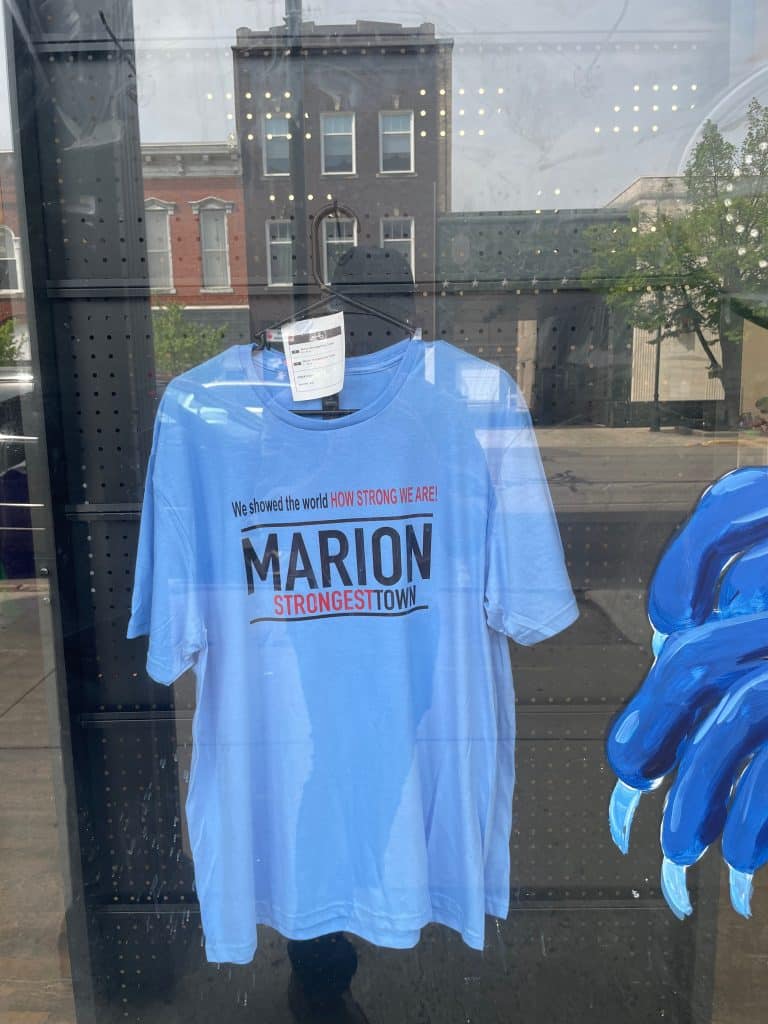
If you heard that a mid-sized Ohio city was selected as “America’s Strongest Town,” Marion might not be the first place that comes to mind.
But the Strong Towns movement doesn’t look for the coolest or cutest places. Its annual March Madness brackets identify a Sweet Sixteen of cities facing challenges that are finding solutions in community initiatives and incremental improvements that build momentum.
The competition includes votes from residents of the Sweet Sixteen towns – but it’s not a stuff-the-ballot-box popularity contest. Strong Towns members, who include 5,700 urban aficionados from throughout the U.S. and Canada, have a significant role in picking the winners in each bracket.
A donation powers the future of local, independent news in Columbus.
Support Matter News
Strong Towns is a nonprofit advocacy organization founded 16 years ago in Brainerd, Minn. It seeks to strengthen cities large and small by looking to pre-suburbanization America: walkable places that developed incrementally with homes and businesses in a variety of types and sizes that allow people to live with dignity as they climb the economic ladder.
A conglomerate swooping into town seeking city council favors for a big project isn’t coming to make life better for you and your neighbors. It’s coming to make money. It may end up creating some public benefit, but that’s not its priority.
It may not be flashy, but elected officials and department heads are more effective if they nurture conditions that enable the local public, private, and non-profit sectors to solve problems, cultivate the local economy, and support volunteer initiatives.
That’s what Marion is working on. Collaboration is the force that strengthens the city, with examples that include:
- -Parents came together to build a playground at a public park for children with disabilities,
- -The city recreation department serves as a public-sector contractor for city facilities in winter months.
- -City and county agencies – often at odds in communities around the country – work closely together.
- -Several senior-citizen agencies and organizations collaborate.
And don’t forget education. Marion Technical Institute, Ohio State University at Marion, and Tri-Rivers Career Center are enmeshed in economic development initiatives and partnerships with the Chamber of Commerce, Forge, Marion Made, and other civic organizations. Many have a focus on home-grown entrepreneurs.
Marion, like many Rust Belt cities, grew and thrived through innovation and the presence of entrepreneurs such as Edward Huber, whose 1863 invention of the revolving hay rake begat the company that became Marion Power Shovel, which produced the machinery that dug the Panama Canal. After decades of consolidation in the heavy-machinery industry, the Marion plant closed in 1997. Other local industries have shut down in recent decades.
Before Mayor Bill Collins took office early last year, he met with all department heads and asked about their priorities and wish lists, seeking projects that could be accomplished quickly and with little red tape. These early victories, he believed, could build momentum for even more incremental success.
He also wanted a grant writer to tap into new resources for the city. When he learned that a new City Hall clerical worker had grant writing experience and aspired to make a career of it, Collins jumped at the opportunity, declaring that Zoe Brown would also help community organizations with applications for civic projects.
James Walker of the planning office stressed that the city’s approach is to seek grants to achieve existing priorities and to “not let funding dictate policy.”
Marion is developing a five-year plan of funding priorities and grants for neighborhood groups, non-profits, and other partners, said Mike Bodine, Marion’s public service director. He added that the city “is thriving on partnerships. There are so many incremental things going on.”
That doesn’t mean things are easy for a city recovering from industrial decline. There have been ups and downs, but the current trend is upward, with leaders citing a couple of catalysts.
In the years just before Covid, a couple of 30-something Marion natives began buying historic downtown properties for revitalization. Alex Sheridan, a musician who also renovates houses, envisioned a boost in downtown nightlife. And Luke Henry’s projects downtown evolved into Henry Development Group, with a focus on commercial storefronts, office space, and restored downtown loft apartments.
Another catalyst was new local investment in former industrial areas, especially near the Marion airport and the Marion Industrial Rail Park– sort of a mini-Rickenbacker intermodal facility. It’s the largest independent intermodal rail facility in the country, taking advantage of the intersection of three major rail lines.
Marion CAN DO! – a hyper-ambitiously named nonprofit corporation that touts Marion’s assets – was organized in 1993 by civic leaders urging the community to focus its resources on rejuvenating the local economy.
Walker, from the planning staff, was a driver in Marion’s bid to become the Strongest Town. The contest itself became a more subdued, straightforward catalyst for Marion. “This contest,” he said, “forced people to look in the mirror and to see our potential.”
Brian Williams is a semi-retired reporter and planner.
Related Articles
The problem with the CDC prohibiting ‘never use alone’
Officials from the Centers for Disease Control and Prevention reportedly told recipients of overdose prevention funding that they may no longer be allowed to promote the message that has become one of the pillars of harm reduction.
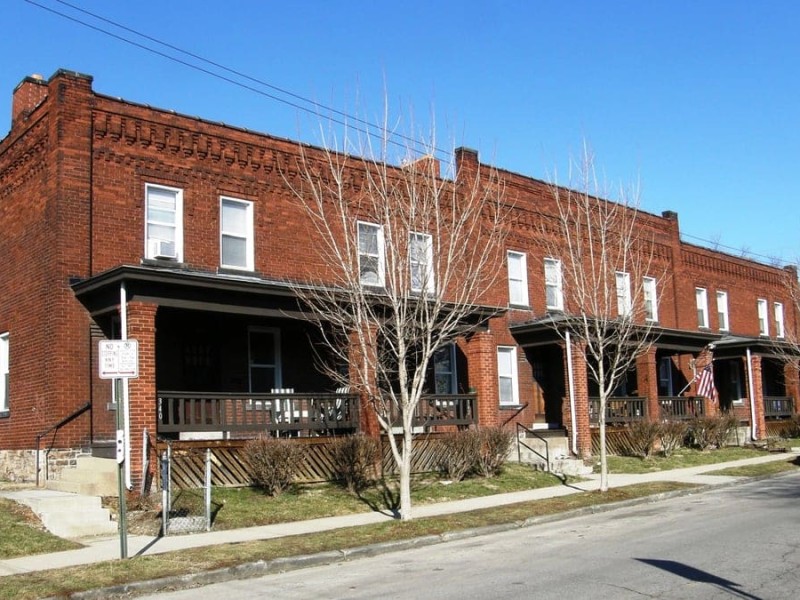
On Development: Of salad greens and sensible growth
Many developers and sellers confuse demand for a certain type of housing and a willingness to buy. There are hundreds of thousands of people in central Ohio who prefer older houses and apartments.
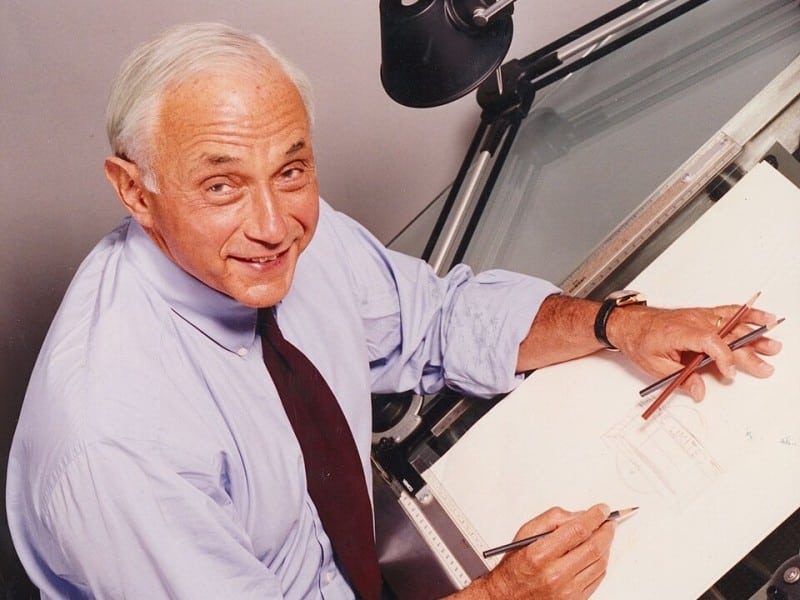
How Wexner’s desire for a city center led to a more fragmented Columbus
As the central Ohio retail magnate faces a larger public reconciliation owing to his ties with disgraced financier Jeffrey Epstein, a look back at how the Wexner name became so synonymous with the city.