
On Development: Still waiting for a trolley
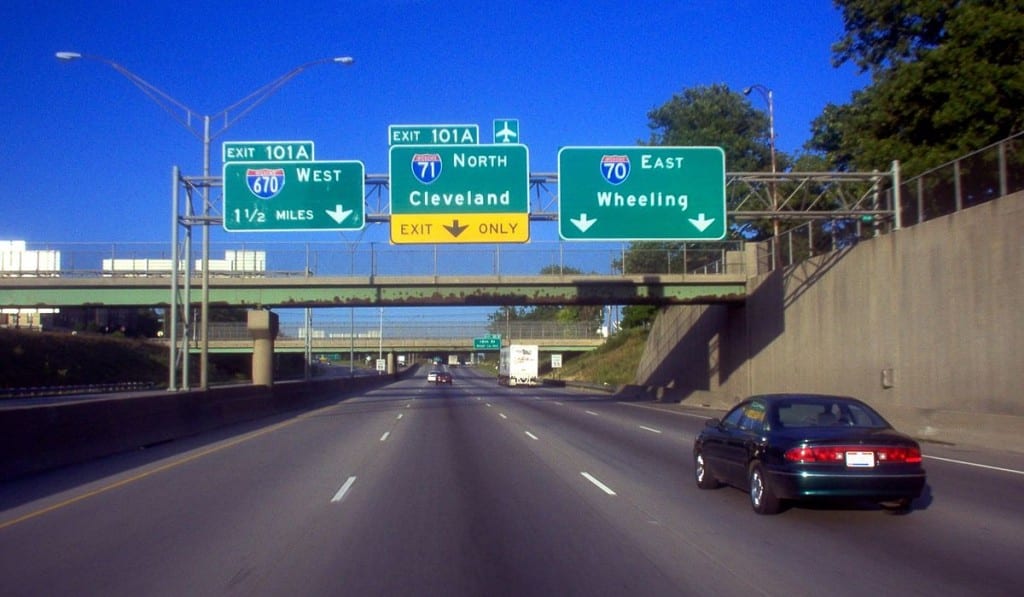
Construction of I-70 and I-71 in downtown Columbus and surrounding neighborhoods ripped the hearts out of neighborhoods, taking and destroying privately owned property and replacing those communities with tax-sucking superhighways.
I recently visited Tokyo (metro population: 38 million) and Bangkok (metro population: 16 million) and found it easy to get around on foot or a variety of rail options. Transit-wise, Asia is leaving the United States in the dust. Japan has 241 stations on its two main subway systems. Bangkok has 173 stops on its subway, elevated train, and monorail lines. Japan has had high-speed, intercity “bullet trains” for decades. But even Thailand – less populous and less developed – has high-speed rail lines in the planning stages.
In Tokyo, I walked every day to the neighborhood Lawson convenience store (a descendant of the Lawson’s stores founded in Cuyahoga Falls and common throughout Ohio starting in the 1960s). But walking to the store could take a while because I sometimes had to wait 10 minutes as heavy-rail, electrified commuter trains passed every minute to or from a nearby station. It was maybe a bit of an inconvenience, but in general, drivers, riders, and walkers are all well accommodated in Tokyo.
In Columbus, as in most of the United States, the options are fewer and a balance among modes of travel is almost nonexistent.
A donation powers the future of local, independent news in Columbus.
Support Matter News
We’ve done disastrously and monumentally stupid things over decades in the name of what we call progress. We’ve destroyed swaths of our once-great cities to build the highways that killed transit growth.
Midwestern cities founded 200 years ago saw slow growth as canals were developed, the boom arriving with the introduction of railroads. Industry expanded along the many competing railroad lines and neighborhoods linked it all together in the street grid.
Construction of railroads led to development of American cities. But a century later, the construction of highways led to demolition of American cities.
President Eisenhower envisioned a national network of superhighways going to – but not through – major cities. He was disappointed when Congress, along with big-city mayors, saw the highways as a path to “urban renewal.” The 1956 enactment of the National Interstate and Defense Highways Act paid to put the highways through neighborhoods.
Construction of I-70 and I-71 in downtown Columbus and surrounding areas ripped the hearts out of neighborhoods, and in particular Black neighborhoods, taking and destroying privately owned property that generated significant tax revenue and replacing those communities with tax-sucking superhighways. The canyons dug to accommodate those highways formed a moat around downtown. Eventually, those sunken highways become money pits.
Many of the cities that embraced urban highway construction (and neighborhood destruction) saw their populations slip into decades of decline after the 1950 and 1960 censuses. The highways paved the way for white flight to surrounding suburbs.
Most of the country’s older eastern and midwestern cities saw decades of rapid population increase up until 1950 (even 1960 and ’70 in some). Cleveland and Detroit have lost almost two-thirds of their population since 1950. Chicago lost one-fourth in the same period. Dayton has lost almost half its population since 1960, while Toledo reached a high point in 1970 but has lost almost one-third since then. Cities with significant rail transit, such as Chicago and Philadelphia, lost population, but not nearly as much as more car-dependent cities.
But a new trend is emerging. Cities that have removed or buried urban freeways have revitalized themselves, to varying extents.
Portland was the first to demolish a downtown highway, in 1974. Its population has grown by more than 70 percent since then, as it developed an extensive light-rail streetcar system. San Francisco demolished two waterfront highway connectors damaged in the 1989 Bay Area earthquake and replaced them with a grand boulevard that has connections to streetcars, subways, and light rail. Boston replaced an elevated waterfront highway with an underground highway in 2004, reconnecting parts of the city and spurring new development (but at a cost of $15 billion). Seattle also replaced an elevated highway that separated the waterfront from downtown in 2019 after boring a tunnel beneath the old highway. Rochester, N.Y., Milwaukee, and Akron also have replaced downtown highways and connectors.
Columbus is decades into perpetuating the asphalt moat that surrounds downtown and adds feeder streets that widen the gap between downtown and neighborhoods. Planning for the multi-year redesign of the I-70/I-71 split – now in the last phase, west of downtown – began in 2003. At public meetings, there were plenty of people urging that the project might be cheaper and more effective if the plans were linked with transit options, bicycle infrastructure, and patterns of development that were less auto oriented.
Even with LinkUS (the multi-faceted city/county/COTA/MORPC transportation initiative), transit takes a back-seat to highways in central Ohio. Maybe someday we’ll catch up with Thailand.
Brian Williams is a semi-retired journalist and planner.
Related Articles

Local Politics: Proposed trade partnership with Israel draws criticism
A bill to create an Ohio-Israel trade partnership is under review in the State Senate. Reactions in the city have been mixed at best.

‘I am not going to stand before God and say, well, I chickened out’: Reflections on building caring coalitions
More than three years after the City of Columbus bulldozed Camp Shameless, one of the founders of the encampment offers their perspective on the housing crisis and the people working at the grassroots to give aid to those routinely left behind.
The problem with the CDC prohibiting ‘never use alone’
Officials from the Centers for Disease Control and Prevention reportedly told recipients of overdose prevention funding that they may no longer be allowed to promote the message that has become one of the pillars of harm reduction.