
Jerry Craft creates the literary world he wishes he could have experienced
The award-winning cartoonist and illustrator behind ‘New Kid’ will appear as part of Cartoon Crossroads Columbus, which takes place Thursday-Sunday, Sept. 26-29.

More than 40 years ago, while attending School of Visual Arts in New York City, Jerry Craft visited an arts supply store to purchase a set of markers he needed to complete an illustration for a homework assignment.
“And they wouldn’t sell me the markers, even when I showed them my school ID,” Craft said, “because kids like me only use those types of markers to graffiti the subways and buses.”
In more recent years, Craft, an award-winning cartoonist and children’s book illustrator, experienced a similarly queasy sensation when his graphic novel New Kid, which centers on a young Black student adjusting to life in a mostly white private school, was targeted for removal by some school boards. These challenges surfaced in the midst of a growing effort by conservative groups to censor certain books – particularly those focused on the LGBTQ+ community and people of color. (“These [right wing] groups have basically just taken lists designed to help diversify offerings in libraries and in school curriculum and turned those into targeted books,” Columbus author Ashley Hope Perez told me in 2022.)
A donation powers the future of local, independent news in Columbus.
Support Matter News
“Now here I am, 40 years later, and they’re banning my books. So, I’m still not like everyone else,” said Craft, who will appear as part of Cartoon Crossroads Columbus, which runs Thursday-Sunday, Sept. 26-29, and also features special guests such as Korean animator Ahn Jae-Huun, Maus cartoonist Art Spiegelman and Scott Pilgrim creator Bryan Lee O’Malley, among many, many others. (Visit the official CXC site for a full list of speakers, screenings and events.)
When the current book ban movement began to take root in 2021, Craft wasn’t initially concerned, rightly believing the content of New Kid to be uncontroversial, to say the least. There’s no cursing, he said, no sex, no drug use. But as the ban lists continued to grow, the whirlwind moved closer, first catching authors with whom Craft was familiar, and then eventually ones he considered friends. “And then the next thing I know, I’m on the Joy Reid show on MSNBC with Art Spiegelman,” Craft said. “And it’s like, wait a minute. Art Spiegelman did Maus on the atrocities of the Holocaust, and New Kid is about a Black kid in private school, and that was just kind of ridiculous at the end of the day.”
Craft said the first removal of New Kid took place at a school district in Katy, Texas, and the title has experienced ebbs and flows of conservative attention in the years since. The impact of these campaigns has been manifolded, with Craft describing the sometimes-heavy emotional weight that can accompany the fallout.
“There are days when you open your computer and someone has taken the time to search you up and find your email or Instagram, and they compose a nasty letter and send it to you, literally saying that you are the enemy,” said Craft, who allowed that there are stretches during these upticks when he can find it challenging to hold onto a belief that better days are possible. “And that’s the hardest thing, because there are times when I don’t necessarily feel that sense of hope.”
And yet, New Kid and its sequels – Class Act and School Trip – are deeply anchored in the idea of promise, the artist creating a literary world in which children, and specifically Black children, can experience the freedom of possibility in a way that Craft never could while he was growing up.
“What some people don’t realize is how hard it was as kids having to read books where we never saw ourselves,” he said. “As a kid, I hated to read, because all of the books with Black characters were either about slavery or the struggle for civil rights. It was never happy. There wasn’t a Charlotte’s Web or Diary of a Wimpy Kid where the protagonist looked like me. So, we all grew up wanting to write the books that we wish we could have read.”
Even now, Craft still sees disparity in the opportunities afforded young Black readers, recalling a schoolteacher who posted an online review of School Trip in which she wrote of her belief that her “largely poor, largely African American” students would have trouble relating to the kids in the book taking a weeklong class trip to Paris.
“So, you have the book banning people, and those are the ones who have their agenda, right? And then even more nefarious are those people who don’t even realize they’re doing the same thing,” Craft said. “It’s like you’re saying that the white kids in your class have a better chance of relating to Harry Potter, who goes to wizarding school and flies around on a broom. I mean, which is more likely to happen: a kid going to Paris or a kid going to wizarding school? … Unfortunately, it often feels like white kids get treated like they can do anything. They can be wizards. They can be superheroes. And then Black kids can only read books where they’re the victims of poverty, of police brutality, of gang violence.”
Infused with these experiences, Craft has continued to shoulder the weight of the bans and the related jabs, intent that they not fall upon his young readers, who he hopes continue to step away from his books feeling both seen and uplifted.
“It really is all about the kids,” he said. “It’s almost an obsession. … If I could put out a book a year, I would, because the humor and the friendships and the family bonding I put into the stories, it’s important. I want the kids to have something positive to emulate.”
Author

Related Articles
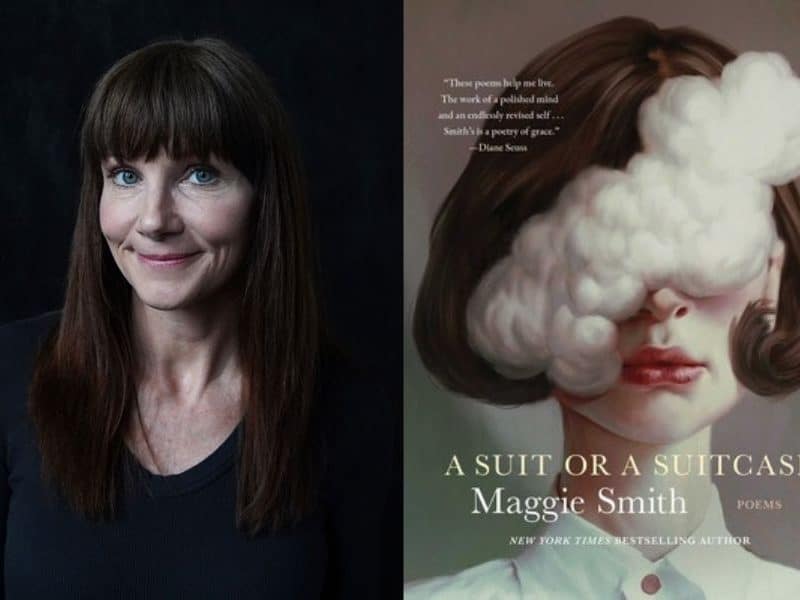
Maggie Smith is content not having all of the answers
The Columbus poet’s new collection, ‘A Suit or a Suitcase,’ confronts more existential concepts such as aging, time, memory, and the durability (or not) of self.
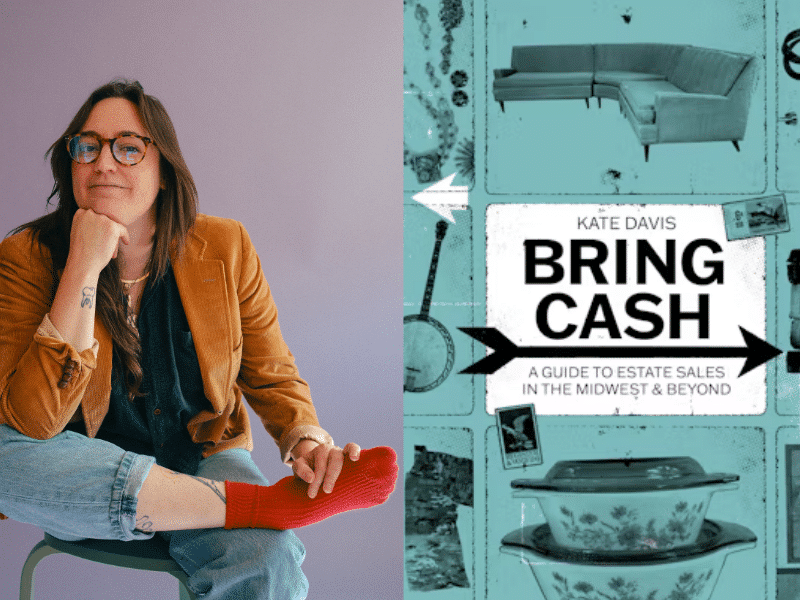
Go estate sailing with Columbus author Kate Davis
‘Bring Cash: A Guide to Estate Sales in the Midwest and Beyond,’ out now, serves as both a how-to guide for those new to the pastime and an endearingly rambling love letter to the people, places, and events that helped to nurture the passion in Davis.
Marcus Jackson finds beauty in life’s simple things
The Columbus poet, who will read this week as part of ‘Rhapsody & Refrain’ at Streetlight Guild, addresses a range of big ideas in poems where the language is frequently stripped to the studs.