
Ohio’s Recovery: The past, present, and future of the overdose crisis
Fewer people are dying from overdose, but the policies and the social determinants of health did not vanish.
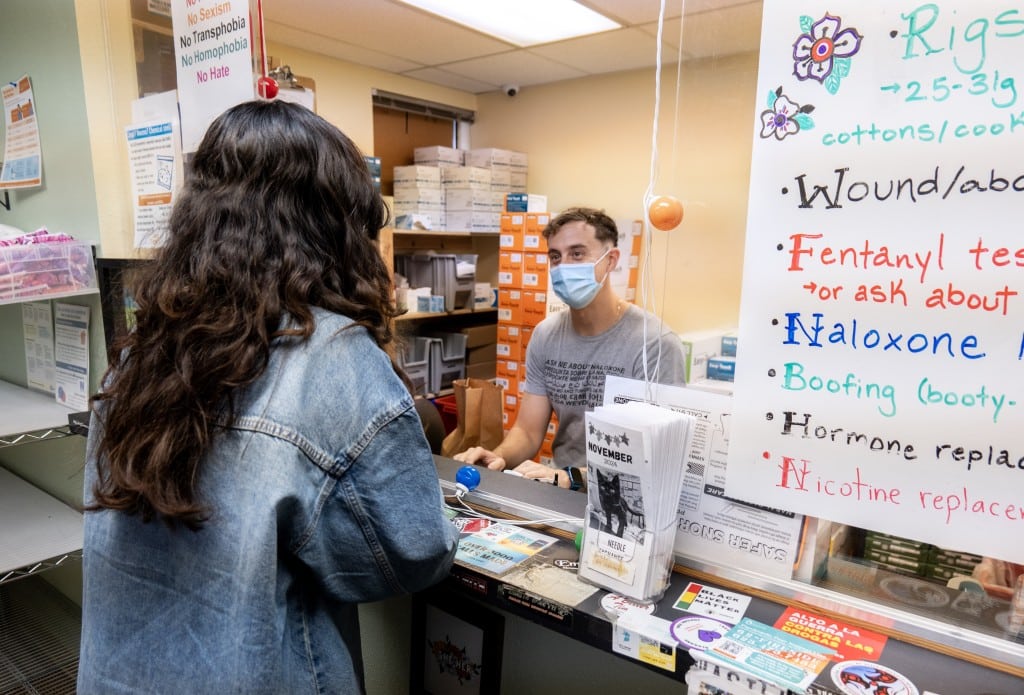
Ohio’s relationship with and response to substance use has always obscured fundamental human rights problems.
Alcohol prohibitionists were fueled as much by racism and xenophobia as they were by religious zeal. The effects of the drug war have impacted Black and Brown people and poor people more than anyone else. Methamphetamine use is a way to stay awake while working multiple shifts or when rough sleeping. And voters approve access to cannabis and then legislators try to limit it.
The surge in opioids that began in the late-1990’s was as much about lack of adequate health care as it was about shady “pill-mills.” When access to pills slowed, there was greater access to heroin and then fentanyl, and then a rise in blood borne diseases. The subsequent sluggish rollout of syringe service programs in Ohio – and an outright ban in Licking County – was rooted in stigma and not science.
A donation powers the future of local, independent news in Columbus.
Support Matter News
Now there is a drop in overdose deaths, with numbers falling to a level not seen since before the pandemic. The decline is significant enough it has even led to increased life expectancy in the United States.
An avalanche of stories and position papers suggest a range of possibilities. Research published in Science suggests that a Chinese government crackdown on sales of fentanyl precursors in 2023 led to the decline. Others cite harm reduction efforts, or that some cartels banned production of fentanyl, or shifts in drug culture among young people.
All of this belies the fact that we still lost more than 80,000 Americans to completely preventable deaths in 2024.
Fewer people are dying, but the policies and the social determinants of health did not vanish. The drug war persists. Federal spending cuts will harm rural hospitals in many of the places where opioids were most dispensed. Federal agencies are not funding lifesaving harm reduction. And grassroots harm reduction workers and those who work to support recovery worry that funding could be cut at any moment.
One of the most dangerous things about America’s relationship with drug use is the co-occurring social stigma associated with addiction and recovery – deeply held beliefs rooted in moralizations that are often used as cudgels and as frameworks for bad policies.
An effort to amend Article 1 of the state constitution would prevent local and state governments from discriminating against Ohioans. Backers are collecting signatures to get the measure on the ballot.
The proposal includes language that prohibits discrimination based on “race, color, creed or religion, sex, sexual orientation, gender identity or expression regardless of sex assigned at birth, pregnancy status, genetic information, disease status, age, disability, recovery status, familial status, ancestry, national origin, or military and veteran status.”
Recovery status.
The inclusion of that language feels stunning.
Lis Regula, executive co-chair of Ohio Equal Rights, said in a phone interview last week that anyone, regardless of political affiliation, could have a substance use disorder.
“Addiction doesn’t discriminate,” Regula said. “But people should not live in fear because of the lack of protections.”
The amendment is meant to protect people from discrimination in education, employment, housing, healthcare services and health insurance, public spaces and accommodations, state records, and legal identification.
For example, Regula said, a landlord shouldn’t be able to discriminate against you if you go to 12-step meetings.
It’s just two words. But maybe it is the beginning of a conversation about recovery and what that means not just for individuals in Ohio, but for the state, for our communities.
Substance use disorder is not a fixed state; it does not have to be forever. Recovery is possible, and there are many people in many stages of that journey.
Recovery for Ohio is also possible. That kind of recovery could mean many things. For one, it could mean something like a truth and reconciliation commission to address the overdose crisis, an acknowledgement of how it happens and what policies could prevent more deaths.
Recovery means a return to, a re-becoming, a restoration of health. Recovery can mean healing, mending, remedy, resolution. The word itself has Anglo-Norman and Middle French roots. One of the origin words is recouvré which means “making good a loss.”
We’ve had so much loss. It’s time to make good.
Author

Related Articles

The billionaire-backed think tank that wants to change harm reduction and homeless policy
Joe Lonsdale’s Cicero Institute contends that we can arrest our way out of the housing crisis, and that states must enforce laws ‘prohibiting open drug use, urban squatting, camping, and loitering.’
Opinion: You can’t talk about Issues 8 and 9 without race
A problem with the discourse around these issues is that it isn’t being completely honest when it comes to race. Not publicly, anyway.
Opinion: Trifectas are only good for racing and the lottery
The legacy of Ohio’s Republican Party is corruption, scandal, and culture wars. Our votes could put an end to their occupation of state government.