
The only weekend march that mattered
Less than 24 hours after a dozen or so masked Nazis walked the streets of the Short North on Saturday, Brian Winston, president of 100 Black Men of Central Ohio, helped lead a counterdemonstration meant to reclaim power and shift the narrative.
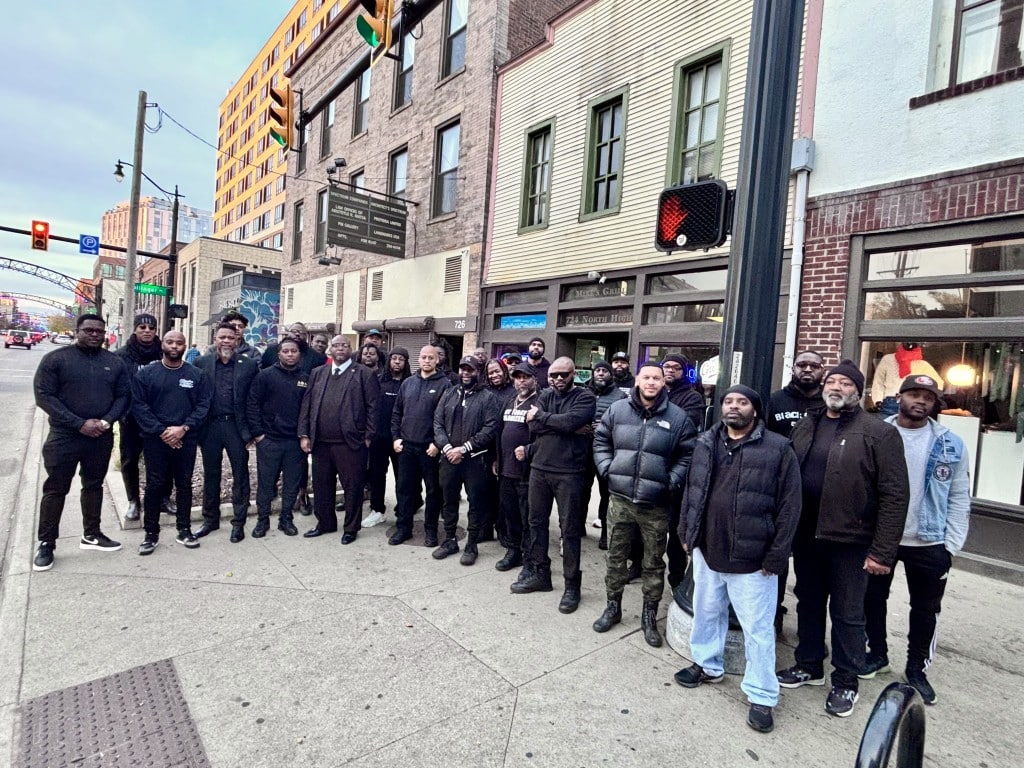
Growing up on the South Side near the intersection of Parsons and East Livingston Avenues, Malcolm White sometimes felt like parts of Columbus were closed off to him. But as White got older and began staging events such as Orange Soda and 614 Day, he began to reclaim those places that once felt forbidden, and in particular the Short North neighborhood.
“That’s where my career really started, when I was working on Wall Street, when we created 614 Day, when I was running FlyPaper. … The places where I really found freedom,” White said in mid-November, joined by Columbus attorney Sean Walton and Brian Winston, president of 100 Black Men of Central Ohio. “We tore down those walls and it felt like there was nowhere in the city I couldn’t go.”
On Saturday, these same streets became the staging ground for a group of a dozen or so masked Nazis, who marched together carrying flags emblazoned with swastikas and making racist chants, attempting to stake their claim on the place where White first uncovered a real sense of self. And White, for one, wasn’t having any of it. “I was like, ‘Nah, not today,’” he said. “They don’t get to own that story, right? They don’t get to own that block.”
A donation powers the future of local, independent news in Columbus.
Support Matter News
Spearheaded by Winston, who called upon White, Walton and other Black leaders to help rally members of the community, a counterdemonstration followed on Sunday, during which roughly 30 Black men walked the same route traversed a day earlier by the Nazi collective.
“I think with myself, it was just making something happen right now,” said Winston, who watched in horror with others in Columbus as videos of the Nazi march began to flood social media. “A lot of times we wait, let things sink in, and then say, ‘Hey, this is what we want to do.’ And I think this was just such a seed of hate, of ignorance, that it had to be right now. We had to make that statement and make sure they saw that, because you did this yesterday, we’re going to be right here today.”
While the images from Saturday were upsetting, none of three were shocked by what took place, with Winston sharing that his initial reaction fell along the lines of “here they go again.” “We live in a society where racism doesn’t take a day off,” he said.
This type of activity has become increasingly familiar to Columbus. In May 2023, the Nazi group Blood Tribe demonstrated outside of a drag brunch at Land-Grant Brewing Company in Franklinton. The city is also hometown to one of the world’s most notorious white nationalists, Andrew Anglin, who founded neo-Nazi site the Daily Stormer while living in suburban Worthington. And just last year, Christopher Brenner Cook, a Hilliard native, was sentenced in a white supremacist plot to attack the nation’s power grid with the aims of sparking a race war.
Paul Becker, an associate professor of sociology at the University of Dayton whose research focuses on right-wing extremism, said earlier this year that the focus hate groups have placed on demonstrating locally could be a byproduct of Ohio’s political transformation, which has seen it trend from a purple state into an overwhelmingly red one. This, he said, creates natural points of tension around traditionally Democratic strongholds such as Columbus that these groups can then attempt to exploit. “There are a lot of flashpoints that happen [in Columbus],” he says, “and all of those things are ways for [extremists] to get people involved.”
Sean Walton, currently running for a leadership role in the Columbus chapter of the NAACP, first viewed the images from Saturday’s Nazi demonstration while on a work trip to Houston, his initial fears rooted in the helplessness he felt in being unable to protect his family from a distance of more than 1,150 miles away. On an early Sunday morning flight to Columbus, Walton gathered strength as he traded text messages with Winston and others, solidifying plans for the counterdemonstration, which kicked off with a meeting at the coworking space Ground x Grind, where the group members candidly addressed their fears and their reasons for being present before taking silently to the street.
“And it felt powerful, it felt like home,” said Walton, who also released a statement calling out “the hateful rhetoric of white supremacy” and challenging local elected officials to take “more impactful action,” including an investigation into the members of the Nazi group and the actions undertaken by them on Saturday. “It felt like we were reclaiming the streets we were walking with dignity. And despite the fact that we were a group of Black men marching in all black, the people we came across were not afraid of us, because our spirit was one of love.”
In terms of the optics, the two demonstrations could not have diverged more. While the Nazis wore masks and traveled to the Short North piled together in the back of a rented U-Haul cargo van, Sunday’s marchers arrived by car, bus and on foot, and then proceeded to walk with their faces purposely uncovered.
The three interviewed also noted a difference in terms of the response from police when compared with other demonstrations (a 2020 study showed police are three times more likely to use force against left-wing protesters). While the Nazis were briefly detained after officers stopped their cargo van near West Goodale Street and State Route 315, they were allowed to proceed freely. And on Monday, Columbus police released a statement saying that while video evidence showed the Nazis had deployed pepper spray, “to date, probable cause has not been established to make any arrests.”
“And I hate to admit it, but if that had been a group of Black men in a U-Haul, I guarantee we’d have been detained for at least a day,” Winston said.
The three also acknowledged the challenge local authorities face in protecting the freedom of speech – especially in those instances where the views being expressed are abhorrent – while also guarding Columbus citizens against menacing, hate speech, and, in the case of pepper spray being deployed, physical attacks. “It’s calling on them to do what they’ve pledged to do, which is protect and serve,” said Walton, who challenged city leaders to work with established community organizations such as Zora’s House and Black Men Build to find better ways to address future demonstrations. “It’s not just looking at it as, ‘Okay, there’s a First Amendment issue here,’ but understanding that the language they’re using is inciting violence. And I think you have to get tough on that.”
Beyond that, White said it’s also incumbent on the larger Columbus community to take a more proactive stance to stomp out hate in those moments when it surfaces, particularly as we enter into a political era where these types of groups again feel emboldened.
“A lot of people pulled out their phones when the Nazis were walking, like, ‘Yeah, I can’t believe this is happening,’” White said. “And I’m like, ‘You’re there. There are other things you could do.’ And I get that you don’t want to put your body in harm’s way, but it also can’t just be on the minorities in any community to speak up about the issues that affect them. It’s not enough to put a Black lives matter sign in your yard. It’s not enough to like and share. I’m not somebody who normally goes to marches or protests, but I do find other, meaningful ways to contribute. … And right now, I feel like it’s the responsibility of every single person who felt something [this weekend] to find their own ways to show up.”
Author

Related Articles
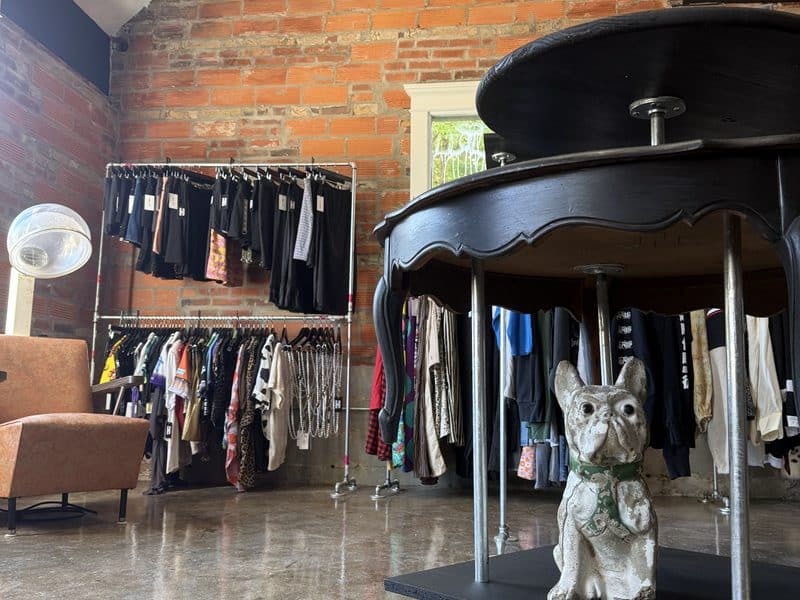
Ripped to Shreds is ready to hit the runway
The new resale shop, created in partnership between artist and musician Courtney L. Hall and Used Kids owner Greg Hall (no relation), will celebrate its grand opening on Sunday, Oct. 11.
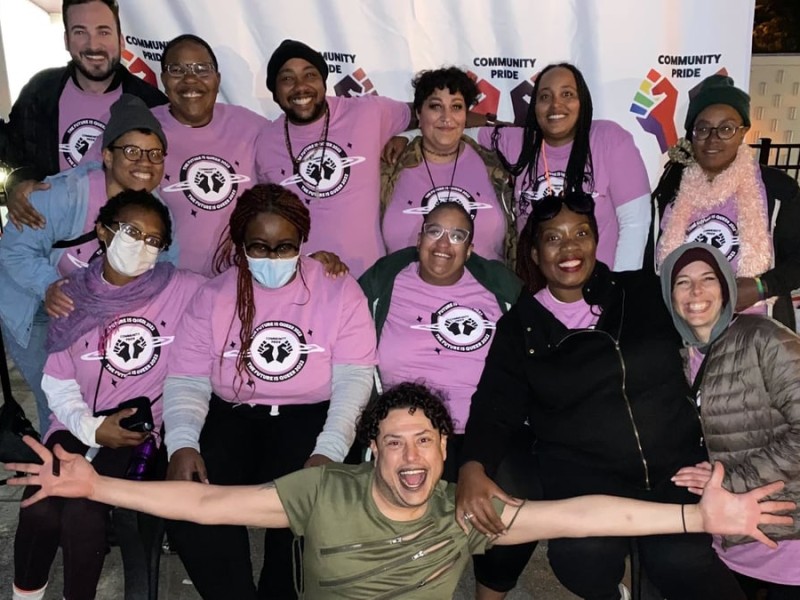
Community Pride returns with a new urgency
Now in its ninth year, the volunteer-run festival takes place at Mayme Moore Park on Saturday, Oct. 10.
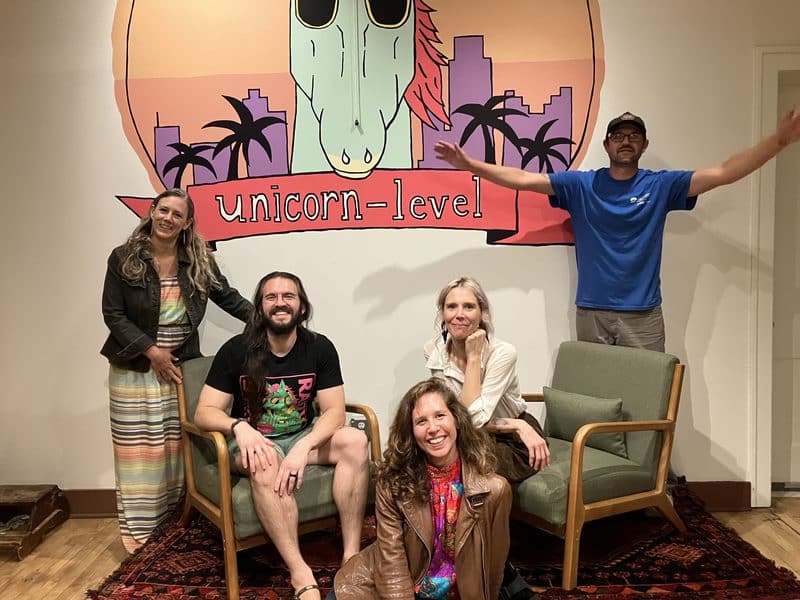
Two Dollar Radio HQ reopens with an expanded ownership group and a similarly expanded vision for the future
‘I think a big part from opening was to give authorship of the space to people with good ideas, to open the doors to people to try different things.’