
Trek Manifest emerges in the light with ‘The Greatest Story Finally Told’
The Columbus rapper takes a more inward turn on his new album, which he’ll celebrate in concert alongside the AYE-1 Band at Summit Music Hall on Saturday, Nov. 23.
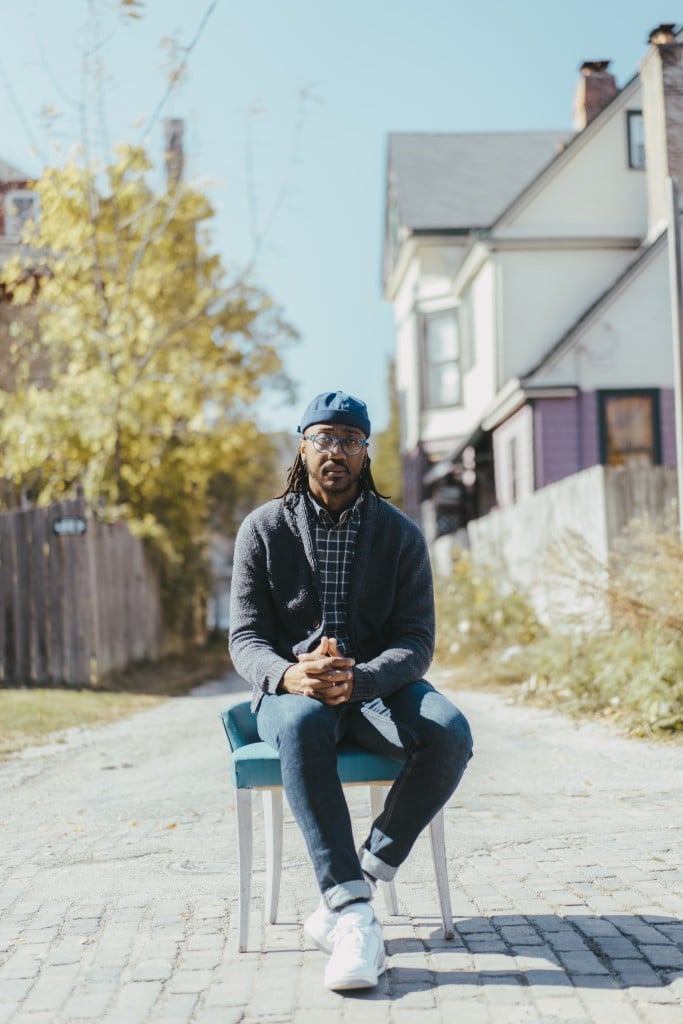
In recent years, Trek Manifest’s releases have painted the picture of someone figuring out who they are in navigating the outside world in the aftermath of transformative loss, the songs on albums such as Everything’s Personal, from 2022, carrying the weight of grief the Columbus rapper carried with him following the 2019 death of his mother.
With new album The Greatest Story Finally Told Vol. 1, Manifest turns the camera inward, the songs focused not on external expressions but rather on making peace with his inner-child, the challenge of holding to faith amid turmoil, and the hard work required to build oneself back up brick-by-brick after being reduced to rubble. Indeed, when the rapper declares that “the old me is dead” on “Fleeting,” a track that falls near the end of the album, it rings as an acknowledgment that new beginnings are possible even in the aftermath of great loss.
“‘Fleeting’ is almost like slowly walking through the tunnel, like, oh, there is a little more light,” said Manifest, who will celebrate the album’s release in concert at the Summit on Saturday, Nov. 23, supported by the AYE-1 Band. (The record releases digitally on Tuesday, Nov. 26.)
A donation powers the future of local, independent news in Columbus.
Support Matter News
The solitude that ripples throughout The Greatest Story is in some ways a byproduct of the album’s creation, with Manifest often working on tracks while isolated in a makeshift studio set up in the basement of his home. The rapper noted that this is the first project in years where Soop, his longtime friend and producer, didn’t “touch a knob” in the control room. “And that’s my friend, my brother, the godfather to my kids,” Manifest said. “Making this album, things were very isolated. I really didn’t have any hands in it. I didn’t have any people to bounce ideas off of. And normally I might be like, ehh, but with this it was okay, because nobody could bring out these stories and how I wanted to tell them more than me.”
This internal search fueled Manifest’s exploratory approach in making the album, leading him to experiment with less-traditional beats and to audition a variety of cadences. On “There’s More Than One Way Up,” which unfolds atop a spacy, atmospheric soundscape, the rapper’s vocals serve as the percussive element, his consonants snapping as sharply as snare drum hits. Then there’s “Death Wish,” where he drops double-time lines, rapping like a man consumed with the idea that time is running short. Even the song’s chorus serves as a rejoinder to Manifest’s accelerated pace, a soothing voice cautioning him to “just take [his] time.”
“Prodigal Sun,” in contrast, finds Manifest flitting from conversational, sing-song vocals to a Southern-fried, Dungeon Family-esque cadence. The track, arguably the album’s emotional epicenter, comes across as the rapper’s dark night of the soul, Manifest wrangling with the various ways his recent losses challenged his faith. “Should I love you or hate you?” he offers at one point, addressing God directly.
“It was like, you literally took the two most important people in my life, but you still want me to love you and give you all this praise,” Manifest said. “And, ultimately, that’s what ‘Prodigal Sun’ is. He wants me to come home, but I’m still trying to figure things out over here. It’s just that gray area. People will tell you, ‘No, it’s black and white. There’s no gray area.’ But I was in the gray area, and I was trying to get more locked in.”
The rapper said he emerged from this internal crisis strengthened in his beliefs, his faith journey in many ways mirroring the personal one that has taken place simultaneously, with both therapy and the recording booth serving as places in which he has worked to reconcile past traumas and make needed peace with an inner child he had too long neglected. On “There’s More Than One Way Up,” Manifest locks in deep conversation with himself, rapping about the pronounced chip that once existed on his shoulder, the burdens of grief, and the desire to chart a different course, even if he can’t quite yet discern what form this path might take. It’s a moment that stands in sharp contrast with the album-closing “Devin’s Anthem,” which finds the musician stepping into the light unencumbered and marked by a determination to “show them the real me.”
“I had to grow personally in order to make the kind of art I’m making today,” Manifest said. “In some ways, it took losing my mother in order for me to express myself more, and you can hear that in these records. I’m not as passive as I used to be. … I had to ask myself, ‘Are you making music just to make it and hide? Or are you making it to have an impact?’”
While Manifest never answered his question, the emotional crater left in the wake of The Greatest Story Finally Told leaves little doubt as to where he landed, but also how he intends to move forward from here.
“The vulnerability is out there, and now we have to talk about it,” said Manifest, who has recorded more than 30 tracks treading this still-progressing ground that he intends to release in future volumes. “The old you is dead. And it doesn’t mean you can’t still learn from that person, but he’s done, done for, peace, bye-bye.”
Author

Related Articles
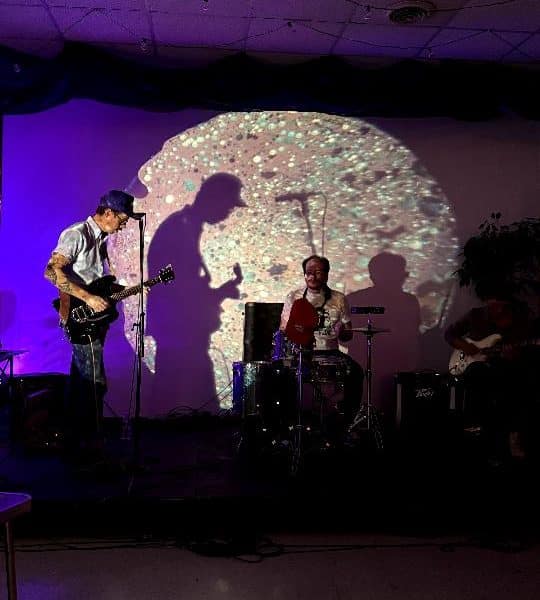
Chlorine’s Joseph Mangum lets his memories bleed through the page
The Kentucky band joins a stacked lineup at Rambling House on Thursday, Oct. 15, performing alongside the Dolphins, Son of Dribble, and Calico Boy.
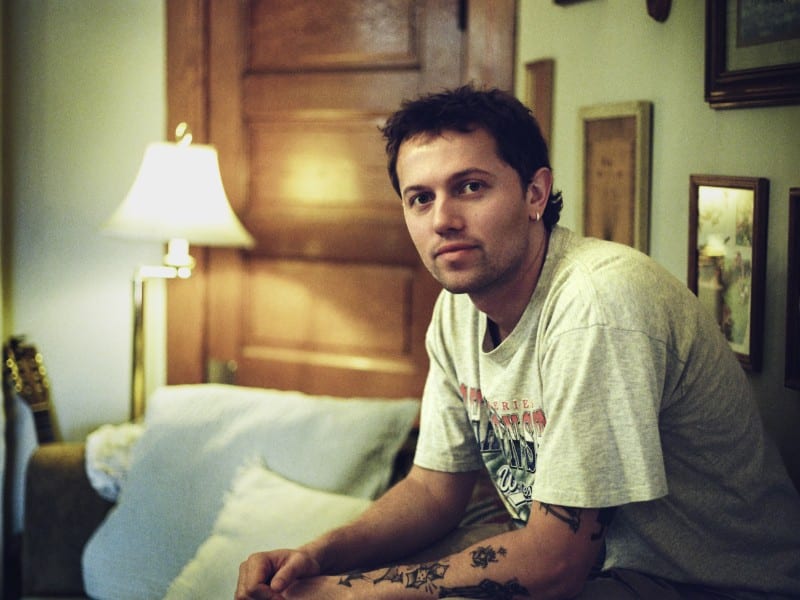
Villagerrr’s Mark Scott would gladly hop off the industry ‘Carousel’
“I was getting a little frustrated with feeling responsible for promoting the album, because putting yourself out there, it’s not the most comfortable thing for a lot of people, and it definitely wasn’t for me.”
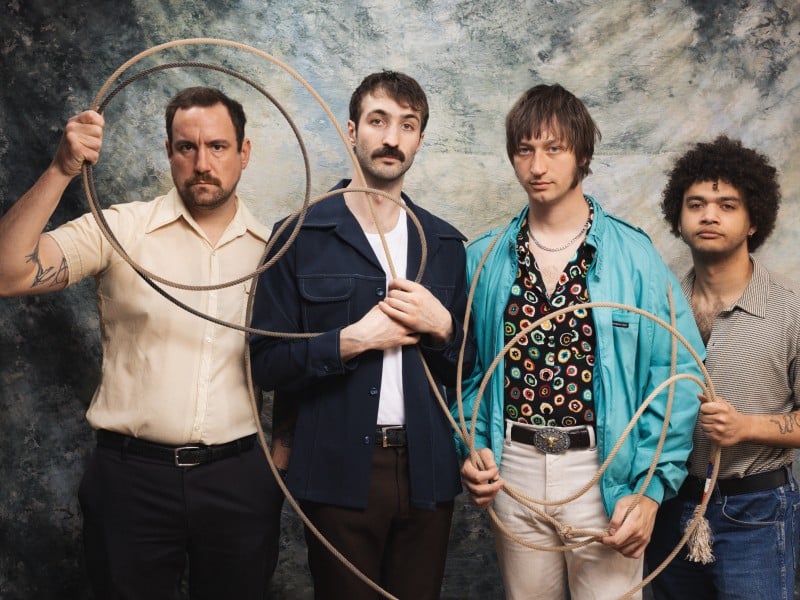
Liteweight Champion survives the fire
The Columbus rock band will celebrate the release of new album ‘Geronimo Hardstyle’ in concert at Dick’s Den on Friday, Oct. 9.