
On Development: Developing better health care and hospitals
Despite the hospital construction projects all over the state, residents across most of Ohio are no closer to health care – and many are even further removed from hospitals.
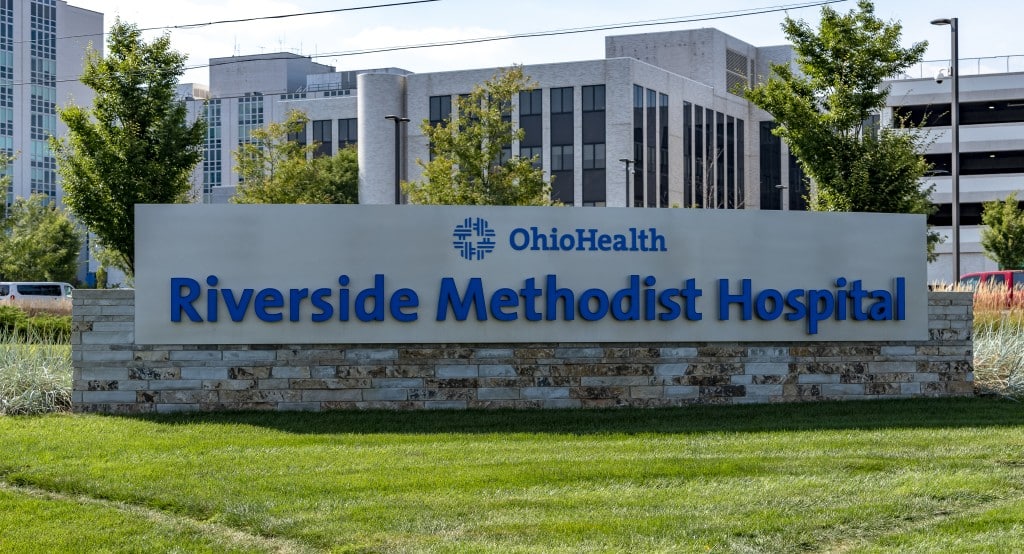
Have you ever seen an urban hospital that wasn’t under construction?
Whether it’s a new hospital wing, parking garage, state-of-the-art exercise facility, new offices for doctors, or a $2 billion, 26-story medical center named for a local billionaire, it seems every major hospital in the country is in a perpetual state of construction of some kind.
The Columbus Dispatch published a lengthy story in March on “the hospital building blitz” and the billions of dollars being spent on construction of new facilities by all four hospital groups based here: Ohio Health, Mount Carmel Health System, Nationwide Children’s Hospital, and Ohio State University Wexner Medical Center. The story said each group seeks to grow in a way that meets the region’s population increases. But none would share what metrics they used in planning for expansion.
A donation powers the future of local, independent news in Columbus.
Support Matter News
The construction boom is not limited to each group’s main Columbus hospital. OSU and Ohio Health, especially, have added localized outpatient facilities throughout suburban Columbus – sometimes across the road from each other, as is the case on Hamilton Road near New Albany. Ohio Health and OSU are also neighbors in Dublin.
Ohio’s 32 Appalachian Counties? Not booming. Wealthy suburbs are rife with medical facilities, while the low-income rural areas that make up much of the state are becoming health-care deserts. Even in regional cities and mid-sized county seats, small local hospitals (many of them purchased by large hospital groups in large cities) often must send patients to the larger urban hospitals for treatment. The cost of the transfer is not cheap.
Last November, staff at Mercy Health hospital in Urbana told the mother of a 15-month-old toddler from nearby Mechanicsburg that the child needed to go to Dayton Children’s Hospital and that the mother could not drive him there, saying he needed an ambulance. The bill for the 39-mile, siren-free, low-speed ambulance ride was $9,000. (Lawyers and insurance companies and hospitals will sort it out and ultimately reduce the charge, while stressing a mother who just wants to care for her son.)
The new wings and special facilities forever under construction at all major hospitals is striking enough among private hospital groups, but it’s especially grating coming from the hospital affiliated with Ohio’s main land-grant university. There are responsibilities that come with land-grant status. Traditionally, those responsibilities have been met by county Extension agents across the state, who share the latest research in effective agricultural practices and home-economics programs.
Perhaps the closest thing to OSU “Health Care Extension” is at Ohio State East Hospital in the King-Lincoln Bronzeville area where the hospital has sought to be ingrained into the East Side neighborhoods it serves. But OSU, as Ohio’s first land-grant university, could do much more for the state as a whole.
For the most part, Americans are stuck with a messy hodge-podge of public and private hospitals, insurance companies, pharmaceutical giants, and an ever-growing legion of rapacious middlemen that we preposterously call a health-care “system.” In such an environment, an institution such as OSU might have the capacity to focus more on statewide comprehensive care than competing for profits with private hospital groups.
Could the East Side model in Columbus morph into some kind of statewide OSU Health Care Extension system in each of the state’s 88 counties, with special attention to rural and underserved communities? It would be a revolutionary change. But Columbus, the state, and the rest of America are desperately in need of a new model for providing health care to the people. It could mean more than increased access for rural residents, but also good experience for medical nursing students working in rural areas – where many of them may be from to begin with.
Despite the hospital construction projects all over Columbus, Cleveland, Cincinnati, Toledo, and Dayton, residents across most of Ohio are no closer to health care – and many are even further removed from hospitals.
Maybe the idea of a statewide OSU Health Care Extension system is not worth much more than the napkin I wrote it on. But at least it’s an idea – perhaps a conversation starter – that might cost less than $2 billion. Ohio elected officials, the heads of large public universities, and leaders in the health-care industry appear not to have gotten even that far.
But, clearly, the current edifice complex and commodification of health care is doing little to make Ohio a healthier place, and in fact has been harmful to people in communities that have lost hospitals and clinics.
Brian Williams is a semi-retired journalist and planner
Related Articles

The billionaire-backed think tank that wants to change harm reduction and homeless policy
Joe Lonsdale’s Cicero Institute contends that we can arrest our way out of the housing crisis, and that states must enforce laws ‘prohibiting open drug use, urban squatting, camping, and loitering.’
Opinion: You can’t talk about Issues 8 and 9 without race
A problem with the discourse around these issues is that it isn’t being completely honest when it comes to race. Not publicly, anyway.
Opinion: Trifectas are only good for racing and the lottery
The legacy of Ohio’s Republican Party is corruption, scandal, and culture wars. Our votes could put an end to their occupation of state government.