
On Development: Another way of looking at Franklinton
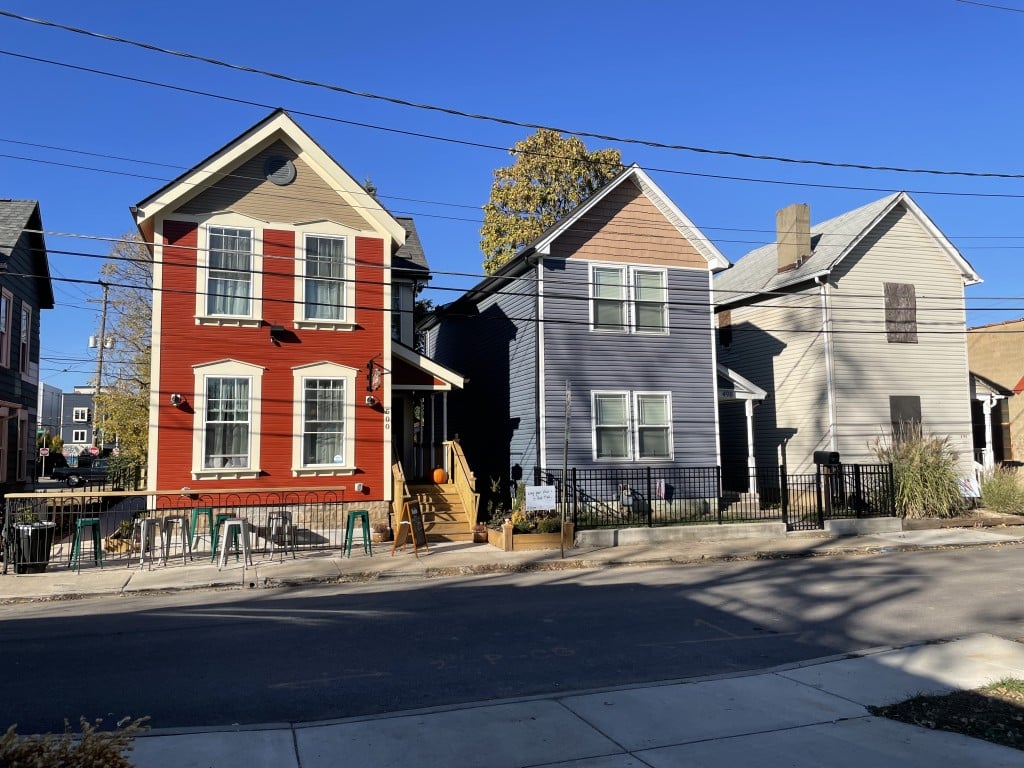
It would be easy for Jim Sweeney and Blake Compton of Walnut Street Partners to level the dozen or so remaining worker houses on a short, narrow block of Walnut Street and put up a couple of typical, boxy “five-over-ones” with tax abatements. But that’s not their vision.
Don’t call it Gravityville vs. Sweeneytown.
First of all, Jim Sweeney has no bone to pick with Kaufman Development or the company’s growing complex of “Gravity” branded apartment and office buildings along West Broad Street.
Second: Sweeney has no intention of slapping his name all over his planned redevelopment of a short, narrow stretch of Walnut Street in Franklinton.
A donation powers the future of local, independent news in Columbus.
Support Matter News
(Except for “Sweeney’s Walnut Street Tavern,” which opened this summer in a 130-year-old former house at 500 W. Walnut St. If the joint has the feel of hanging around in somebody’s living room, it’s because it used to be Sweeney’s living room.)
But he hopes his vision for this one little street will help shape the broader neighborhood – in a complementary way. His tavern is the first of about a dozen small houses that would become small shops and restaurants focused on arts and music. He hopes residents and developers will better appreciate the heritage of Old Franklinton, with its narrow worker houses scattered amid large and small manufacturing businesses, and in particular its resilience after the great flood of 1913.
“We could honor the heritage with murals, art and photographs from the flood — but those can be painted over,” said Blake Compton of Compton Construction, Sweeney’s comrade at Walnut Street Partners. (Compton Construction is one of several Community Match Partners supporting Matter News’ ongoing NewsMatch fundraising campaign). “These buildings are the living history … honoring the times. They’ll have new uses but the historic streetscape will be much the same. We want to put enough money into these old houses that you can’t tear them down.”
The 1913 flood, and floods in 1937 and 1959, triggered almost a century of disinvestment in what was known as “the Bottoms.” Even before completion of the Franklinton floodwall in 2004, Sweeney, as executive director of the Franklinton Development Association from 2002 to 2016, knew investment in the neighborhood was coming.
In his director’s role, he oversaw development of 150 new units of affordable housing scattered around the neighborhood. He also saw the arts as a tool to guide future investment, and was a founder of the Franklinton Arts District.
“This was a diverse, prosperous community,” Sweeney said of the district’s heritage. “We want this to set the stage for other [developments in the area]. We’re going to make our money, but we’re going to do it in a different way.”
That means making a living rather than making a killing. It would be easy for Sweeney and Compton to level the dozen or so remaining worker houses on the block and put up a couple of typical, boxy “five-over-ones” with tax abatements. But that’s not their vision. At the same time, they recognize the necessity of the larger residential projects such as Gravity, located a few blocks to the north, and the River & Rich mixed-use development a block or so south and east.
The artsy revitalization got a boost when Los Angeles-based Urban Smart Growth bought 400 West Rich in 2009 and started renting artist studios in 2011, though tensions with the resident artists have increased in recent years. The company also owns the buildings that house the former Vanderelli Room and Chromedge Studios, along with a large vacant, grassy parcel at the southwest corner of Walnut & McDowell (site of Scrawl, Franklinton Fridays, and other arts events).
Despite the addition of large projects such Gravity, River & Rich, and the Peninsula complex of Downtown Columbus Inc. just west of COSI, Sweeney estimates “only one quarter of the developable land in east Franklinton is spoken for.”
That gives Walnut Street Partners a chance to incrementally repurpose a small historic section that can be a community beacon for the projects of other developers. Much of Compton’s work has focused on legacy projects that augment old buildings for new uses – mostly office and commercial, including a lot of breweries and taverns in Franklinton, Italian Village, and Schumacher Place, among other historic neighborhoods.
True community comes from the bottom up – the people who live in a place come to define the community organically. But in the business world, “community” has become sales jargon – a business plan, a self-contained, top-down concept. A corporation’s “community” often refers to the tenants and their “amenity decks,” gyms, and yoga studios.
There are so many challenges in redeveloping a city for future growth: new vs. old; affordable housing vs. market rate; commercial vs. residential; building units vs. building community.
Ordinarily, it’s best to preserve any existing affordable housing, like the old houses on Walnut Street. But it’s only a dozen homes that will be sporadically converted to small businesses, while hundreds – even thousands — of other homes are coming. And, most importantly to Sweeney, the buildings will remain – and they will be at the heart of the entire neighborhood.
And they may show other developers in Franklinton – and elsewhere in Columbus – the benefits of building the future on the past.
Brian Williams is a semi-retired planner and reporter
Related Articles
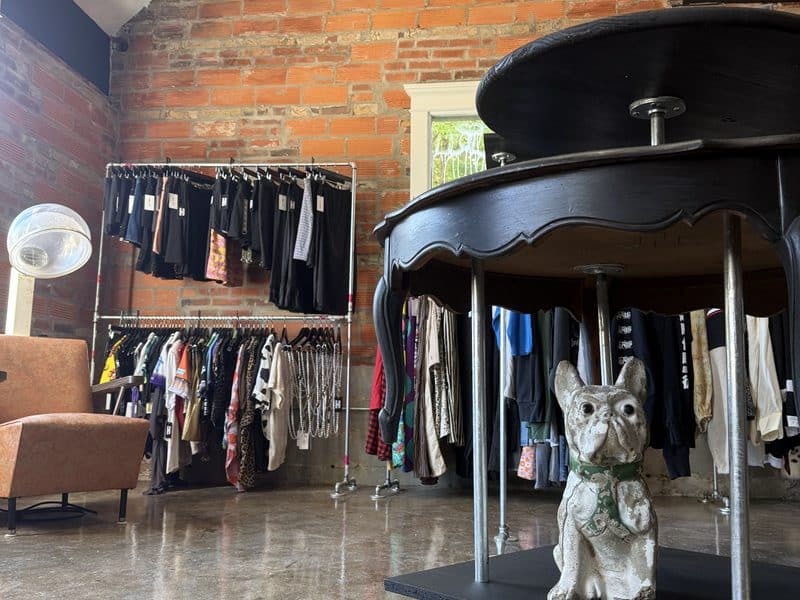
Ripped to Shreds is ready to hit the runway
The new resale shop, created in partnership between artist and musician Courtney L. Hall and Used Kids owner Greg Hall (no relation), will celebrate its grand opening on Sunday, Oct. 11.
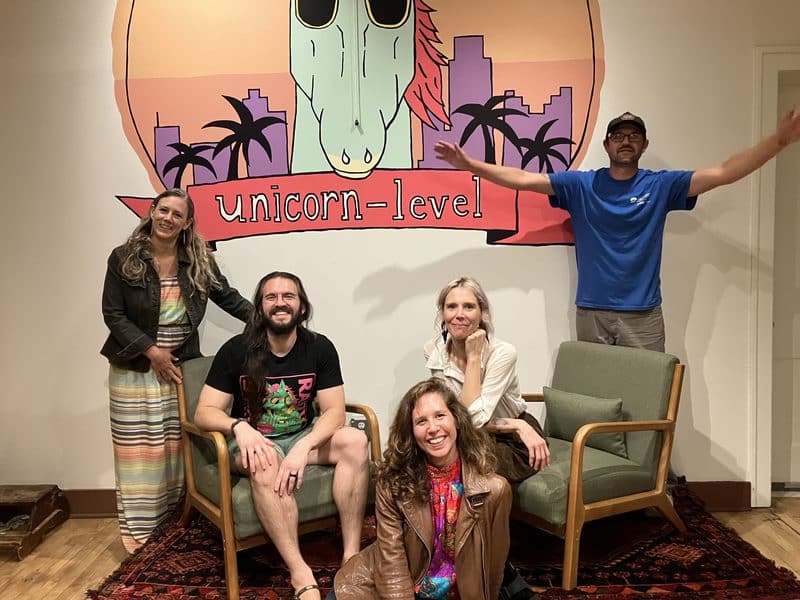
Two Dollar Radio HQ reopens with an expanded ownership group and a similarly expanded vision for the future
‘I think a big part from opening was to give authorship of the space to people with good ideas, to open the doors to people to try different things.’
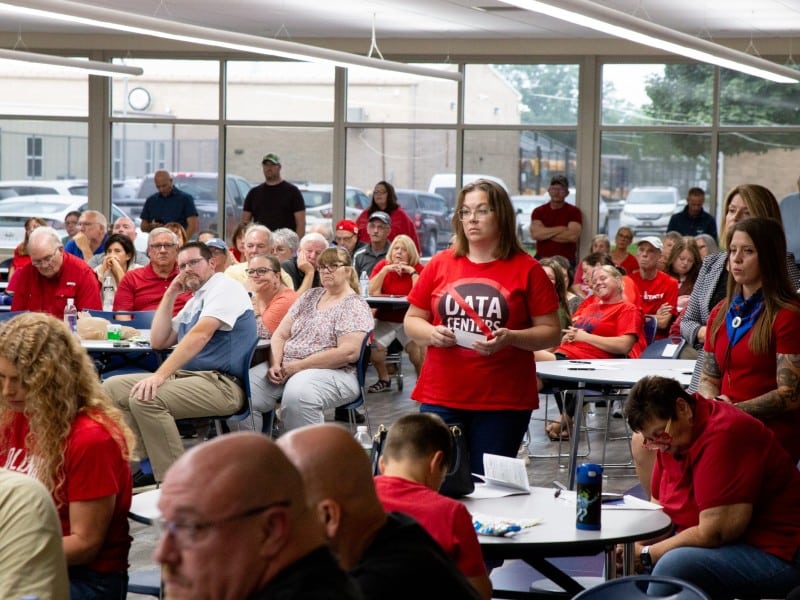
An Ohio school needs funds. It voted to cut Anduril’s tax bill, anyway
How a factory for AI-powered weapons, a data center, and a needy public school collided in rural Ohio.