
Blueprint unpacks the urgency, sense of expectation that fueled ‘1988’
The Columbus rapper will mark the 20th anniversary of his 2005 solo album in concert at Natalie’s Grandview on Friday, April 4.
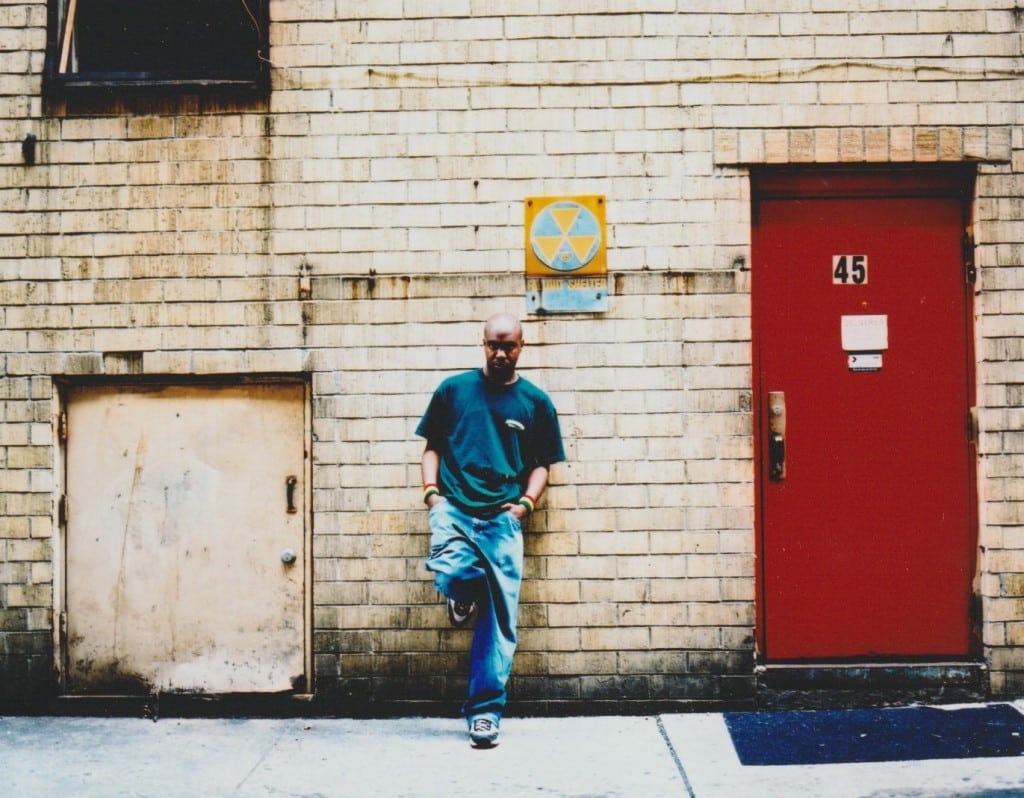
In the years leading up to the 2005 release of 1988, the Columbus rapper and producer Blueprint, born Al Shepard 50 years ago, kept an exhausting pace.
He dropped a pair of solo projects (The Weightroom and Chamber Music, from 2003 and ’04, respectively), and partnered with RJD2 for the first Soul Position album, 8 Million Stories, from 2003. The same year, he released Life Sentences, the full-length debut from Greenhouse Effect, a trio he formed in 1997 alongside Inkwel and Manifest. Then in 2004 he produced the album Celestial Clockwork for fellow Columbus rapper Illogic.
“I was just making as much shit as I could, because I didn’t know what was going to stick,” said Blueprint, who left his full-time job as a computer programmer in 2002, recalling how he used to live in an apartment just off the bus line he took to his office at the Kroger Building in downtown Cincinnati. “At that point, I think it was like, ‘If this is really what you want to do, you better be eating it, sleeping it, drinking it, breathing it.’ … There was a lot of uncertainty with being a professional artist, and I remember moving with an urgency, because I wasn’t sure if it was going to last. It was like, let me get in everything I can get in. There was never a show I turned down, never a tour I turned down. I was taking advantage of every opportunity, doing every record I could, and I think a lot of it might have been the fear that this career wouldn’t be around long term.”
A donation powers the future of local, independent news in Columbus.
Support Matter News
These fears were stoked in part by a prevailing idea at the time that hip-hop was strictly a young person’s game – a concept driven by the relative newness of the form and the reality that there were a limited number of aged practitioners at the time. “That was in our subconscious, and it definitely made us approach [the music] as though it were a short-term thing,” said Blueprint, who at the time didn’t think that rappers such as Jay-Z and Nas would still be in the spotlight and making music more than two decades later. “And once you get rid of that mindset, you start making art with the idea … that your whole life, your whole career isn’t riding on this one record, because you might not get another chance, and you might not be doing this still at 40.”
Now into his fifth decade, Blueprint continues to record and release music, including two records last year alone: the Falling Down EP and the largely instrumental Chamber Music II, the latter of which found him tapping into the sense of joy and discovery he embraced when he first started creating. At the time, the rapper lauded the sense of freedom he viewed in these early albums, saying it was this spirit that could carry him into the next 20 years of his career.
First, however, the rapper will linger on the past a little bit longer in celebrating the 20th anniversary of 1988 in concert at Natalie’s Grandview on Friday, April 4. Released in 2005, the album draws conceptual and musical inspiration from the year widely considered the be one of the most groundbreaking in the history of hip-hop, with culture shaping releases from the likes of Public Enemy (It Takes a Nation of Millions to Hold Us Back), N.W.A. (Straight Outta Compton), and Ultramagnetic MCs (Critical Beatdown), among others.
The album also exists as a document of what Blueprint described as a “transitional” time in his life, written and recorded in the wake of Soul Position’s breakout debut, 8 Million Stories, which brought with it a sense of pressure that was entirely new to the artist, and which can be heard in songs such as “Trouble on My Mind,” where he acknowledges his need to hit the bottle before hitting the stage as a means of dealing with newfound anxieties. “I never drank until I started touring. … And by about 2007, 2008, I had a real drinking problem,” said the rapper, who has now been sober for almost 15 years.
Looking back, Blueprint says the sense of expectation he felt in that moment was so acute that he had conversations with the people closest to him about walking away from music altogether. “I was like, ‘I don’t know if I should continue, because I don’t know if I can make a record better than that,’” said the rapper. “So, it was like, ‘I’m just going to quit on top. Then I don’t have to make any solo records. Then I don’t have to worry about any of this pressure. I had my time, now I can just go back to my job or whatever. I’ll just be a legend or some shit.’ And I was having these serious conversations with people.”
Instead, Blueprint opted to lean into creating something that could exist at a degree of remove from Soul Position, embracing 1988 as an opportunity to get into his bedroom recording studio and more casually unpack his day-to-day life amid a loose conceptual framework. “It allowed me to explore my influences and sort of sidestep the sense of expectation that came with Soul Position,” said the rapper, who filled the resulting album with a stream of idle boasts (“The Barry Bonds of any song you hear me on,” he offers with typical bravado on “Anything Is Possible”), slice of life vignettes (“Inner City Native Son”), and at least one song, “Kill Me First,” that remains depressingly relevant in its telling of young Black men killed by police – in this case Cincinnatian Timothy Thomas, whose shooting death inspired riots adjacent to the downtown intersection where Blueprint worked.
“I literally watched the riots happen, because they happened right on the corner where my job was, so I could look out the window and see everything happening,” he said. “I had to cross a police line, a barricade, that was blocking off the entrance to downtown. … It was really seeing the impact that [Thomas’ killing] had on Cincinnati, and everything that led up to it, because there were two other murders before him of unarmed men by police. So, by the time Tim Thomas got shot and killed by police, everybody knew it was about to blow, and something big was going to happen.”
Other songs, in turn, feel more distant. Blueprint allowed that a track like “Big Girls Need Love Too” is something he wouldn’t write nowadays, owing to both his own maturation and the ways in which society at large has progressed. But in revisiting the record, the musician continues to be impressed by the production, as well as the go-for-broke gusto he flashed then as a rapper, and which has since settled into something more sustainable.
“I was very much in prove-it mode then,” Blueprint said. “I’m at a point now where I don’t feel like I have to hit a home run every time I step up to the plate, and it’s knowing all you have to do is get your bat on the ball and you’ll get more swings. You know what I mean? It lets you stay in the game. … That’s probably what’s different about my approach now. I truly look at it as a long-term endeavor. It’s not just about owning the moment.”
Author
Related Articles
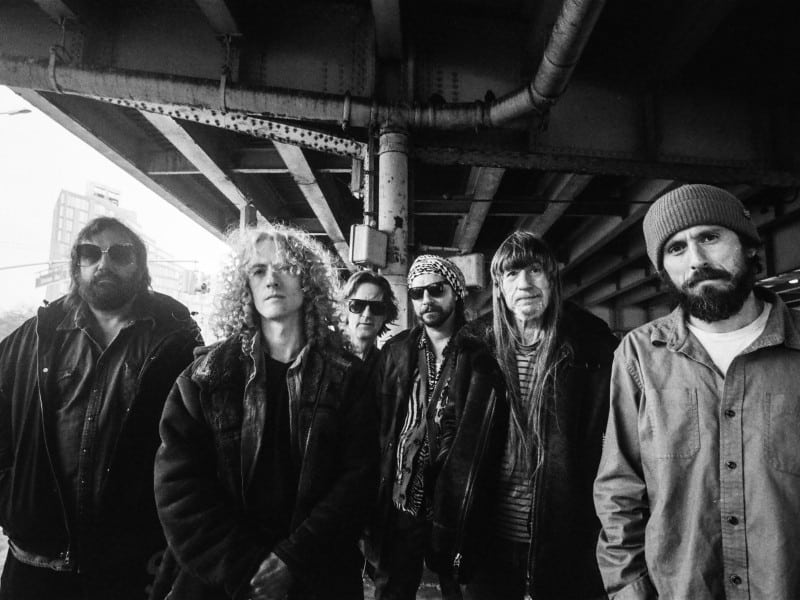
Prison finds freedom in sprawling psych-rock jams
The New York band’s current tour hits Rich Street Records on Saturday, Aug. 15.
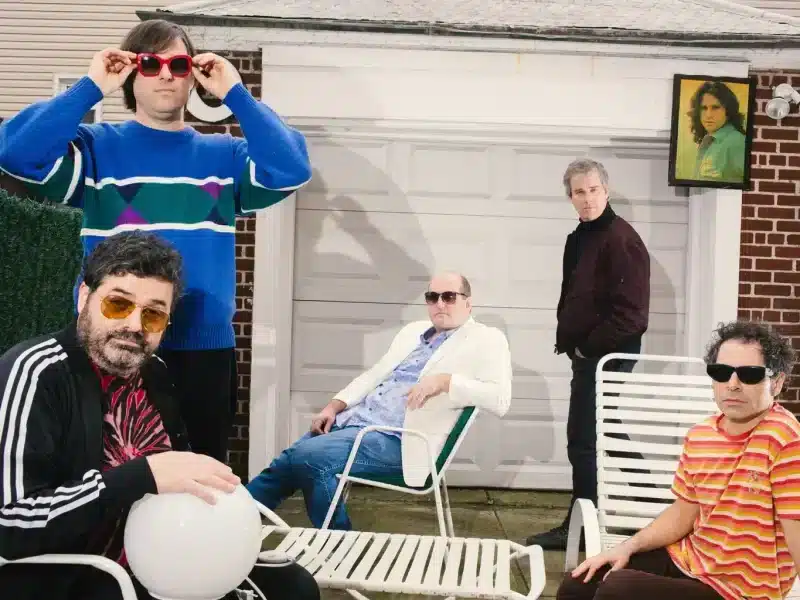
Curiosity, community continue to fuel Oneida
The long-running experimental rock band will visit Cafe Bourbon Street for a concert on Friday, Aug. 14.
Angela Autumn attempts to find heaven on Earth with ‘Believer’
The Nashville-based country singer performs a free concert at the Snow Fork Event Center in nearby Nelsonville on Thursday, Aug. 13.