
Kwame Alexander understands the life-changing power of words
The poet and New York Times best-selling author will take part in Schooled on Poetry at the Davidson Theatre on Saturday, May 3, reading alongside Columbus poets Hanif Abdurraqib and Cynthia Amoah, among others.

Poetry has long been embedded in Kwame Alexander’s DNA, the author recalling how as a child his mother would read to him works by the likes of Lucille Clifton, Langston Hughes and Nikki Giovanni – a poet who later served as a sounding board, a mentor, and a friend for more than 37 years up until her death in December at age 81.
“[Poetry] was the way I learned how to communicate, how to express myself,” said Alexander, who will take part in Schooled on Poetry at the Davidson Theatre on Saturday, May 3, reading alongside Columbus poets Hanif Abdurraqib and Cynthia Amoah, the Nashville-based rapper and poet Chris Byrd, and students from Lincoln Park Elementary School, AIMS Middle School, Walnut Ridge High School and the Arts and College Preparatory Academy. “It was a way for me to articulate and process and interpret all the different feelings I had as a boy. And of course, on the football field, or in school, or playing outside with my friends, that was not looked on as a positive thing. But that sort of became my cool. … My sport was words, and it sort of became my way to sort of form my identity.”
Alexander traced his early fascination with language back to his parents, recalling how a few times a month he’d be tasked with cleaning the family’s garage, which served as an ad-hoc library and storage space for his father’s massive book collection, stored in dozens of milk crates and numbering somewhere north of 5,000.
A donation powers the future of local, independent news in Columbus.
Support Matter News
“And one of my joys in clearing up that garage was being able to sift through all of the books. And so, I’d sit on the floor looking at the spines, seeing books like Earthquakes and Sun Rise Missions by Haki Madhubuti, or The Wretched of the Earth by Franz Fanon,” said Alexander, a New York Times best-selling author who has since contributed a number of tomes bearing his name to his own expanding pile, including celebrated children’s books (The Crossover; Rebound) a deeply poetic memoir (Why Fathers Cry at Night) and, most recently, an inspirational self-help guide (Say Yes: Find Your Passion, Unlock Your Potential, and Transform Your Life). “My parents like to joke that I was an experiment. … But this was the way they raised me. They nurtured me to appreciate words, to know that words could transform you, that words could be powerful. Maybe powerful enough to change the world and your place in it.”
There were times, of course, when he rebelled against this literary push, recalling his teenage decision to pivot from writing as he graduated high school and headed into college at Virginia Tech University, hatching plans to major in biochemistry with the aim of becoming a doctor. “And then I took organic chemistry sophomore year and said, ‘Maybe not,’” Alexander said, and laughed.
Around this same time, poet Nikki Giovanni started teaching at the university, and so Alexander enrolled in her advanced poetry class, which he now credits with rekindling his love for the written word. And it wasn’t because he excelled in the course, either. In his first go round, Alexander received a grade of C, which “really pissed me off,” he said. Intent on proving the professor wrong, he signed up for another class, receiving the same grade.
“And getting those Cs in her class, man, those were fuel,” he said. “It was like, ‘Oh, I’m going to show her. She has no idea what she’s talking about. I’m dynamic.’ And it was that interaction that sort of fueled my fire that I was going to be better, that I was going to become this thing that this renowned person was telling me I wasn’t, and that I was in fact mediocre at best. And that became my motivation, and also the beginning of a 37-year friendship.”
These earliest lessons received from Giovanni were more observational, Alexander crediting the three years he was fortunate to watch her as a student with allowing him to see how someone can make a living as a poet, and what it meant to carry that practice throughout your daily existence. It also reinforced in him a larger idea to which he was introduced by his mother, who from childhood read him works by countless famed poets, establishing a belief and an understanding that this poetic writing existed on a continuum of which he was part.
“I found my voice by getting exposed to and immersed in so many different voices, from Nikki Giovanni to Pablo Neruda,” Alexander said. “It was taking some of the heritage and history from the Harlem Renaissance, taking some of the heart and love from Neruda and the other Latin poets, taking the humor and the activism from the Black Arts Movement, and then meshing all of these things together in a way that was uniquely me.”
There’s a certain thrill to this literary exploration that remains in place these decades later for Alexander, who allowed that he can still get chills from poems that behave, as Giovanni used to say to him.
“I think the best poetry still surprises me in the way it can excite you or make you wonder, and in the way it makes you smile,” he said. “There’s just a certain feeling you get from reading a poem that really knows how to dance on the page.”
Author

Related Articles
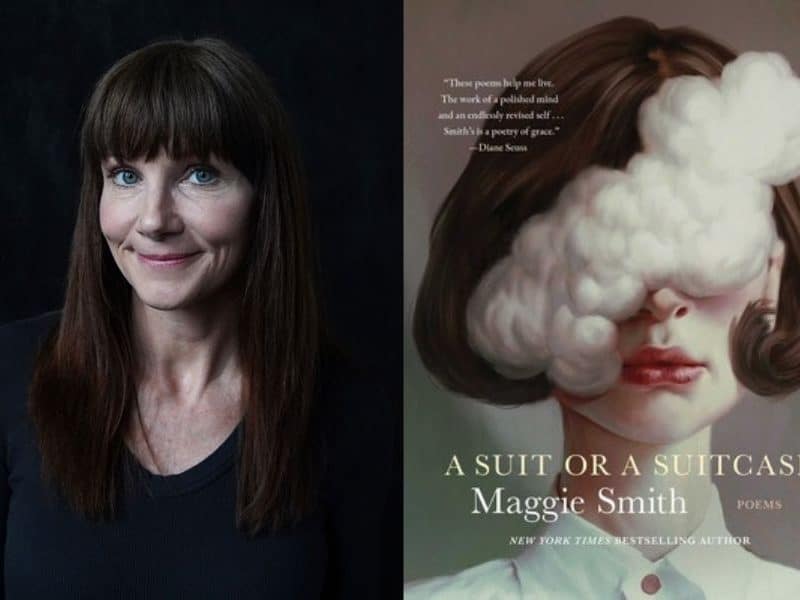
Maggie Smith is content not having all of the answers
The Columbus poet’s new collection, ‘A Suit or a Suitcase,’ confronts more existential concepts such as aging, time, memory, and the durability (or not) of self.
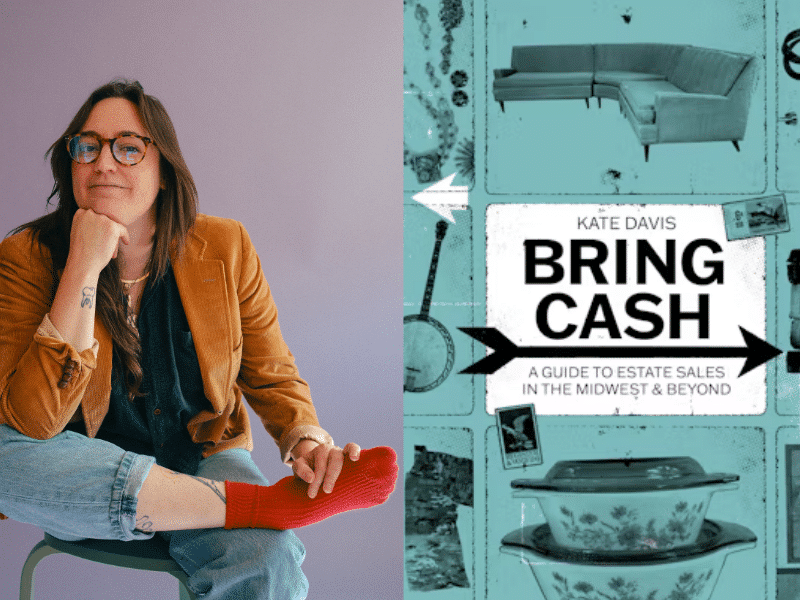
Go estate sailing with Columbus author Kate Davis
‘Bring Cash: A Guide to Estate Sales in the Midwest and Beyond,’ out now, serves as both a how-to guide for those new to the pastime and an endearingly rambling love letter to the people, places, and events that helped to nurture the passion in Davis.
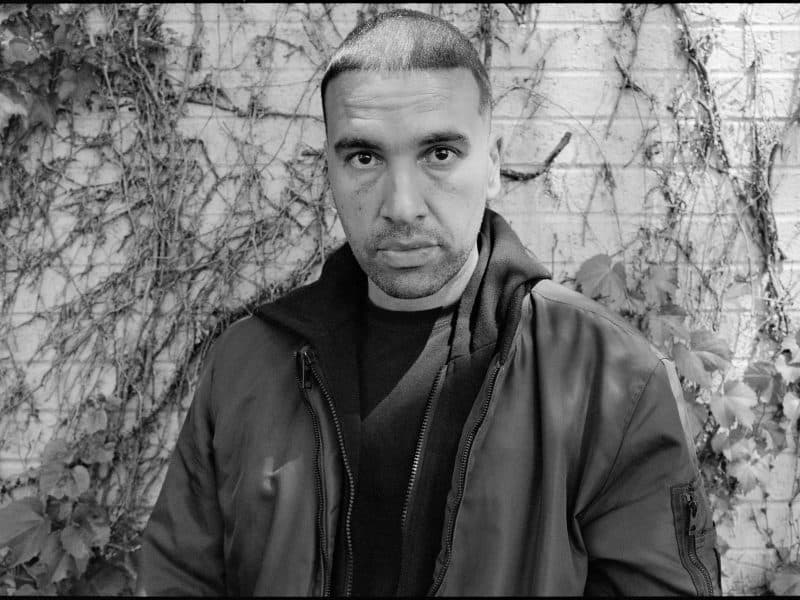
Marcus Jackson finds beauty in life’s simple things
The Columbus poet, who will read this week as part of ‘Rhapsody & Refrain’ at Streetlight Guild, addresses a range of big ideas in poems where the language is frequently stripped to the studs.