
Dana Lynn Harper dives into the past to find a new way forward
Discontent with the large-scale, colorful works with which she made her name, the Columbus artist hit pause, taking time away to reconsider the story she wanted to tell and the form it needed to take.
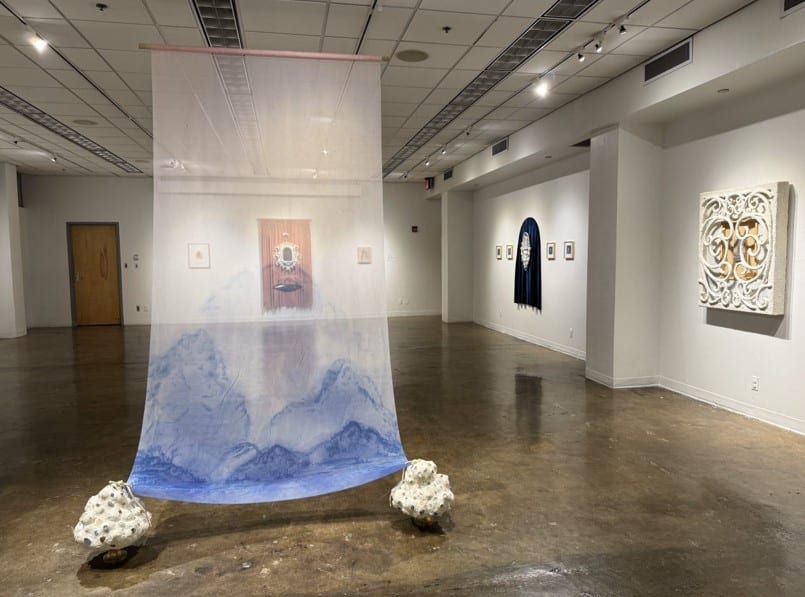
A few years back, Dana Lynn Harper entered into a period of intense self-evaluation during which the Columbus artist began to reconsider the approach she had taken to her craft in the past and how she wanted to refocus her energies moving into the future.
“I started to reevaluate things, asking, what am I doing with my art? Why am I using all of these bright colors? Why is everything abstract?” said Harper, who became further disenchanted by her experiences developing a pair of commissions for the Columbus Museum of Art and Otherworld, respectively, concerned that these projects forced her to replicate work she had done in the past rather than enabling her to explore new creative directions. “I have this really large piece called ‘bloom bloom’ … and I started to feel like everyone just wanted that piece, and they were basing this commission work off of that old work and wanting me to repeat what I had already done. And because of that, I felt like I hadn’t grown in a while.”
And so, Harper hit pause and entered into an artistic chrysalis, of sorts, taking time to explore everything from the types of materials she wanted to work with to the larger conversation she hoped the art could engage with the world. Some of these questions began to surface when the artist installed her exhibit “A Little Too Much” at the Vanderelli Room in December 2022. Harper then talked about a series of new works she had begun creating using hollowed-out eggshells, which she described as a commentary on the outsized role of motherhood in determining a woman’s worth. “It’s coming to this realization that the most influence you can have comes from sharing your story in a vulnerable way,” she said at the time.
A donation powers the future of local, independent news in Columbus.
Support Matter News
These ideas intensified in the two years Harper spent in therapy, which helped the artist to realize that while past works often explored intensely personal themes, she often embraced abstraction and bright colors as shields meant to deflect from these vulnerabilities. “In therapy, I think I realized the past work was almost always a response to feeling invisible,” Harper said. “I felt I was overlooked in my younger life, and so making these massive, colorful things was a way of being seen without drawing attention to that physical self.”
Harper described the decision to abandon a style for which she had become known as deeply unsettling, aware that her ability to make a living as an artist hinged in part on the various grants and large, project-based commissions enabled by this past body of work. But she received an unexpected infusion of courage when she started to teach a studio intensive class at CCAD around the time these concerns began to surface. Harper said the course, which focused the students intently on whatever their specific artistic discipline might be, required her to encourage the youths to embrace experimentation and play with the belief that any emerging work would reveal aspects of their truest selves.
“And I think in the process of that, I was like, you know, I’m not really doing that for myself,” Harper said. “And all of these things started to culminate where it was like, I can’t make this work anymore. It doesn’t mean anything to me. And then I got quiet for a while, and I started producing a whole new body of work that is very different.”
For Harper, this process started with an exploration of new materials, the artist abandoning the plastics she worked with in the past in favor of paper clay, a decision she made owing in part to the clay’s more sustainable, eco-friendly nature. This decision created myriad ripple effects, initially forcing the artist to reconsider her perfectionist tendencies, since paper clay is inherently rough in texture. The change in materials also allowed Harper to reconnect with the sense of discovery she experienced creating as a youngster, which in turn led her to more deeply consider the years she spent growing up in Upper Arlington. These memories then began to influence everything from the additional materials incorporated in the emerging pieces – rice, shells, and rocks reminiscent of childhood – to the deeply layered themes surfaced in the work.
“Upper Arlington is a very white, very affluent neighborhood, and I think there was always this sense I didn’t belong,” Harper said. “And I think those older, brighter works were about creating a space for myself, about becoming visible, about making a place where I could exist. And then this new work is more about, okay, what’s already there? And it’s grounding myself in a heritage that already exists and practices that have been in my family for a long time. I think before I didn’t want to be seen as somebody who had been othered, but the reality is that I have been, and this work is kind of embracing that otherness and allowing myself to exist in it and accept it and be proud of it.”

Recently, Harper posted to Patreon an in-depth look into the creation of “Garden Gate,” a richly layered, sculptural piece that centers on a photo of her great grandmother and incorporates a variety of materials that harken back both to the artist’s childhood (a backdrop created from hand-placed grains of rice) and her more recent past (an outer box created from foam she repurposed from her Otherworld commission). The piece is then overlaid with an iron gate-like form shaped from paper clay and meant to mirror the garden gates the artist encountered growing up in the north side suburb.
“The side of Upper Arlington I grew up on, they called it ‘The Golden Ghetto,’ which is so embarrassing and distasteful. But it was really split by which middle school you went to, and if you went to Jones, you were from the rich side. And it’s all the rich side, by the way,” said Harper, who began to consider the sense of exclusion projected by these imposing features and then gradually expanded on the idea. “So, the gate became representative not only of this exclusion I felt in the community I was raised in, but also in the way I feel excluded from a lot of my own history, because I’m not in the lands from which my family comes. And because I’m disconnected physically, I have this desire to learn these new things about my family, about my mom, about my grandmother, about my great grandmother. … I’m almost filling in the blanks for myself, where the work becomes these relics that reflect this history, but then also represent my own life.”
Harper said she only met the great grandmother whose photo features in “Garden Gate” one time, holding to a faint memory of the elder hugging her and kissing the top of her head. The photograph, taken overlooking an Indonesian mountainscape, is then overlaid with glass beads, which Harper said simultaneously serve as a window and a barrier, distorting the image slightly and also creating a rainbow iridescence for the viewer as they move around the piece.
Other aspects of “Garden Gate” can’t be seen but carry equal meaning, including the decision to incorporate an outer box shaped from foam leftover from the Otherworld commission, which Harper initially viewed as a utilitarian decision – “Foam is such a toxic material for the Earth, so I didn’t want it to sit here and do nothing,” she said – but which has taken on greater meaning in retrospect.
“It wasn’t until afterwards that I was like, you know, it’s kind of poetic that I’m taking something that I feel injured my spirit and turning it into something that is more in line with who I am,” said Harper, who earlier this month shipped this emerging body of work to Auburn University for the exhibition “Ritual & Absence,” which opened last week at the Biggins Gallery. “This is the work that has to be made. And I just have to release control and allow it to happen, to allow the forms to come, to research what I want to research, and to finally just be free.”
Author
Related Articles
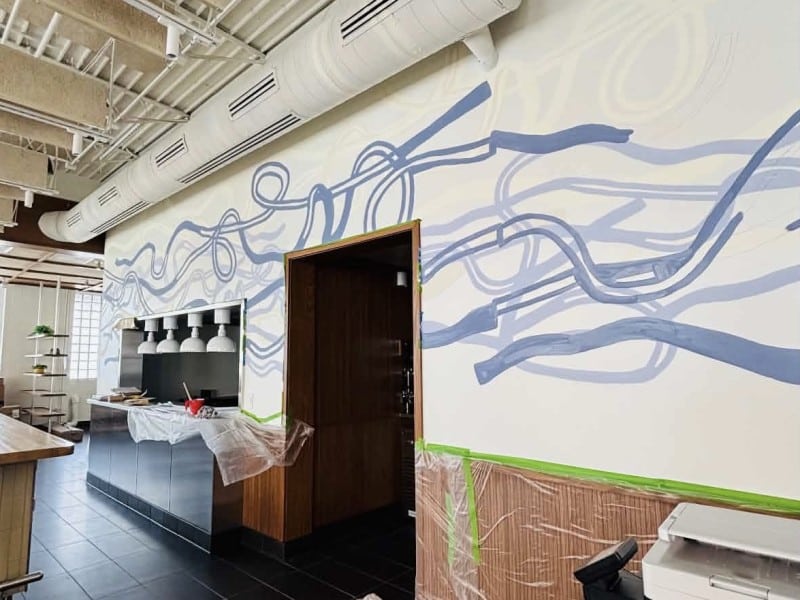
Andrea Myers comes full-circle with progressive mural at the Line
The Columbus artist once took drawing classes in the building that now houses the new restaurant and hospitality training center founded by Service!
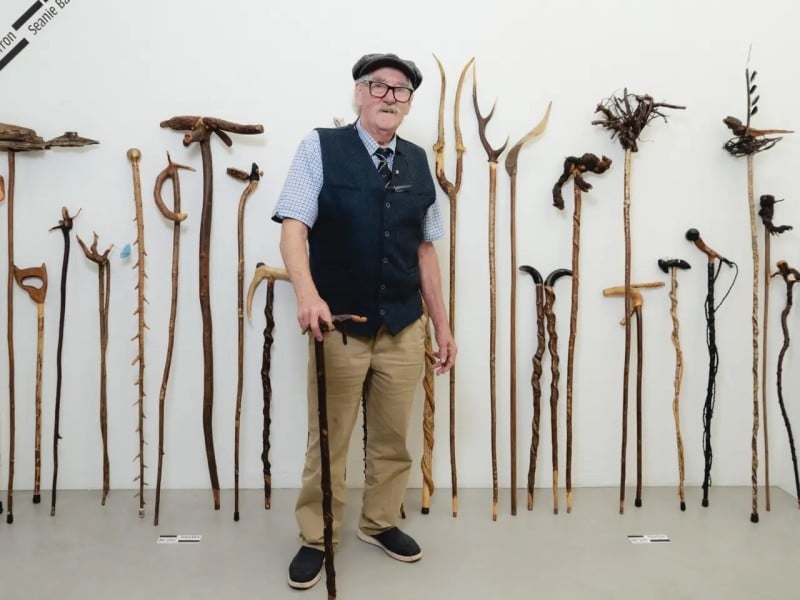
Take a leisurely stroll through the woods with Seanie Barron
The Irish artist’s new exhibition of hand-carved walking sticks kicks off at No Place Gallery with an opening reception today (Friday, Oct. 16).
New Urban Arts Space exhibition opens up a conversation about death
‘Spirit & Dust,’ co-curated by Diane Callahan and Michelle Burdine, explores grief, loss, and the weight of mortality from a wealth of perspectives.