
A determined joy
On Veterans Day, columnist Jack Shuler remembers the people like his grandfather, an Army Air Corps pilot who experienced tragedy but still held to joy as he worked to move the world forward.
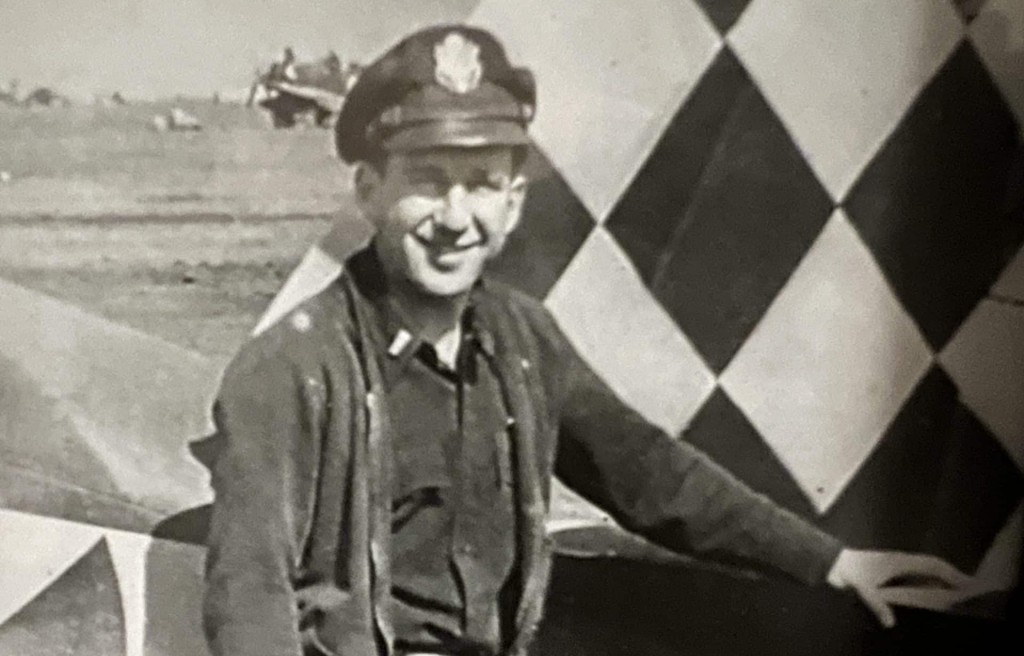
I think of my grandfather in his kitchen.
Standing in front of a pot of vegetable soup on the stove. (He pronounced it veg-i-tibble in his South Carolina Lowcountry lilt.) The vent fan circulating. The smell of stew beef and onion and okra. My grandfather, Harold Clinge, a.k.a., Dit, sliding, no, dancing around his kitchen, from pot to pot to sink.
And my grandmother, just steps away at the kitchen table, glued to the evening news or “Wheel of Fortune” on the TV. In front of her a glass of wine with a pink packet of Sweet and Low next to it.
A donation powers the future of local, independent news in Columbus.
Support Matter News
This is how I remember him. It was, for anyone who was lucky enough to witness it, his heaven on Earth. Serving others, especially my grandmother, gave him joy. And if I’m being honest, the man could dance.
His childhood was sloppy, growing up in post-Depression South Carolina. His father died when he was young, so he lived with his mother and an aunt. He went hunting squirrels with friends, eventually finished high school, and went to the Citadel.
And then something extraordinary – a war. He trained to fly while he was still in college and reported for duty with the Army Air Corps in 1941. He flew in North Africa when the United States entered the war. He flew P-40s, P-47s, and the P-51 Mustangs with their black and yellow checkered tails. His fighter group was dubbed the Checker Tail Clan, and when this group moved to Italy, he was promoted to First Lieutenant and Flight Commander.
A war summarized in a few sentences captures but a fraction of its terror and intensity.
The time his canopy blew off while flying over the Alps.
The raid on an airfield in Italy where 100s of P-51s skimmed the sea so closely I remember him saying that the props lapped the water.
I asked him once about that mission, flying so close to the sea with so many planes, wondering if he was scared. “Scared? Hell, I peed my pants.”
Dit flew some 50 missions from the time he landed in Italy until he crashed in 1944, breaking his leg and ending up in the hospital. When he got out, he became a flight instructor and test pilot, winding up at Wright Field near Dayton. He was awarded the Air Medal with Bronze Stars and the Presidential Unit Citation for service beyond the call of duty.
There’s nothing special here for many men of his generation. But the experience of war shaped his outlook on life – as it did for many he fought alongside. He chased joy and celebration. He served those around him. And he had a habit of spending his money on jewelry for his wife and trips to Myrtle Beach and Disney World.
“You can’t take it with you,” he’d say.
Dit was my first interview.
Assigned to interview a grandparent for American History, my sister and I would ask him questions, and he would repeat the same stories, leaving the room when conveniently needing to stir the soup or put the wash in the dryer. My mother always said that before we started interviewing him for school assignments, he never really said much about the war.
That war took a young man out of his small South Carolina hometown and sent him to other states, to other countries. He met and flew with people he may never have crossed paths with otherwise – Italian Americans, Jewish Americans, people from exotic locales like Long Island.
Dit was no paragon of progressive ideals. He grew up a white man in the Jim Crow South, and he carried that baggage. But the movement and connection of people during the war exploded his world wide open, and he saw things that he couldn’t explain through old frameworks.
He understood more than I would ever want to what fascism – what not believing in the universal right of every person to live with dignity – can do to a world.
He wouldn’t have used those terms, but he believed everyone deserved a fair shake. And as the war carried on, he told me, he learned about the camps, he learned what was happening, and it horrified him.
Yet somehow, after all of that, he continued to love his country and his friends and family deeply. He wanted to bring people together after seeing so much torn apart.
If he could see this country now, he would imagine a better one – one rooted in joy and service.
In a recent interview, Jill Lepore said she prefers the word determination over the word hope when thinking about those people responsible for moving the world forward, ever slowly, in a positive direction. They imagine a future end to tyranny, to suffering. These are determined people. Determined people fought for universal suffrage. Determined people worked together to defeat Naziism.
Dit had to be determined. It was the only way to survive.
After every mission, pilots would be rewarded a little shot of whiskey. Dit told me he’d store his in a flask until he really needed it. What do you mean? I asked, a dumb teenager just hoping to hear a story about some party he had with his buddies during the war.
After one particularly hard mission while he was flying out of Italy, he said, he went back to the tent that he shared with five others.
He was the only one left.
Author
Related Articles
Opinion: When unionization isn’t enough
Collective bargaining can protect journalists from arbitrary firings, stagnating wages, and unsafe or exploitative working conditions. But a union contract cannot fix a broken funding model.

On Development: Cars can’t take us where we need to go
The billions of dollars of new road improvements cited in MORPC’s analysis 26 years ago have already been spent, and now we’re still looking at the same challenges with more people and more roads.

‘Just regular people’
There’s a long history of underground mutual aid in America that often cuts against laws and norms.