
‘A better world is possible’: Organizers find common ground in Inauguration Day protests
A rally scheduled to take place at Trinity Church at noon on Monday, Jan. 20, features a diversity of groups and organizations joined in opposition to what the protesters have labeled ‘Trump’s extreme-right billionaire agenda.’
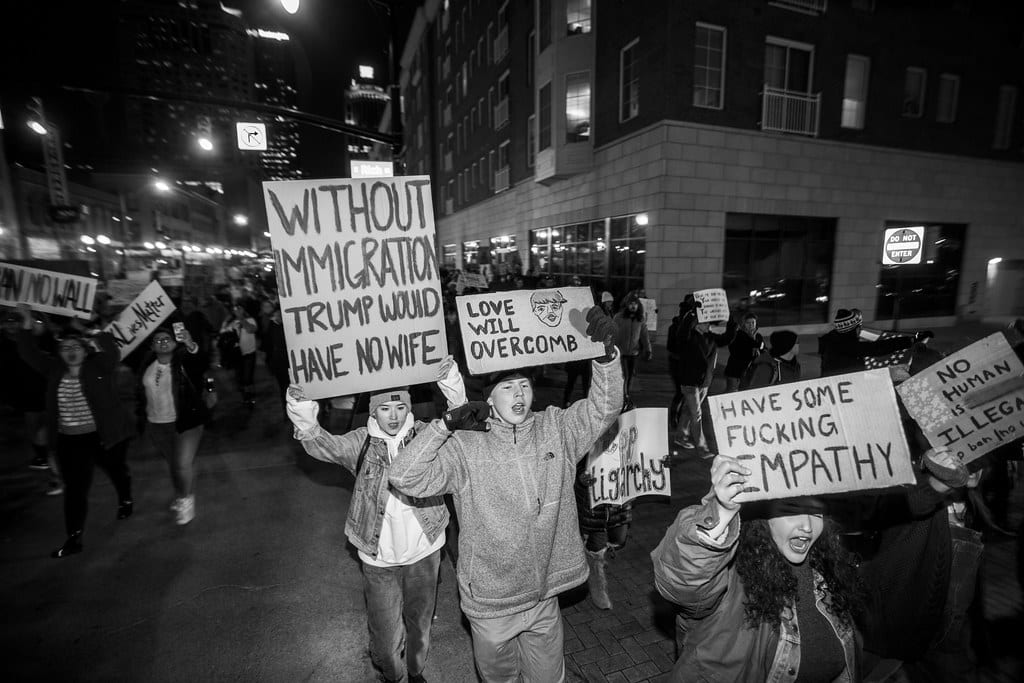
A common theme has emerged in various interviews in the two months since Election Day. Whether speaking with abortions rights activists, organizations enmeshed in the immigrant community, trans activists, or harm reduction workers, inevitably the conversations have turned to the importance of mutual aid and the need to build strong, intersectional alliances in this political moment.
“So, if folks find them in a community support space and there are no Black people around, you’re doing something wrong. If you find yourself in a community support space and no one is trans, you’re doing something wrong,” Dara Adkison, executive director of TransOhio, said in mid-November. “Those vastly intersectional, powerful community support spaces exist all over Ohio. And people should find them.”
On Monday, Jan. 20, a protest timed to both the presidential inauguration of Donald Trump and the celebration of Martin Luther King Jr. Day has embraced this idea, gathering a diversity of groups and organizations to counter what the protesters have labeled “Trump’s extreme-right billionaire agenda.”
A donation powers the future of local, independent news in Columbus.
Support Matter News
Part of a nationwide protest scheduled to take place in more than 70 locales spread across the United States, the Columbus edition takes place at noon at Trinity Church (125 E. Broad St.) and features a coalition that includes members from Black Men Build Columbus, Starbucks Workers United, Jewish Voice for Peace Central Ohio, Artists Against Apartheid, Gateway Film Center United, and the Columbus art-rock band Cellar Dwellar, among others.
“I’m tired of listening to Democrats tell us that things are fine when Republicans continue to feel emboldened to attack our democratic rights,” said Deja Gaston of the Party for Socialism and Liberation, who joined Shenby G (Artists Against Apartheid, Answer Coalition) and Aly Stein (JVP Central Ohio) for a mid-January interview. “A lot of people want to fight back. And what we want to do is build a large coalition of organizations and forces to demonstrate to people – whether it’s local or across the country – that we don’t have to just sit back and watch as the Trump administration enacts all of the things they’re threatening.”
While this protest casts a wider net, all three people interviewed said this type of coalition-building has been more prevalent in recent times, particularly related to actions around the Palestinian genocide in Gaza. “This feels like a broadening out and a continuation of that coalition-building work,” Stein said.
Historically, this hasn’t always been the case, with Shenby acknowledging that there’s a tendency among some to view leftist movements as more easily splintered. “The more people you have, the more differences there might be, but we need to understand we have a common unity as working-class people and that we have so much more to gain by working together,” they said. “I can’t say that every single person in the coalition has [the same reason for being at the protest], but we understand that even if we have differences here or there, we have to build unity. And it’s not just unity for unity’s sake. It’s a principled unity. We clearly want to defeat Trump’s ultra-right billionaire agenda, and we want a future where working class people have control over their own lives.”
Of particular note is the strong union representation expected on site at Trinity, which speaks to the potential power unions could have in this political moment, emerging as one of the few spaces in which workers can still amass the collective strength needed to fight back against capital.
“In the last four years, we’ve seen a huge resurgence in organized labor, whether it was the Amazon workers or dock workers or service workers,” said Gaston, who expressed a desire to see labor unions flex more political muscle in the months and years ahead. “Unions have historically protected workers’ rights, and they’ve traditionally been relegated to the economic side of things. But there’s more of a question of the role that unions should play in the political realm, especially when there are these intentional political choices being made by a tiny handful of people that affect working people every day.”
The idea of building an oppositional movement outside of those traditional spheres of influence is particularly needed at this moment in Ohio, Shenby said, pointing to a statewide election that saw Republicans tighten their grip on power. With the Ohio Supreme Court now favoring conservatives 6-1, for example, even the courts may not offer the same resistance they might have even three months ago.
“We should be sober in the fact that the Supreme Court and the courts in general are not going to help working people, and in fact could be used as a weapon towards them,” said Shenby, who stressed the importance of remaining cognizant of these on the ground realities while refusing to succumb to defeatism. “Inauguration Day is on MLK Day, and MLK and the broader Civil Rights movement, they were able to smash Jim Crow apartheid. … We’re honoring MLK by carrying forward that legacy of struggle. … I think it’s easy for people to get demoralized, but it’s our job as organizers to inspire a type of optimism that points to the future, because we do believe a better world is possible.”
Author

Related Articles

Fear, uncertainty grip Mohan Karki following his deportation by ICE
Late Wednesday, the Columbus father spoke from the Delhi airport prior to boarding a flight to Bhutan, bringing a sad end to a nine-month odyssey in which family members, attorneys, and community groups advocated against his removal.

The right-wing campaign targeting Somali daycares isn’t really about fraud
‘It’s a very coordinated propaganda campaign to demonize and dehumanize really small groups and to justify violence.’
On Development: Cities and schools need to be on the same page
There is a savings associated with closing schools. But there also is a cost.