Artists Against Apartheid launches exhibition to highlight Palestinian resilience
The exhibit, which takes place at the Citadel today (Monday, July 22), was first crafted as a response to the visit currently being undertaken by Israeli Prime Minister Benjamin Netanyahu, who is scheduled to speak before the United States House of Representatives on Wednesday.

When Artists Against Apartheid staged a one-night-only exhibition at the Citadel in December, much of the art displayed at the time was more “descriptive” of the horrors unfolding in Gaza amid Israel’s ongoing assault, according to Columbus illustrator and organizer Shenby G.
But for a new exhibition taking place at the Citadel today (Monday, July 22), Shenby said the collective approached curation with a slightly different mindset.
“I think people’s artwork has changed to be more reflective of the need for struggle,” Shenby said. “Of course, we still want to describe the things we’re seeing. But for the curation of this show, rather than focusing on pain and suffering, I’ve been trying to pick out works that are particularly empowering, as well as works that speak to the need for resistance, or to the moments of beauty that exist in Palestine.”
A donation powers the future of local, independent news in Columbus.
Support Matter News
The exhibition was initially crafted in response to the visit currently being undertaken by Israeli Prime Minister Benjamin Netanyahu, who is scheduled to speak before the United States House of Representatives on Wednesday, July 24. “Netanyahu coming to the U.S. was, in a way, a reminder that artists need to be involved,” said Shenby, who helped to curate submissions from more than 40 artists who stretch from central Ohio to countries scattered around the globe. “We wanted to embrace this as another chance for artists to intervene in support of Palestine.”
Shenby attributed the activism that resonates in their own illustrations to the countless eye-opening social justice movements to which they were exposed while growing up. In 2012, when Shenby was just 12-years-old, George Zimmerman shot and killed Trayvon Martin, 17, sparking mass protests across the United States. Other headline-grabbing struggles followed, including the 2015 Baltimore uprising that followed in the wake of police killing Freddie Gray, the 2016 Dakota Access Pipeline protests at Standing Rock, and the nationwide Black lives matter movement given rise by the Minneapolis police murdering George Floyd in May 2020.
“There were all of these massive struggles happening right as my own political development was taking shape,” Shenby said. “And I think a lot of other young people are in the same boat, as well. We’re kind of growing up … in the aftershocks of 9/11, along with all of these mass uprisings. … And, honestly, I think it can be said for many people that we want answers to the problems we see in our lives. We want to understand why it is we struggle to buy groceries when we’re sending billions of dollars to kill men, women and children in Palestine. Why can I not afford to buy a house or even be able to afford rent when the war machine is getting $1 trillion a year? These are questions everyday people have. And I think in order to answer these questions, we have to educate ourselves.”
Early on, Shenby said the artwork they crafted in response to these larger questions was more responsive, particularly in the immediate aftermath of Donald Trump first being elected president in 2016. Then in high school, the artist said their illustrations at the time tended to be comparatively simplistic, rooted in base idea of “Trump bad.”
“And now,” Shenby continued, “I might make a piece that is saying, ‘Yes, Trump is bad. But we also need to build something new.’ It’s not simply describing a thing but proposing a solution. … And that’s something I’m trying to do in my art on Palestine, as well. It’s not simply describing the horrors we’re seeing, but actually saying, ‘They are resisting. They are still fighting.’ With [the hope of] infusing some revolutionary optimism into people.”
In interviews, local Palestinian writers such as Mandy Shunnarah and Sara Abou Rashed have made similar statements about how they have approached their respective crafts amid the unfolding genocide, with Rashed saying in February that as a means to counter the darker headspaces in which she increasingly found herself, she began to embrace a more intense lightness in her poetry, verses arriving steeped in themes of love and family. “I’ve always believed poetry can change the world, and now I believe it even more,” Rashed said at the time.
In early spring, a similar spirit led Columbus’ Iya Bazar to compile a zine filled with recipes submitted by her Palestinian relatives. “I was having a lot of difficulty processing everything,” Bazar said in a late April interview. “It’s one of those things where I want people to see Palestinians as more than this suffering, tragic group, because we’re not just that.”
Today’s exhibition at the Citadel will attempt to present a similarly well-rounded picture, offering up Palestinian baked goods and music that highlights the sounds of Palestine, the Arab World and the Global South alongside the submitted artworks. “We see that pain and suffering every day,” Shenby said, “so we also need to take a moment to uplift resistance and resilience and hope.”
Author

Related Articles
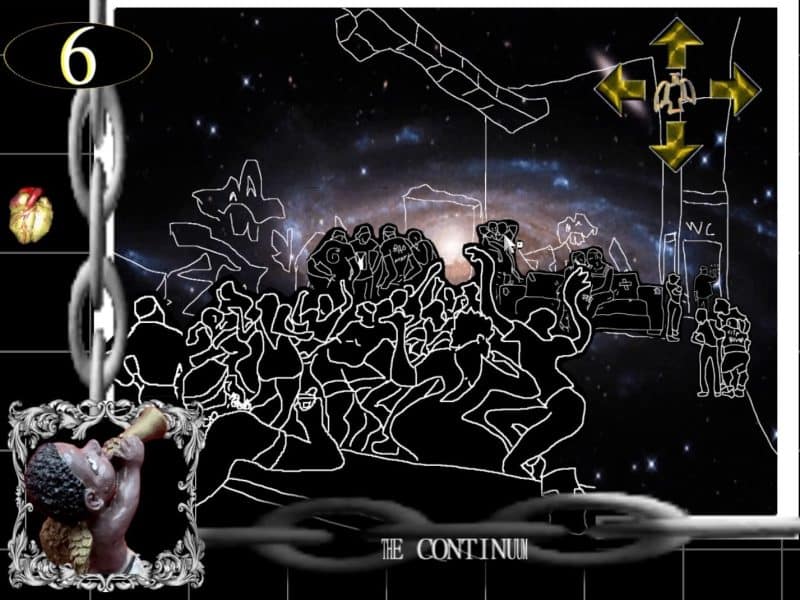
Cameron Granger’s debut video game doubles as a love letter to the Columbus DIY scene
In ‘Sidechain,’ set at a warehouse party on the final night before the world ends, players navigate scenes that draw inspiration from the formative years the artist spent frequenting spaces such as MINT, Corrugate, and Skylab.
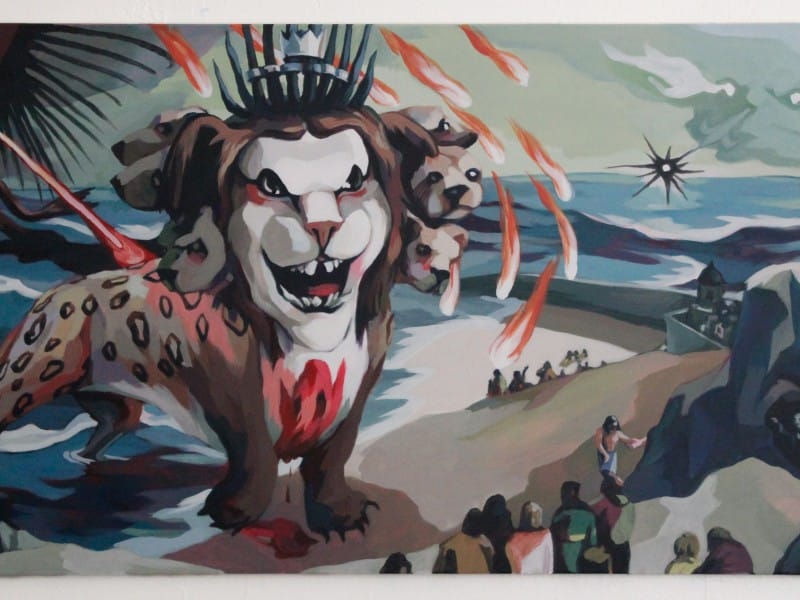
Aaron Burleson explores the nature of reality at Chaos Contemporary Craft
The Columbus artist will celebrate the opening of ‘Touchdown Jesus’ with a reception from 5-8 p.m. on Friday, April 17.
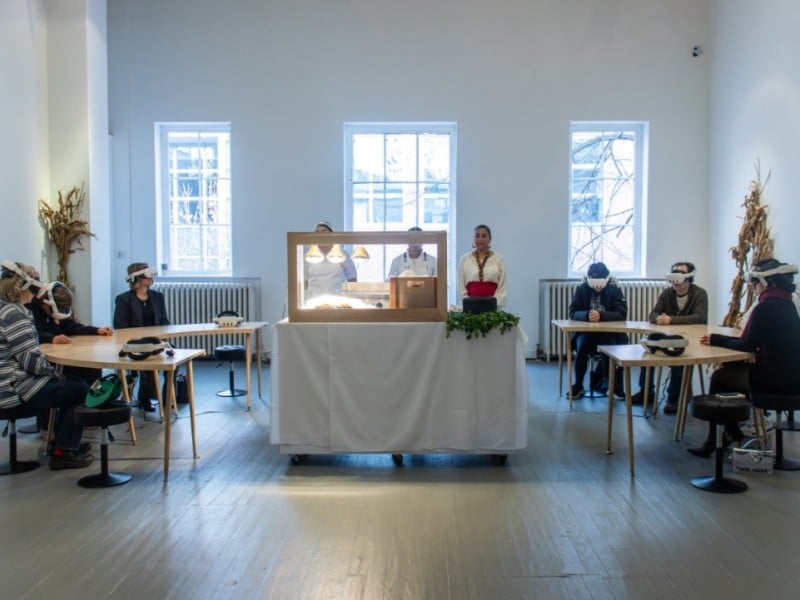
Artist Illya Mousavijad and chef Cristina Martinez bridge continents, cultures with ‘Taste of Exile’
The unique, multisensory exhibition kicks off at No Place Gallery with an immersive dining experience on Friday and Saturday, April 24 and 25.