
Columbus City Council meeting debates the local impact of data centers
‘This is the beginning of a conversation,’ councilmember Christopher Wyche said of the four-hour meeting, during which reps from the data center industry, labor unions, and environmental groups joined residents to debate everything from data center water usage to the number of jobs these massive facilities actually create.
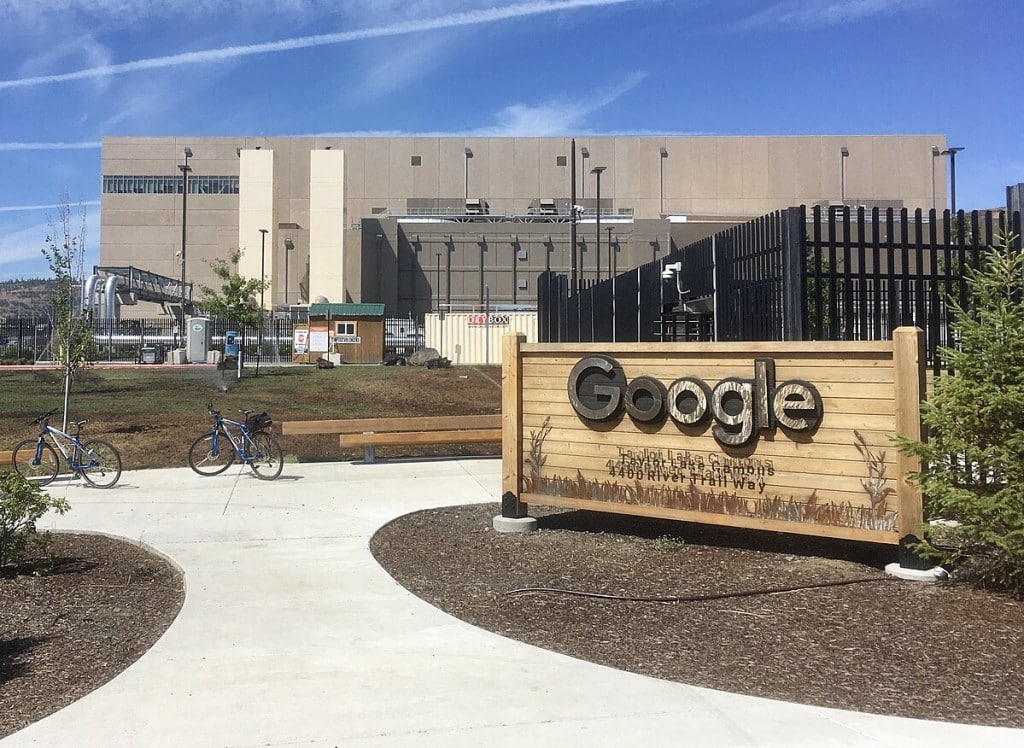
Attendees at Wednesday’s City Council hearing disagreed over the basic facts: how much water would data centers need; how many long-term jobs they would create. “Stop lying, bro!” one person called out from the back of the chamber after Heather Coil from the Data Center Coalition, an organization representing data center owners and operators, referred to the industry as “one of the strongest private sector leaders in the transition to clean energy.”
Councilmember Christopher Wyche organized the marathon four-hour session, focused on local data center construction. Representatives from the data center industry, labor unions, policy thinktanks, environmental groups, and Columbus’ water department delivered PowerPoints on the subject for three hours. Residents shared their views for the last hour.
Central Ohio is one of the fastest growing data center markets in the country, according to a 2025 report from global real estate firm JLL. Data centers in the Columbus area grew 1,800 percent between 2020 and 2025. Companies intend these facilities to enable the anticipated growth in use of generative AI software, such as ChatGPT.
A donation powers the future of local, independent news in Columbus.
Support Matter News
Wyche’s office also collected 28 written testimonies from constituents and stakeholders. Sixteen testimonies explicitly opposed the building of data centers locally, with many citing concerns about electricity and water usage and long-term environmental impacts. “Central Ohio has already experienced historic drought conditions and increasingly dry summers,” said Katy Shanahan, a local resident.
Four testimonies, including two written by representatives of labor unions, expressed support because of the stable jobs created. “These projects are not only high-tech but are safe with great amenities and conditions that provide industry standard wages and benefits for our members,” said Dorsey Hager, the executive secretary-treasurer at the Columbus/Central Ohio Building & Construction Trades Council.
But speakers disagreed on the overall impact of data center jobs. Once built, “data centers only employ a small number of full-time permanent workers,” said Zach Schiller of progressive thinktank Policy Matters. Once up and running, a data center employs about 60 people, said Chris Magill, senior managing director at Vista Site Selection, which advises governments on data center builds and also works with data center companies to select locations.
US data centers also disproportionately rely on fossil fuels. Natural gas supplies more than 40 percent of the energy needed, while 24 percent comes from renewable energy, with 20 percent from nuclear and 15 percent from coal, according to the International Energy Agency. The fossil fuel proportion could grow: Last summer Ohio passed House Bill 15, which encourages data centers to adopt their own power plants in so-called “behind-the-meter” schemes. This reduces strain on electricity infrastructure, but “that means data center development often brings new fossil fuel development into a community,” said Annalisa Rocca of the Ohio Environmental Council. Big tech companies such as Google and Microsoft were already unable to meet their carbon emissions targets in 2024 due to rising AI use.
Operators are also exploring the use of small modular nuclear reactors to power data centers. These electricity sources are dangerous, said Columbus resident Pari Sabety, who called for data center companies to pay for and design community safety and evacuation plans in case of failure. (Full disclosure: Chen is in a choir with Sabety.)
Speakers also delivered conflicting information over the water needed. “Large data centers may require up to 5 million gallons of water per day,” said Becca Pollard, Executive Director of Buckeye Environmental Network, a statewide environmental justice nonprofit. That’s the water usage of tens of thousands of people.
Meanwhile, Coil of the Data Center Coalition cited a 2024 Virginia report that 83 percent of data centers in the state use the same or less water than an average office building. However, Coil did not mention that the report was referring to small-scale designs that were popular at least a decade ago, not the hyperscale facilities in support of AI that companies are currently building.
Rob Priestas of Columbus Water & Power also voiced a concern that they did not know where data centers would be discharging their water. “Those discharges could be located in very close proximity to our water intake for our water treatment plants,” he said.
The lack of clarity over basic facts reflects the lack of transparency in the data center industry. It can be difficult to even figure out who is spearheading a build. Schiller said he reviewed an agreement between Wood County and Meta. “If you look at the agreement closely, you’ll see that this agreement is not with Meta,” he said. “It’s a company you’ve never heard of called Lee Ames LLC.” Schiller cautioned policymakers to examine whether these entities were in compliance with the law.
In a move for more transparency, Ohio’s House Bill 706, introduced in February, proposes minimum standards in the state for electric service agreements with data center customers.
Sabety and Shanahan called for the city council to place a moratorium on new data centers in Columbus, a move that local governments in Jerome Township, Washington Township, and West Jefferson have adopted. More recently in Jerome Township, however, an applicant for a data center zoning permit disputed the legality of the moratorium, and in December the township attorney issued two permits for two data center projects.
Ongoing data center projects in central Ohio, such as Meta’s gargantuan Prometheus project in New Albany, are taking place outside of Columbus’ jurisdiction, according to Wyche. Columbus sets water rates for these sites but is largely limited in its ability to otherwise regulate these facilities. Of the 130 data centers in the Columbus area, only 18 fall within city limits.
At the hearing’s conclusion, a gulf remained between proponents and opponents of local data center construction. “This is the beginning of a conversation,” Wyche told Matter News. “This is not the only time we will talk about data centers.”
Related Articles

‘I am not going to stand before God and say, well, I chickened out’: Reflections on building caring coalitions
More than three years after the City of Columbus bulldozed Camp Shameless, one of the founders of the encampment offers their perspective on the housing crisis and the people working at the grassroots to give aid to those routinely left behind.
New affordable housing investments may leave Columbus’ most vulnerable properties, and tenants, behind
Even as new bonds approved by voters hope to transform housing development for years to come, a desperate shortage of affordable units continues to push low-income renters into the lowest-quality homes.
On Development: Of salad greens and sensible growth
Many developers and sellers confuse demand for a certain type of housing and a willingness to buy. There are hundreds of thousands of people in central Ohio who prefer older houses and apartments.