
New affordable housing investments may leave Columbus’ most vulnerable properties, and tenants, behind
Even as new bonds approved by voters hope to transform housing development for years to come, a desperate shortage of affordable units continues to push low-income renters into the lowest-quality homes.
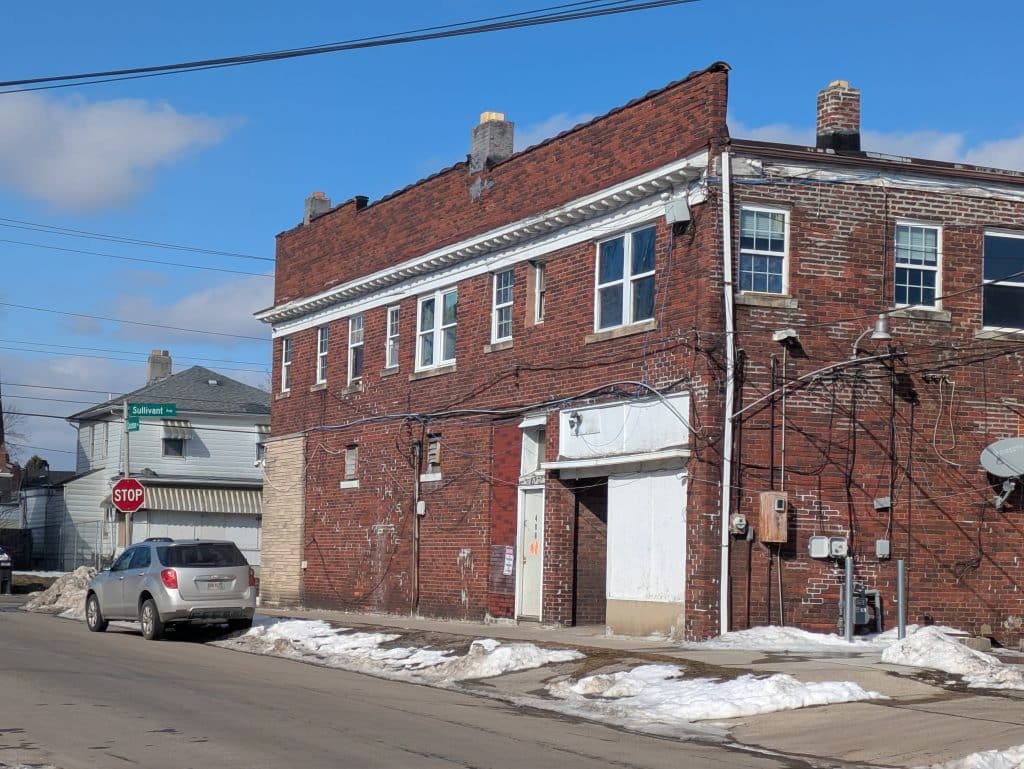
Todd Selbert used to pay $650 monthly for an apartment on Sullivant Avenue in the Hilltop neighborhood on the West Side of Columbus. It was cheap, though the apartments, Selbert said, “were not up to any type of code.”
An event center operating as a club downstairs produced noise late into the night, and crime was rampant. The dilapidated condition of the building even prevented mail from being delivered, which Selbert said led him to miss paperwork from Social Security, with the subsequent loss in income leading him to fall behind on rent. He complained repeatedly to his landlord and eventually to the police but he said “nothing ever got fixed.”
In October 2025, the city filed a lawsuit detailing the code violations and problems about which he had complained. Selbert hoped conditions would improve. Instead, just days later, he found an eviction notice taped to his door.
A donation powers the future of local, independent news in Columbus.
Support Matter News
Selbert’s landlord, who declined a request for comment, simultaneously filed evictions against three other tenants the same day. “I think they were just getting in so much trouble they wanted everyone out of there, plus they knew that I was the one complaining,” Selbert said. Months later, he has been unable to find another apartment. “I’m still staying in a hotel going broke,” he said.
The same day those evictions were filed, Nov. 4, 2025, Columbus voters approved the issuance of $500 million in affordable housing bonds. They also elected to City Council Tiara Ross, an attorney and Deputy Chief of the Property Action Team, which was responsible for the lawsuit against Selbert’s landlord. The bond vote reinforced a broad consensus in agreement with Ross that affordable housing is “one of the most, if not the most important issue that we are facing as a community.”
But even as the bonds hope to transform new housing development for years to come, a desperate shortage of affordable units continues to push low-income renters into the lowest-quality homes. On the frontlines of the affordable housing crisis are the many who Council Member Ross described as “just kind of hanging out on that edge of housing instability” – people like Todd Selbert, for whom any disruption could spell a slide into homelessness. While leaders debate exactly how the bond money will be spent, the decay of existing units threatens to cancel out any progress, and to leave residents in the lurch.
In an interview with Matter News, Columbus City Attorney Zach Klein, whose office oversees the Property Action Team, described the process by which the city tries to manage problem apartments. When residents complain, officers from the Department of Building and Zoning Services can inspect a property and issue a code violation specifying necessary repairs. Alternatively, for properties with repeat incidences of crime, Columbus police can write a warning to landlords requiring them to develop a safety action plan.
“Most landlords call the number on the letter they receive,” Klein said, “and then the matter is over.”
But in some instances, landlords neglect to fix the problems, and the case is turned over to the Property Action Team to file a lawsuit against the property owner in municipal court.
In a press release published alongside the October lawsuit seeking to declare the Sullivant Avenue building and its owners a public nuisance, Klein said, “This lawsuit is a positive step toward cleaning up that mess, improving public safety, and making life better for residents and families along Sullivant Ave and the west side.”
More broadly, Klein told Matter News the goal of the Property Action Team is centered on landlord accountability. “It’s making sure that landlords uphold their end of the bargain when our residents are paying monthly rent on time,” he said. “And they’re paying monthly rent in return for a safe, sanitary place for them and their families.”
The Property Action Team has become an increasingly important force, transforming the landscape of affordable housing in the city in recent years. Since becoming City Attorney in 2018, Klein said his office has filed a record number of nuisance abatement cases like the one against Selbert’s landlord.
Today, the team consists of eight attorneys along with a number of paralegals, assistants, and a social worker – not to mention alumna Council Member Ross, now chair of the Housing, Homelessness & Building Committee. In 2025, according to numbers provided by the City Attorney’s Office, the Property Action Team filed around 500 cases against property owners across the city. It has also inspired the creation of a similar team for Franklin County, the Nuisance Abatement Unit.
However, the work of the Property Action Team has not been without controversy. In 2021, a lawsuit against the Columbus Greyhound Station caused a years-long saga of displacement, with the station moving to different locations. An April 2025 lawsuit likewise generated public debate after it accused Sanctuary Night, a Franklinton drop-in center for victims of sex trafficking, of constituting a public nuisance by facilitating drug use and violence.
Neither the Sullivant Avenue building where Selbert lived, nor these high-profile debates around criminal activity are necessarily typical of the work of the Property Action Team. Still, while the City Attorney’s office said the vast majority of cases concern residential properties – mostly single-family with code violations – the effects of the team’s work on low-income residents across the city can be enormous.
As Ben Sears, Executive Director of the Columbus Coalition for the Homeless, explained, vigorous code enforcement can have unintended consequences for the most vulnerable end of the housing continuum. “We had three really large events here in Columbus over the last couple years that really disrupted all this,” he said, referencing the Colonial Village, Latitude Five25 (aka Sawyer Towers), and Galloway Village apartment complexes, each of which was declared uninhabitable by Columbus or Franklin County officials.
“It was like 1,000-some units,” Sears continued. “A lot of individuals coming out of the homeless system, or on a subsidy, or part of a community-based program supporting vulnerable populations were housed in those units or similar ones. So, it’s really impacting people who didn’t have the flexibility to pick up and go find a new place.”
When large numbers of affordable units are taken off the rental market, Sears said, the data shows “it increases the length of stay in our shelters, it increases the unsuccessful outcomes for people that get placed in housing but [for whom] it isn’t sustainable.”
Deputy Director of the Department of Building and Zoning Services, Anthony J. Celebrezze III, said officials are reluctant to take such drastic steps as an “immediate vacate” order of the type seen at Colonial Village or Latitude Five25. But in cases where a property becomes uninhabitable – if the heating breaks in the winter, for example – they may have no choice.
Even before other offices like the Property Action Team get involved, Celebrezze said code officers work with landlords to find relocation options. “So instead of having people be basically out on the street or having to go find friends or family to stay with, we’re going to get them into a unit that’s safe, that’s heated, that’s got running water, that is habitable,” he said.
But Celebrezze also pointed to multi-unit apartment complexes willfully neglected by owners as a major challenge, with no clear solution to prevent long-term decay. Many, he said, “haven’t been maintained well over the years, they’re getting old, they’re getting tired, and unfortunately, some of these out-of-state or out-of-city institutional owners are maximizing profit over maintenance and the tenants.” Code enforcement and the Property Action Team alike, which both react mostly to citizen complaints, struggle to prevent such properties from becoming ripe for displacement and its negative effects on tenants and the affordable housing market.
In response to such incidents, and to the at least $9 million the city spent rehousing residents of Colonial Village and Latitude Five25, Columbus has taken steps to try to prevent mass displacement events. City Attorney Klein said his office now meets regularly with tenants and management at problematic complexes. In 2024, City Council likewise passed an ordinance intended toforce landlords whose properties are deemed uninhabitable to cover temporary housing costs for residents for up to three months. While the city will still need to front costs, and has created a new Division of Housing Stability within the Department of Development to oversee relocation, the ordinance gives the opportunity for the city to claw back relocation expenses from future negligent landlords.
Ben Horne, Advocacy Director at Legal Aid of Southeast and Central Ohio, described the ordinance as “an extra stick to get landlords to fix things quickly.” He pointed to a recent example of a complex on East Broad Street in which the boiler broke in the winter, but the threat of liability for relocation costs for more than 100 tenants encouraged the owner to quickly fix the issue. Horne added that Columbus has an ordinance that protects tenants from retaliation for reporting code violations. “But it’s hard for a tenant to prove that,” he said, and whereas the Columbus statute makes retaliation a misdemeanor, “retaliation ordinances in other cities are stronger and there are actually fines attached to them.”
For tenants already in precarious situations on the edge of housing instability, however, such protections are often insufficient, and the disruption of a forced relocation or retaliatory eviction can be devastating. Horne described how all of his clients who had lived in uninhabitable apartments at Colonial Village – mostly Haitian asylum seekers – opted not to file claims for the rent they likely overpaid. While their relocation by the city got them out of the conditions at Colonial Village, it also scattered them to different parts of the city. At Colonial Village, Horne said, “They knew where the schools were, they knew where their doctors were, and then all of a sudden they were placed in a hotel by [State Route] 161.”
Matina Bliss, a former Housing Outreach Specialist with the Mount Carmel Housing Outreach Program, described the challenges faced by those relocated to or given transitional housing in hotels. “In the city’s eyes, it’s like, you should be grateful that we offered you anything,” she said. “But a lot of times, that type of displacement can be really complicated to get back on your feet from.”
Bliss raised the same concerns as Horne, including disconnection from community, from transit, and from familiar institutions and jobs, adding that, “If somebody needs to go through a program to get government-assisted housing, it’s likely going to take them a year to a year and a half, and providing a hotel room for eight or nine months is not meeting the requirement that most people would need.”
Moreover, Bliss said, those in relocation hotels often do not qualify for other housing support such as that provided by Mount Carmel, which focuses on street homelessness. The most affordable subsidized, income-based housing, which people without support from a case worker are unable to get, she added, is typically “one-in-one-out; somebody loses a voucher and loses their housing typically, or in the best case scenario they no longer need it and then another family gets it. But then, does that mean a family is falling into homelessness?”
In an interview with Matter News, Council Member Tiara Ross said she is taking lessons forward from her time with the Property Action Team, emphasizing programs to help elderly owner-occupiers fix code violations and stay in their homes. “The idea that someone has to be displaced from their home was literally the very last, most extreme thing that we would need to do,” she said. But she admitted that the team struggled to even learn about maintenance issues or prevent the decay that could eventually make displacement inevitable. Latitude Five25, she said, was “one of the worst places from a physical conditions perspective that we had in our community,” but the team had been unable to make the case to justify a full-scale inspection before the heating failure displaced hundreds of residents over Christmas.
This inability to proactively ensure cheap housing is maintained has led City Council to propose a rental registry for all units in the city, which Ross called “one of the most important steps we can take to prevent situations like a Colonial Village, like a Sawyer Towers.” She continued, “I think that the benefits far outweigh the cost to have something like this, where it allows the city to be proactive and to ensure that we are not having to get into situations where we are spending tens of millions of taxpayer dollars to relocate people for an issue that we would have hoped to be notified about years before.”
Sears cautioned, however, that the rental registry “could cause some significant harm to low-income renters and other low-income units,” in that it might lead landlords to renovate affordable units, raise rents, and pass registration fees on to tenants. His concerns echo the fundamental tension inherent to the most affordable housing: Such housing is so cheap precisely because of its poor quality, and one wrong move could take the unit off the market for good, forcing another family onto the streets. Meanwhile, cities with a rental registry, such as New York, have struggled to regulate the cheapest, most dangerous apartments, which often go unregistered.
At a recent public hearing concerning the $500 million in affordable housing bonds set to be issued over the coming years, officials from the Department of Development shared results from past rounds of bond funding, including the $50 million approved in 2019 and $200 million in 2022. Leveraged with $1.4 billion in other public and private funding, they said this money has helped create 7,000 affordable housing units (an average of more than $200,000 per unit). Of those, 6,000 are for those earning less than 80 percent of the Area Median Income ($87,200 in 2025 for a family of four), with just 700 units earmarked for those earning less than 30 percent of the Area Median Income ($32,700). An additional $7 million dollars went to “emergency and critical home repair for low-income homeowners.”
A report released this month by the National Low Income Housing Coalition and the Coalition on Homelessness and Housing in Ohio, however, found that the Columbus metropolitan area has a deficit of more than 53,000 affordable rental units for those in the same sub-30 percent category. In this context, the 700 units constructed are a mere drop in the bucket. With the displacements at Colonial Village, Latitude Five25, and Galloway Village alone having removed more deeply affordable units from the market than were created by more than a billion dollars in investment, it remains unclear whether the new bonds have any hope of making a dent in the affordable housing crisis.
Correction: An earlier version of this feature included a quote from Klein in which the City Attorney said, “When I inherited the job, the Property Action Team existed, but it was just one lawyer.” A communication’s staffer sent a follow-up email to clarify that Klein meant one lawyer for each of the then-five police zones, and the staff has since been expanded to include the sixth zone and additional employees.
Related Articles
On Development: Developing better health care and hospitals
Despite the hospital construction projects all over the state, residents across most of Ohio are no closer to health care – and many are even further removed from hospitals.

‘I am not going to stand before God and say, well, I chickened out’: Reflections on building caring coalitions
More than three years after the City of Columbus bulldozed Camp Shameless, one of the founders of the encampment offers their perspective on the housing crisis and the people working at the grassroots to give aid to those routinely left behind.

Columbus City Council meeting debates the local impact of data centers
‘This is the beginning of a conversation,’ councilmember Christopher Wyche said of the four-hour meeting, during which reps from the data center industry, labor unions, and environmental groups joined residents to debate everything from data center water usage to the number of jobs these massive facilities actually create.