Joey Blackheart and the grassroots work of harm reduction
Taking place this weekend at Cafe Bourbon Street, Blackheart Fest is both a tribute to the late Girls! guitarist, who one MASS member described as a harm reduction pioneer, and a reminder of the essential role grassroots communities play in navigating crises.
Mutual Aid Street Society (MASS) formed out of necessity in the early months of the pandemic, at a time when a number of established organizations involved in the work of harm reduction either reduced hours or paused operations, decreasing access for drug users to potentially life-saving supplies such as clean needles.
“People came from different backgrounds, including people with lived experience of intravenous drug use and current intravenous drug users, and very quickly our distribution grew,” said MASS member Alex, a pseudonym, who spoke under the condition of anonymity owing to the nature of the group’s work. “In the first year MASS was around, I believe the number [of clean needles] we distributed was comparable to Safe Point.”
The experience with MASS reinvigorated Alex’s belief in the importance of mutual aid work, rooted in a deep, long-developed understanding that the community members – particularly those often looked down upon by certain factions of society – are often their own best salvation. Within MASS, Alex said, people who use drugs, sex workers and the unhoused work side-by-side with musicians, artists and social workers to distribute naloxone and clean needles, in addition to operating regular free markets, details of which are posted in advance on the group’s Instagram page.
A donation powers the future of local, independent news in Columbus.
Support Matter News
It’s a deeply established model that has served disparate communities experiencing any number of tragedies, from the early days of the AIDS epidemic, when queer people helped to spread life-saving advice in bathhouses and sex clubs at a time when government officials ignored the growing crisis, to the mutual aid groups that sprung to immediate work out of places such as Firestorm Books in Asheville in the wake of Hurricane Helene, searching for missing neighbors, distributing potable water and establishing food serves.
MASS exists in a similar spirit, supported by and serving the overlooked and the downtrodden, its members working to reclaim the concept of “harm reduction” from what has undeniably become big business both nationally and within Ohio. Increasingly, Alex said, the experiences and stories of people who either use or formerly used drugs are commodified to the benefit of nonprofit organizations, government entities and pharmaceutical corporations.
“It’s gone from a grassroots movement of drug users or people who were very close to drug users to this more institutionalized model where there’s all of this money involved,” said Alex, who criticized the distribution of opioid settlement funds collected from drug companies by the states, a portion of which has even been used to fund police operations. “Even the language we use to talk about this stuff [needs to change]. To me, it’s not an ‘opioid epidemic.’ It’s an epidemic of all different sorts: of despair and social inequality and economic inequality, of racism, environmental collapse, criminalization. … One thing that has been consistent is that prohibition makes things more deadly.”
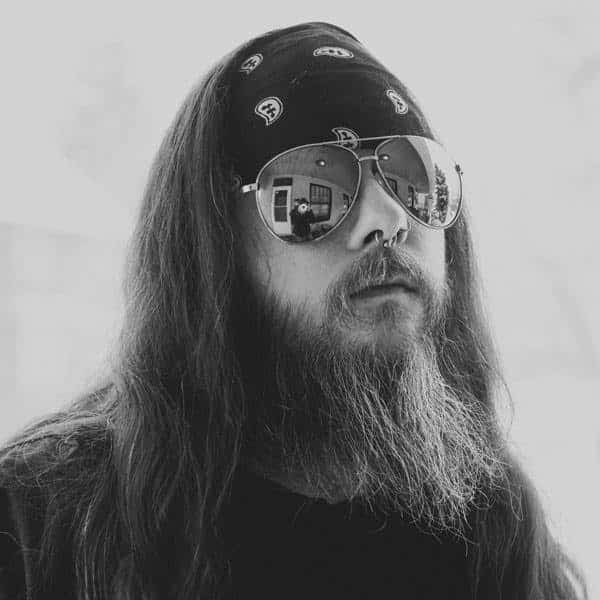
It’s in this spirit that MASS is staging Blackheart Fest at Cafe Bourbon Street on Friday and Saturday, Oct. 11 and 12, featuring music from didi, Married FM and the Fallen, among others. This is the second go-round for the festival, first staged 10 years ago in memory of musician Joey Blackheart, who died in 2014 and whose life and work have continued to resonate with members of MASS Ohio and others in the Columbus community at large.
“It’s been 10 years since Joey died, and it’s really important in this day and age where harm reduction is being co-opted and recuperated, and where it’s become this big business, to remember our pioneers,” said Alex, who recalled how Blackheart would buy needles in bulk and distribute them to anyone in need – a core tenet of MASS’ mission. “Because to me, that’s what harm reduction is. It’s friendship and solidarity and survival. … It’s educating each other. And it’s something that as a drug user I’ve been involved in my whole life. And that’s the thing, too, this is something that’s been around. People have been sharing not only clean needles but information about what different chemicals do and what their experiences have been.”
Ryan Vile can remember precious few details from performing at Blackheart Fest in 2014.
At the time, Vile was a member of the Girls!, a band in which he played alongside Blackheart, who served as both a guitarist and a feel-good spirit animal within the tightknit crew. In taking the stage so soon after his friend’s death, Vile said he had barely begun to grapple with the overwhelming feelings of grief and guilt that arrived in alternating waves in the weeks and months after his passing, often leveling him without warning.
“We just went onstage and went through the motions,” said Vile, who will make an appearance at this weekend’s Blackheart Fest, playing drums in Orchard. “It was like a puppet show. We just went up there and pretended we could be the old versions of ourselves, but we weren’t. And over time, people got to a better place. But at that point we were just pretending like nothing had changed. … We weren’t a band that brought anything but happiness onstage. That was the whole point. And if you were in the audience, you were supposed to be happy with us. And I’m sure that looked awful to some people [at the first festival], but that’s just what we did. We would get onstage and try to bring happiness to people. And then offstage we would go right back to crying.”
While Vile allowed that there will be tears when he takes the stage at Blackheart Fest this weekend, he also said he is in a radically different place emotionally than he was a decade back. “After Joey’s death, I realized how loved I was by so many people,” Vile said. “I think I became a happier person by realizing, oh, things can be the worst they’ve ever been, and I can get through it. The band I was in with Joey, it was literally the good thing for us. It was the one good thing we all had in common. … And when Joey died, it was like the one good thing we could count on went away. And knowing you can get through that with the right people around you, that makes a big difference.”
One thing that hasn’t changed for Vile is the importance he places on harm reduction, having experienced the reality firsthand while living with multiple family members who used opiates. “And then you see that blast radius increase every year,” he said. “When you go back to the 1980s and ’90s, there was this stigma that a certain type of person did drugs, or a certain type of person used heroin. … And now everybody knows somebody who’s affected by it. But the stigma, unfortunately, is still there when it comes to clean needles. It’s still there when it comes to harm reduction.”
For Alex, at least part of the importance the mutual aid work being done by MASS is driven by a realization that there is no sustainable legislative solution to curbing overdose deaths. Even in places where drugs are decriminalized, the policies are often later rolled back, with drug use scapegoated for a range of potentially unrelated issues, including crime, solicitation and litter. In Portland, Oregon, for example, the Democratic-controlled Legislature passed a law in March that rolled back a 2020 measure approved by 58 percent of voters that made possessing illicit drugs like heroin punishable by a ticket and a maximum $100 fine. And in Canada, government sanctioned programs such as legal injection sites have faced growing backlash, while the British Columbia government has backpedaled on a pilot program to decriminalize small quantities of illicit drugs in public places within the province.
“Political will can go all sorts of different ways,” Alex said in brushing aside unreliable legislative cures before taking aim at the more damning bureaucratic elements that can impact the work being done by even well-intentioned nonprofits, leaving drug users and the people adjacent to them to fend for themselves. “There’s no organization that was the first. Drug users have been here taking care of ourselves. And we need to keep doing it.”
Author

Related Articles
Lawsuit, ballot initiatives seek to make Columbus City Council more accountable to residents
A lawsuit looking to restrict council from closed-door sessions is making its way through the courts at the same time that organizers with Our City, Our Say are beginning to collect signatures for a ballot initiative designed to recast how council members are elected.
Workers say Columbus Metropolitan Library management is union-busting
An Unfair Labor Practice Charge filed last week alleges that the recent termination of a CML employee was “unlawful and retaliatory,” motivated by the worker’s involvement in union organizing.
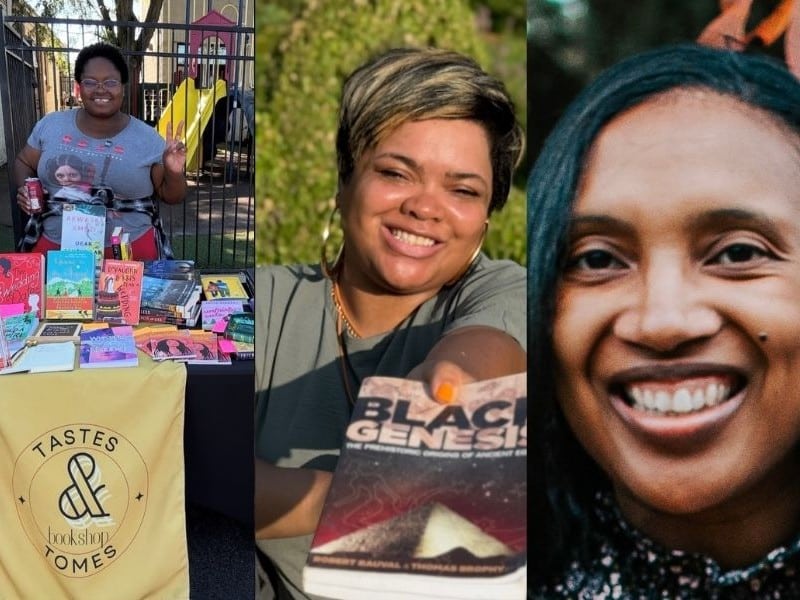
Meet the Columbus Black-Owned Bookstore Collective
Tracy Ramey of Tastes & Tomes will join fellow collective members Barbara Bailey (Eqstesi by B.E.E.) and Megan Turner (Rooted Books) in a panel discussion at Zora’s House from 6-8 p.m. on Tuesday, April 7, as part of the inaugural National Black Bookstore Day.