
The aftermath of ICE
In the week since federal agents apprehended three staff members at one North Side hotel, employees and management have simultaneously navigated a mix of fear and grief while adjusting operations to better keep people safe at work.
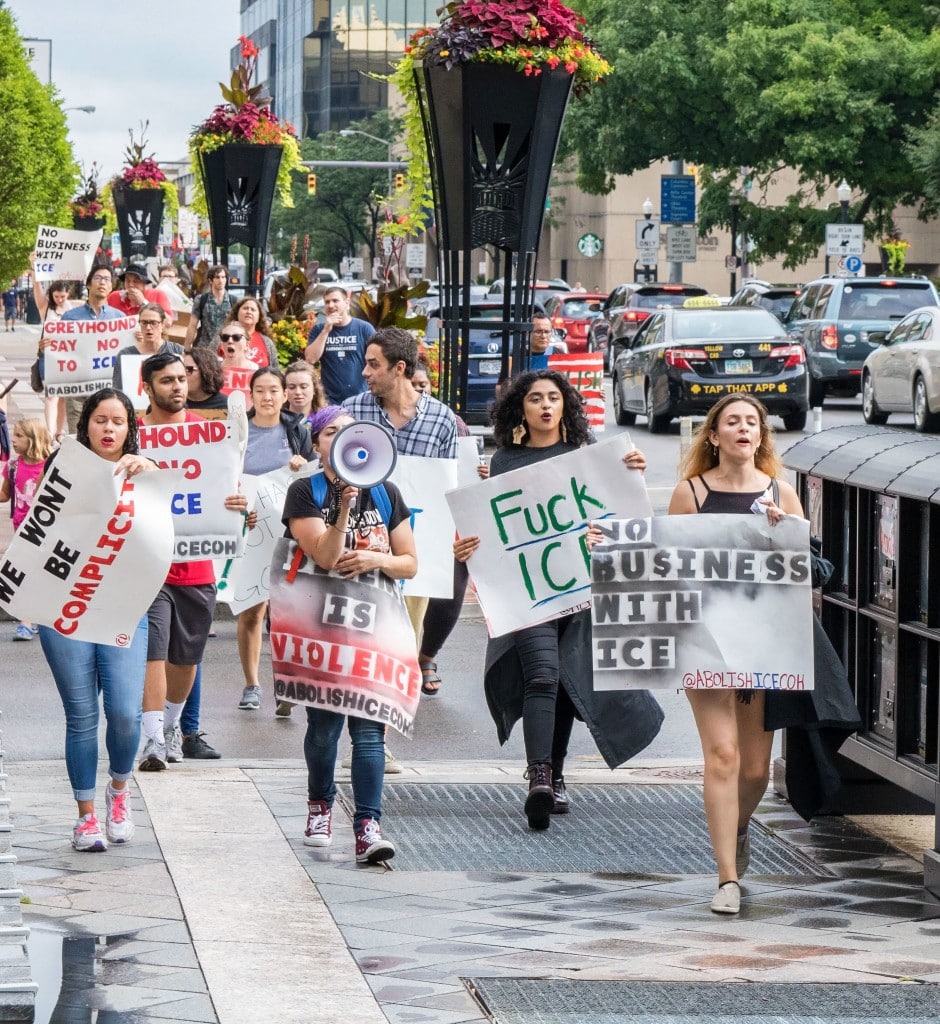
Six months ago, when Lexi started working as part of the housekeeping crew at a hotel on the North Side of Columbus, he said he didn’t speak much, generally keeping to himself during his shifts.
In time, though, Lexi began to open up and build relationships with his coworkers, and in particular Fernando, who educated the teenager on cars and recently even taught him how to drive. So, when Lexi’s phone began chiming with notifications last Wednesday from people informing him that Fernando was one of three coworkers who had been abducted outside of the hotel early that afternoon by U.S. Immigration and Custom Enforcement (ICE), he didn’t want to believe it.
“Fernando had just invited me to go out and eat on Sunday, and it was most of us on the housekeeping team,” Lexi said. “So, for that to happen three days later, the gravity of that hit me pretty hard.”
A donation powers the future of local, independent news in Columbus.
Support Matter News
General manager Brad Bonacci was on site at the hotel on Dec. 17 when he said the property was set upon by roughly a half-dozen masked ICE agents who claimed to be tracking “a criminal” whose phone had pinged near the location. “And then two cars came from the back, and we heard screaming from our housekeepers, and they were gone,” said Bonacci, who clocked the entire affair at less than 15 minutes.
According to Bonacci, the three members of the housekeeping staff taken by agents included two Puerto Rico-born U.S. citizens and a Mexican immigrant who had all of his legal paperwork in order. “None of my staff can be hired if they don’t have the correct documentation,” said Bonacci, an 18-year hotel veteran who described immigrants as the long-running backbone of the hospitality industry. “We watched the video footage [of the detainments] at the corporate office. … And the agents jumped out of two cars, grabbed them, threw them in the vehicles, and they were out. They didn’t ask them a single question. Just looked at them, saw the color of their skin, and off they went.”
At the time they were taken into federal custody, Bonacci said the workers had been walking to their cars to begin their lunch break. As of yesterday, their vehicles were all still sitting abandoned in the parking lot behind the hotel.
As reports of ICE-related actions at local hotels stretching from Polaris to the North Side began to spread both on social media and in group texts between hotel managers, the Ohio Hotel & Lodging Association (OHLA) sent an email stating that it had “not seen raids or received any reports of enforcement actions targeting hotels in Columbus, even this week,” while reminding its members that President Donald Trump had previously raised the importance of foreign workers to the hospitality industry. A second email from OHLA followed the same afternoon acknowledging the arrests at local hotels and noting that the organization had partnerships with labor attorneys specializing in immigration enforcement.
“We have been communicating to member hotels and organizations about the issue of immigration enforcement all year long,” said OHLA President and CEO Joe Savarise, who also shared screenshots of a late January communication sent to hotel operators that included information about the steps they could take to better prepare for the possibility of federal immigration raids. “We continue to monitor the actions happening in Columbus but also the entire state and nation. It will be important to receive accurate information about the number, scope and impact of specific actions to understand the full picture … [as] the situation continues to unfold.”
Once the ICE agents departed the property last Wednesday, Bonacci said the hotel essentially shut down for the day. Employees were sent home, and a skeleton crew pulled from management remained on duty to cover essential operations. Those workers who did not feel safe leaving the premises were offered space within the hotel, which set aside a couple of rooms where those workers could decompress and begin to process events. Almost immediately, Bonacci said, the conversations between staff and management began to focus on the ways they could all support the families of those taken, including one who has an 8-month-old baby at home. The group also talked about the different ways they could better keep team members safe both on and off hotel grounds.
Along with feedback from corporate, these discussions informed Bonacci as he worked with his team to update an action plan for navigating on-site interactions with ICE and other federal agencies, which requires staff members to congregate in designated secure, non-public areas while management engages the agents. He also developed a transportation system that has remained in place in the week since, with managers helping to drive nearly 50 housekeeping and kitchen staff members to and from work, with assistance from the hotel shuttle.
“It was, ‘How do we keep you guys safe, and not just you, but your families? Is it hourly check-ins? Daily check-ins? If we don’t hear from you by this day, then what?’” Bonacci said. “We’ve shifted to where we’re not just running a hotel, but we’re also running a family telephone [system]. … We’re driving people home. We’re picking people up. We’re making sure our family is safe.”
In this pivot, the manager’s office has been converted into an ad hoc ICE response center where Bonacci has been printing red cards for distribution to staff members reminding them of their Constitutional rights. Elsewhere in the hotel, which felt subdued on a midweek visit (no music played in the public areas as staffers wordlessly went about their days), management has essentially deployed a buddy system, with employees escorting one another in the building and avoiding the outdoors as much as possible. Bonacci also shifted staffing, reducing the number of daytime housekeepers from a dozen people to three while boosting the size of the nighttime crew.
“And everybody wants those shifts because … there’s a little more comfort being here in knowing their family is safe at home,” said Bonacci, who has continued to evolve and update the hotel’s action plan while simultaneously relaxing corporate policies related to absences. “We have a couple of people who want to wait … until they feel safe to come back [to work], so we’ve adapted our policy to say, ‘We’re going to put you on an on-call, as-needed leave.’ … Tardies, call offs, nothing is being held against them. No one will lose their job. They will always have a place here. Even with the three who were taken, as long as they’re gone, we will hold their positions.”
At the time of our interview, Bonacci still wasn’t sure how long these absences might extend, estimating that it could take anywhere from one to three weeks for everyone to see release – a timeline potentially impacted by the looming holidays and the glut in immigration cases driven by the surge in local ICE arrests amid the ongoing “Operation Buckeye.” (Bonacci said all of the families involved have retained legal representation to assist with their cases.)
Even locating the facilities where the staff members had been taken proved a challenge, with Bonacci and a handful of employees working in tandem to search online arrest databases statewide beginning early evening last Wednesday and stretching into the following day. “We just went from jail to jail looking at daily incarcerations,” he said. “And we found them on Thursday – one in Butler, one in Hamilton, and the other in Miami. So, all in different counties, and all an hour to two and a half hours from where they were picked up.”
In photos posted by the jails, which Lexi displayed on his cellphone, the workers appear downcast and distant in a way that remained jarring to both Bonacci and the teenager, who recalled the way the expressions of those arrested pierced him as he scanned the various jail websites trying to locate his friends. “The ones that hit me hard were the Hispanics and the African people, because you can just look in their eyes and see how they look defeated,” Lexi said. “They weren’t taken professionally but ransacked and moved like cargo.”
The day of the hotel raid, Lexi stayed at home after school. A U.S. citizen and the child of Mexican American parents, Lexi worried that his complexion might make him a target – a reality that he said has made him feel like an outcast at home. “It really does make me feel like less of a citizen, even though my mother and brother and everyone else tells me that I’m perfectly okay, that I’m good,” he said. “I’m a citizen, but what I know is that I don’t look like a citizen to ICE. To them, I look like a number, a logistic.”
When he returned to work the Friday after the abductions, Lexi said it took a couple of hours to begin to get his bearings after having spent the previous days trading messages with coworkers, many of whom have experienced the same fears and sleeplessness as the teenager. “I’ve had to use a lot of melatonin to just put myself to sleep,” he said.
Lexi allowed that the sense of routine introduced by a return to work has been helpful, even as his responsibilities have shifted wildly from day-to-day dependent on staff and hotel needs. One day he might spend his entire shift deep cleaning a specific public area, and the next he might be part of a team tasked with cleaning three dozen guest rooms.
“Usually, we try to check the dashboard ahead of the day to check and see what we’re going to do, and to mentally and physically prepare ourselves. Most of us are mentally drained, or scared that ICE could be here, and we don’t want to get caught off guard again like we were on Wednesday,” said Lexi, who also made a point on his first shift back to lay eyes on the area of the parking lot from which agents absconded with coworkers that included his friend Fernando just a couple of days prior. “I wanted to see where it all happened. … These people were not doing anything bad. They were literally acting as normal civilians-slash-residents, so it was 100 percent profiling. And as a Mexican American citizen here, what if they end up profiling me? Really, no one is safe. You can be African American, Hispanic, Asian – they’re going to profile you. And that’s something that hit me hard. I have not returned to a normal student teenage life ever since ICE hit.”
Author

Related Articles
Workers say Columbus Metropolitan Library management is union-busting
An Unfair Labor Practice Charge filed last week alleges that the recent termination of a CML employee was “unlawful and retaliatory,” motivated by the worker’s involvement in union organizing.

Meet the Columbus Black-Owned Bookstore Collective
Tracy Ramey of Tastes & Tomes will join fellow collective members Barbara Bailey (Eqstesi by B.E.E.) and Megan Turner (Rooted Books) in a panel discussion at Zora’s House from 6-8 p.m. on Tuesday, April 7, as part of the inaugural National Black Bookstore Day.

On Development: Developing better health care and hospitals
Despite the hospital construction projects all over the state, residents across most of Ohio are no closer to health care – and many are even further removed from hospitals.