
Trump policies threaten the community resettled Afghans have built in Columbus
Four years after Columbus welcomed thousands of Afghans fleeing the Taliban, administration attacks on immigrants have created growing anxiety.
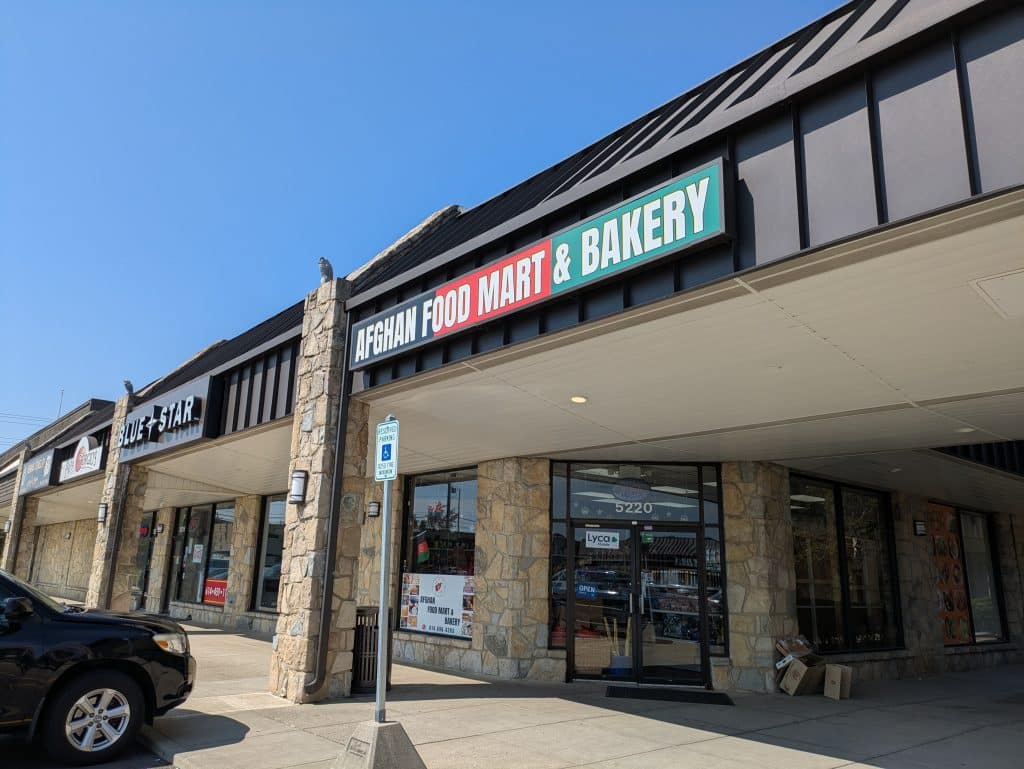
Inside an unassuming storefront off of Bethel Road, several families wait with anticipation. Finally, the swinging doors open and a tantalizing smell emerges, along with a new round of fresh Afghan bread. This is the first Afghan store (and bakery) in Columbus, a meeting place for a burgeoning new community. And business is good.
Four years ago this month, many of the same families who now patronize the Bethel Road shop crowded onto the deadly grounds of Kabul International Airport as American troops pulled out and the Taliban approached. Hundreds of those families resettled in Columbus in 2021 and 2022, many of whom had worked with international organizations or militaries and feared reprisal. As the Afghan newcomers faced the struggles of building new lives in Ohio, a massive effort by local organizations and community members helped them find their feet. Today, a settled and vibrant Afghan community calls Columbus home. But even as they look back with gratitude and forward with ambition, the Trump administration and its immigration policies have presented new challenges.
Natasha Sherzai has never seen Afghanistan. Born in Italy to Afghan parents, she has worked as a retirement manager in Columbus for a decade and a half. She volunteered sometimes, but never envisioned the key role she would play in the local response to the Afghan refugee resettlement crisis.
A donation powers the future of local, independent news in Columbus.
Support Matter News
In August 2021, she watched with horror the events unfolding at the airport in Kabul. “You see all these people running after the planes, and it was horrible.” Sherzai said. “I heard that a lot of these refugees would be placed in different states, and I wondered if they were going to come here to Columbus.”
She followed the news over the following weeks as tens of thousands of evacuated Afghans were moved from military bases abroad to resettlement centers in the United States, and eventually to local refugee resettlement agencies in dozens of cities in nearly every state, including Columbus.
Sherzai began soliciting donations for welcome packages based on a list provided by one of Central Ohio’s resettlement agencies, Community Refugee & Immigration Services (CRIS). These agencies receive government funding to provide housing and other services to refugees for the first months after their arrival, but they lack the resources to provide many of the items needed for daily life. “No dishes, no couches, no chairs, no beds,” Sherzai said. “Some families had nothing. Not because they [CRIS] didn’t try, but because everybody was overwhelmed. They were coming and coming and coming, and there was not enough for everybody.”
Sherzai joined a committee organized by another local organization, MY Project USA, which had a warehouse for furniture and other donations for refugees. Suddenly, Sherzai said, “I was in charge of that, given the keys to this huge warehouse.”
Beyond the physical labor of sorting mountains of donations, the logistics of the operation built overnight were daunting. Sherzai enlisted her husband, Ajmal, and together they coordinated and translated between newly arrived families, CRIS, and an army of donors, transporters, and volunteers. “It was another full-time job, pretty much every day and every weekend,” she said.
This continued for months, and as the needs of the families shifted, the couple’s roles also changed. “Once they started settling, it was looking for jobs,” Sherzai said. “And a lot of people didn’t speak good English.”
The couple reviewed CVs, passed along references, and coached people on American interview practices, and Sherzai can still rattle off the achievements of those they assisted who have kept in touch. Two who arrived in the United States speaking no English now have good jobs at the Honda factory in Marysville, and another has been promoted up the ranks to manager at FedEx.
“Kids are graduating, most people have jobs, most people have moved out of the resettling apartments they were at and found better places,” Sherzai said.
In Afghanistan, Zainullah Shaheedzoy worked with the former government alongside the American army, as well as with the news media. With the help of the American soldiers he knew, he and his family were able to evacuate the country in August 2021. After months in transit camps at U.S. military bases in Wisconsin and elsewhere, they arrived in Columbus, where a friend who had previously left Afghanistan had settled.
“When we arrived in Columbus, my friend was the one who came with his daughters and took us to his house,” Shaheedzoy said.
In the first days, employees from CRIS and other members from the Afghan community stopped by repeatedly to offer help, to purchase necessities for the family, and eventually even to co-sign for the family’s first long-term housing.
When he arrived, Shaheedzoy said his English was weak. He enrolled his entire family in an English program offered at a local church and quickly reached a level where he could contribute to helping other members of his new community with the language. He took a job with Ethiopian Tewahedo Social Services (ETSS), another of the resettlement agencies in Columbus, acting as a liaison for the Afghan community with Columbus City Schools. He’s now approaching four years helping families enroll their kids, coordinate transportation, and address concerns in school.
In 2023, Shaheedzoy also founded a nonprofit, the Afghan Association of Central Ohio, which organizes cultural events for Afghan newcomers “to help them become part of the community.” He points to the annual Nowruz celebration, held on the first day of the solar year, along with the two Eids, major religious holidays. This month, the nonprofit is planning a festival to celebrate Afghan Independence Day, commemorating the anniversary of the treaty which established Afghanistan as a modern state independent from the British Empire. “After four years, now I feel like this is my hometown,” Shaheedzoy said. “When I go out of Columbus and come back to Columbus, I feel that I have come back to my comfort zone.”
Even as Shaheedzoy and his family settle into the vibrant Afghan community emerging in Columbus, he points out new challenges in the Trump era. ETSS has had to eliminate most of its resettlement department as a result of a January executive order suspending the refugee resettlement program. The administration also added Afghanistan to the “travel ban” list, stranding some potential Afghan refugees while simultaneously indicating an intention to focus future refugee resettlement on white South Africans. ETSS Program Director of Resettlement Tatjana Bozhinovski previously managed a team of 16 staff providing services that included resettlement, employment readiness, and intensive case management for those with extra medical needs to people from many countries. But, she said, “with the collapse of these programs, meaning new Executive Orders, stop work orders, the travel bans and all that, obviously at this point we do not have very many arrivals.” Her team has since been cut down to just four.
The cuts to the refugee resettlement programs are significant, not just for Afghans abroad, but also for those here. Irfan Ali Shah Akhundzada himself evacuated from Kabul in 2021 and previously worked for CRIS. Now, he works for US Together, the third local organization which resettled many Afghans in Columbus. He pointed out that many of those newcomers are still stuck in low-paying jobs as drivers or at grocery stores. Very few are working in better-paying professional jobs, he said, and those mostly with CRIS, US Together, and ETSS as caseworkers. As at ETSS, some Afghan caseworkers have already lost their jobs, and now, he said, “every day there is stressful news.” Furthermore, his two young daughters remain in Afghanistan, and as for the chance that they will be able to reunify with him given the new policies, he can only say, “fingers crossed.”
Not all of the Columbus newcomers have received the same government support. One Afghan man now residing in Columbus, who asked that his name be withheld for his safety, worked with international nonprofits and as a result cannot return to Taliban-controlled Afghanistan for fear of reprisal. But unlike others interviewed, he was not evacuated in the American airlifts, with major consequences for his immigration status.
At the time, his only option to leave the country was via a commercial flight to Brazil, which offered humanitarian visas to Afghan refugees. “I decided to come to the U.S. by road, by river, through the Amazon forest,” he said. Over four months, he traversed the dangerous overland route from South America, a choice hundreds of Afghans have made in the past few years as they find it difficult to start a new life in Brazil. He spent more than a month in Mexico before finally crossing the border into the United States, where he was detained for around three months.
Eventually, a friend living in Columbus was able to sponsor him, and he paid the $2,500 bond to be released with his pending asylum application and Temporary Protected Status (TPS), a deportation protection granted to individuals of certain countries whose citizens face ongoing danger were they to return home.
Of the nearly 200,000 Afghans who have come to the United States since 2021, the majority have received permanent residency as part of their Special Immigrant Visa (SIV) cases. But for the estimated 11,000 Afghan refugees with TPS, there is as yet no path to permanent legal status. Some hoped the passage of the so-called Afghan Adjustment Act would remedy this situation, but the bill stalled in Congress.
“A few days ago, I received an email that says, ‘Your TPS Has Been Terminated,’” said the anonymous Afghan man. The Trump administration announced in April that it would end TPS for Afghans. After a brief legal battle, the courts allowed that decision to go into effect in late July, opening thousands of Afghans to the possibility of deportation, including some of the estimated 19,000 Ohioans with TPS.
“I don’t know what to do,” the man said. “You don’t have any options. I have a lot of friends that ICE [Immigration and Customs Enforcement] got them and put them in detention. Now I don’t know what they’re going to do with me if they find out.”
After arriving in 2022, he received his commercial license and now works as a long-haul truck driver. But that work often takes him to Los Angeles and other places where recent immigration enforcement crackdowns have garnered headlines. He fears any load could result in his detention or deportation.
He expressed hope that the Trump administration will stop its immigration crackdown on Afghans. Likewise, he hopes his asylum case will be accepted, and with it that he will acquire permanent residency. If so, he said, “I will definitely stay in Columbus. I don’t want to go anywhere. It’s my first city in the United States. I started my life from zero. Columbus gave me a lot, and I owe Columbus.”
Related Articles
Why Electricity Bills Are So High—and How the Blowback Could Hit Trump
As Democrats and climate activists seize on energy costs as a political issue, new data shows electricity rates rose 5 percent nationwide in 2025. The figures were much higher in some states.
How Wexner’s desire for a city center led to a more fragmented Columbus
As the central Ohio retail magnate faces a larger public reconciliation owing to his ties with disgraced financier Jeffrey Epstein, a look back at how the Wexner name became so synonymous with the city.
‘They took away our voices’: Administrators quash planned Plain City student walkout
In a statement sent late last week to district families, the Jonathan Alder Board of Education wrote that while it recognizes and respects the constitutional right of students to express their views, ‘those rights must be exercised in a manner that does not disrupt the operation of the schools.’