Craft Raccoon takes nest in Merion Village
Rachel Wallis launched her new creative reuse shop and artist studio space with the aim of building community. ‘It’s really trying to keep it grounded in this space of abundance, in this space of creativity,’ she said.
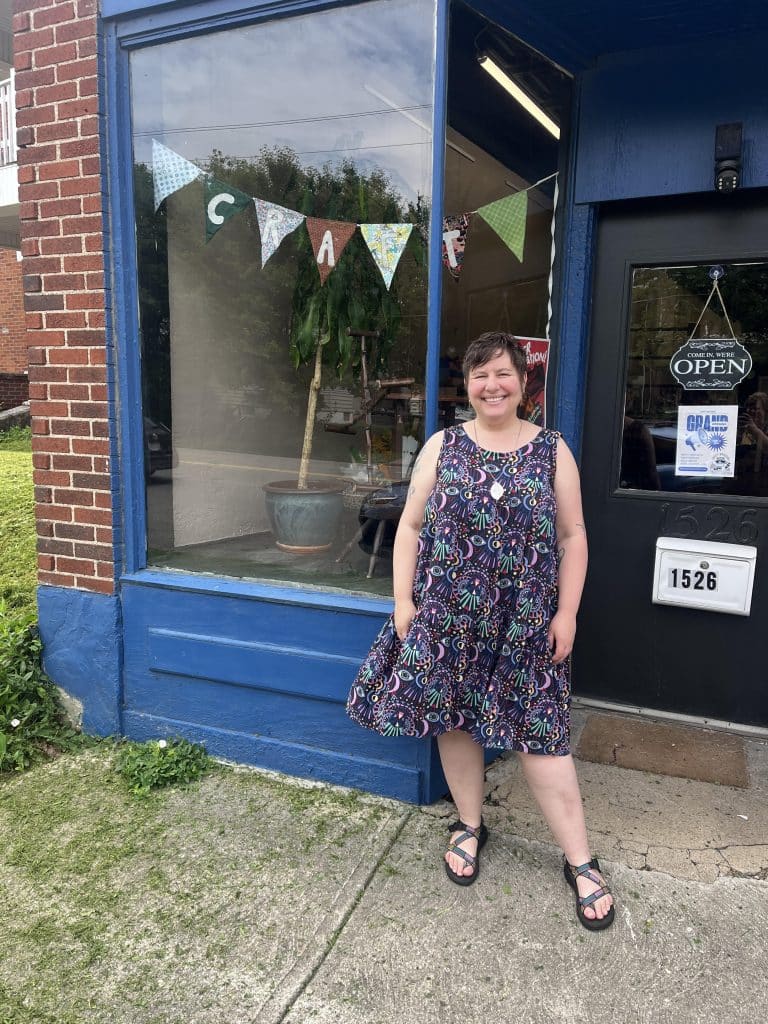
For decades, Rachel Wallis has dreamed of opening a community art space, describing the act of creation as one too often shaped by solitude. “I’m a textile artist, and my work is really community-based, but it’s hard, because I feel as an artist it’s really easy to get siloed in your studio and to become disconnected from other people in your personal practice,” the quilter and textile artist said in an early June interview.
As a counter to this, and as a way of advancing the concept of creative reuse – the utilization of affordable secondhand art supplies that she described as intrinsic to her practice – Wallis recently opened Craft Raccoon Creative Reuse and Community Studio at 1526 S. High St. in Merion Village.
In addition to offering a selection of gently used arts and craft supplies that range from fabric swatches and yarns to soap- and candle-making goods, Wallis intends for the store to develop into a community hub, providing studio space for creatives to gather together and work. In that way, Wallis said the concept had recently started to come full circle, her focus on community resurfacing following a recent stretch in which the day-to-day realities of opening a business took necessary precedence.
A donation powers the future of local, independent news in Columbus.
Support Matter News
“Since I’ve been active on the opening-a-business part, it’s been like, ‘Oh, my God. Now I have to pay rent every month,’” Wallis said. “So, it’s like I’ve been wearing my small business hat for a while. But now, especially this month, it’s like I’ve been planning mending nights, and events with local community organizations, and really reminding myself what this space is for rather than getting swept up in these ideas about success. It’s really trying to keep it grounded in this space of abundance, in this space of creativity.”
Wallis described her initial interest in creative reuse as both an antidote to capitalism – “It’s a practice rooted in the idea that … producing and consuming doesn’t have to be the end all be all, and that there’s enough for everyone in our society if we’re smart about how we’re using things,” she said – and an acknowledgment that these secondhand materials can arrive already imbued with a story.
“I love the idea of an object having a history,” Wallis said. “And I love that as you’re receiving these donated items, you can sort of feel and see the passion of the makers who owned them before coming through.”
While some quilters speak of their introduction to the craft in blood terms, its tenets passed through expanding branches of the family tree for generations, Wallis acknowledged that she’s relatively new to the trade, having picked it up 11 years ago after her sister gave birth to a daughter and recruited Wallis to make a quilt for the infant. “She was like, ‘Somebody is gonna make this kid a quilt, and it’s gonna be you,’” Wallis said, and laughed.
Once she began quilting, however, Wallis quickly connected the practice with her need to explore social justice themes in her work, describing the history of the craft as one deeply rooted in radical causes ranging from abolition to the queer rights movement. “In the beginning, I was thinking a lot about projects like the AIDS quilt, and the different people who used quilts, like the suffragettes and the Civil Rights movement,” she said. “There’s also something about sewing, and with making in general, where inhibitions drop. People start speaking really honestly. They start speaking really personally about themselves and the things they care about. And I found that has been very powerful … in getting people to have these conversations about things in my own practice, whether it’s about prisons or policing or environmental justice or reuse, where people are much more able to engage if they’re doing something else at the same time.”
While much of Wallis’ work takes an outward, societal view, she recently completed a series of introspective pieces in which she began to consider her relationships with aging, to her body, and to the concept of productivity. The artist traced the roots of this more vulnerable work, currently on display at Wild Goose Creative in the group show “Gay Audacity,” to her move from Chicago to Columbus early in the pandemic and the isolation that stemmed from the collision of these world-altering changes.
“Spending a lot of time alone, it changed the way I was making art and thinking about art,” said Wallis, who acknowledged that moving her practice into Craft Racoon could lead to yet another evolution in her work, while also sounding more invested in the potential for others to be touched by the space. “You know, we’re at a moment when the problems facing us seem really, really overwhelming, and it’s hard to think about making change on that scale. But this sort of community level, grassroots, human-scale work is where a lot of us can really make a difference now. And the idea for [Craft Raccoon], I think, really came out of that, and out of wanting … to impact the lives of the people around me on an achievable scale at a time when everything else feels so massive and overwhelming.”
Author
Related Articles
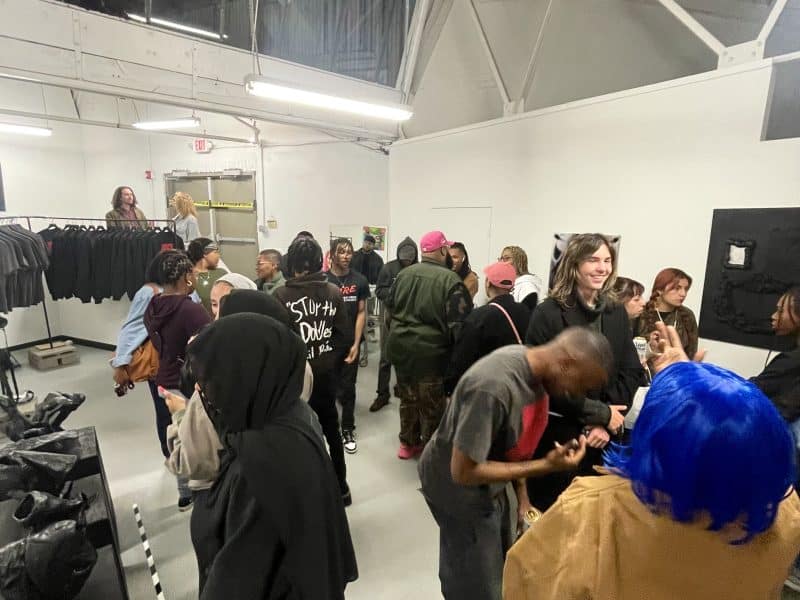
WIT Gallery celebrates turning five while keeping an eye on the future
Poet, artist, and gallery founder Larry Robertson will celebrate the Franklinton art space’s anniversary with a sprawling group exhibition opening on Friday, June 12.
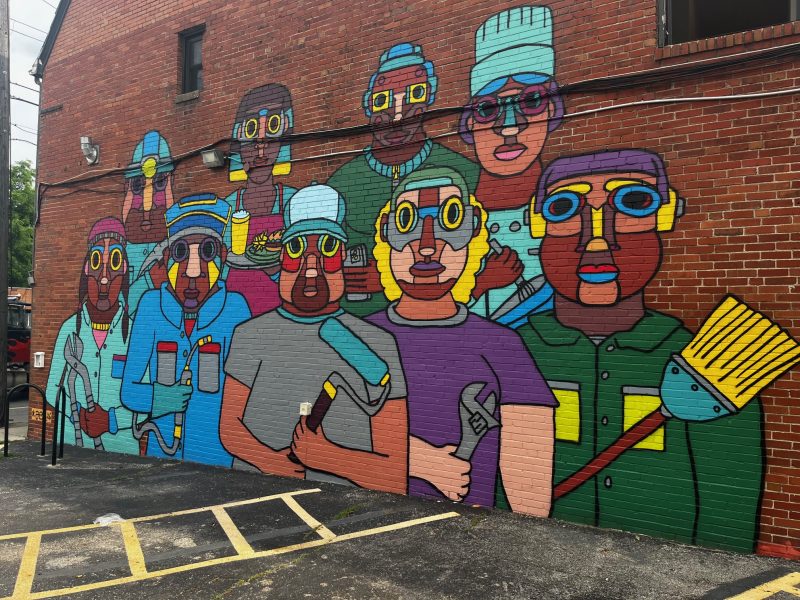
Adam Hernandez aims to uplift immigrant workers with his latest mural
The Columbus artist will be on site at 1014 Parsons Ave. for the public unveiling of ‘We the People/Nosotros la Gente” on Thursday, June 11.
Johnny Williamson finds himself on the other side of ‘Nightmares’
In the midst of rebuilding his life for the second time, the Columbus artist and musician will host a dual album listening party and exhibition at Rehab Tavern in Franklinton on Friday, June 5.