
Craftin’ Outlaws prepares to say goodbye
As the alternative craft fair prepares for its final go-round at the Bluestone on Sunday, Dec. 1, longtime coordinator Megan Green discussed the sense of community and spirit of play fostered by the event.
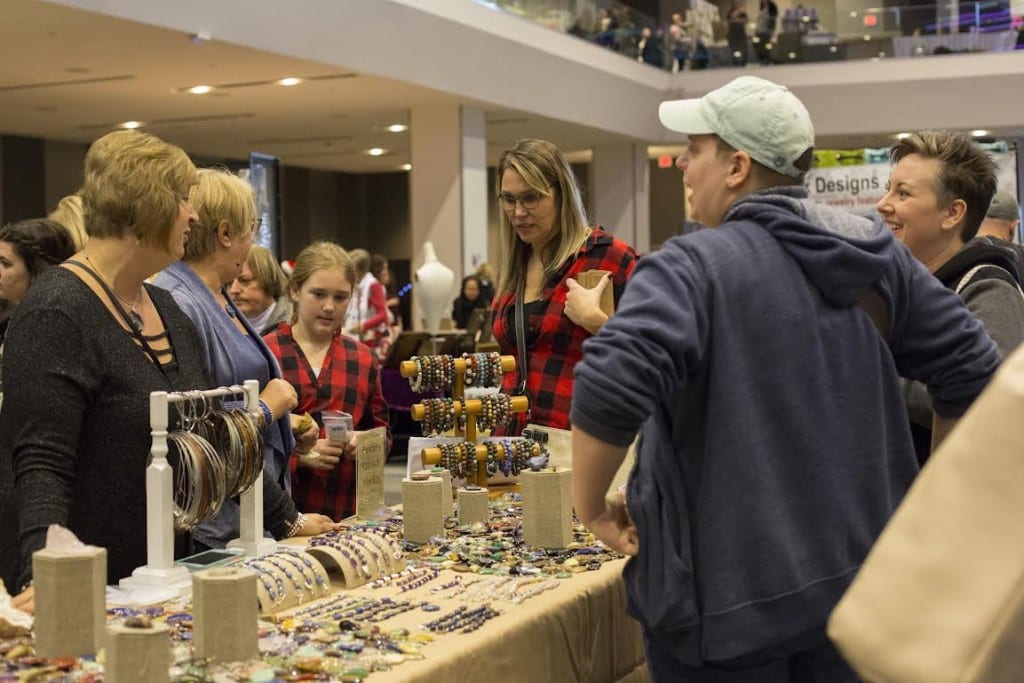
Coming out of the early height of the Covid pandemic, Megan Green said something in Craftin’ Outlaws had shifted. “I could tell the climate had changed, and the atmosphere had changed, and for all of the obvious reasons,” Green said of Columbus’ long-running alternative craft fair, founded in 2005.
And so, about a year ago, Green, who has helmed the fest in some capacity since 2007, approached her board to let them know this year’s event would be her last, and that if they wanted to continue forward under new leadership, they had her full blessing and support. But when nobody expressed an interest in picking up the mantle, everyone involved agreed to call it a day at the conclusion of this year’s event, which takes place at the Bluestone from 10 a.m. to 4 p.m. on Sunday, Dec. 1, followed immediately by an afterparty.
“Sometimes things come to an end,” said Green, who up until this point has been too busy with preparations to feel the full emotional impact of the decision. “I’m sure Sunday’s going to hit me really hard, especially anytime I have to get onstage and make an announcement. And I’m a big hugger and a crier, so I know it’s going to be an emotional day. But I’m trying to block all of that out for now and focus on the details. And then I’m looking forward to Monday, when I can truly breathe.”
A donation powers the future of local, independent news in Columbus.
Support Matter News
The winding down of Craftin’ Outlaws has naturally made Green more reflective. When she first raised her hand to volunteer for a leadership position nearly two decades ago, she was in her late 20s and pregnant with her first child. The event was staged at Skully’s in the Short North in those early days, with Green drawing upon the DIY lessons she absorbed working at the Newport and seeing bands perform throughout Columbus beginning as a teenager. (She still instinctively refers to craft shows as “concerts.”) In those formative early years, both Green’s child and the alt-craft fair grew rapidly, with Craftin’ Outlaws eventually moving to the Convention Center for a stretch, which offered welcome elbow space for vendors but felt somewhat ill-suited to the rock ‘n’ roll ethos with which the fest was established.
“[Craftin’ Outlaws] was kind of counterculture to the more traditional craft fairs. It was a place where people like me were making soaps in the shape of weird, creepy baby doll heads or hand grenades, or repainting bowling pins, or upcycling fabric,” said Green, who for a time operated Stinky Bomb Soap, which offered soaps shaped to look like explosives. “So, getting our customers to the Convention Center … that was a bit of a stretch.”
Over time, though, a number of these vendors were accepted into the mainstream, and Green expressed admiration for the many early Craftin’ Outlaw tablers she watched grow and expand, with some even moving into their own brick and mortar shops
From the onset, the idea of community has been central to the event, best evidenced by the formation of Midwest Craft Con (MCC). Green said the nonprofit first originated as a space in which the crafters, many of whom by necessity spent countless hours ensconced in solitude as they pursued their chosen trades, could foment a needed sense of connection. “We loved bringing everyone together [with Craftin’ Outlaws], but we never really got a chance to commune, other than seeing each other from across the room or across the table,” Green said. “And [MCC] was the way of bringing everyone together to talk about their highs and lows, to share ideas, share resources, and to have some inspiration, some creative release, and some fun.”
Midwest Craft Con also strengthened in Green the concept of chosen family, which is part of what first compelled her to raise her hand and volunteer all of those years ago. “I loved the scene and the community. … And, personally, I had a brother who passed away, and this was a way of rechanneling a lot of the energy from his loss,” she said. “It literally was a chosen family in lots of different ways, and it helped me feel that connection to something else.”
It helped, of course, that Green felt a natural inclination toward crafting, and particularly those trades that allowed her to get her hands dirty, tracing this desire back through her bloodlines and to a mother and grandmother who for years made their own clothes.
“My grandma taught me how to sew, and I think that’s probably my first love,” said Green, who as an adult taught herself to make candles and soap, drawn in by the hands-on nature of the trades, as well as the sense of history that accompanied them. “It’s the idea of allowing the history and the recipes and the processes to inform what you’re doing, and then learning through trial and error. … I’ve dabbled in [numerous] creative artforms, and while I don’t feel the need to sell things again, there’s always that sense of learning and exploring and, yeah, playing.”
Author

Related Articles
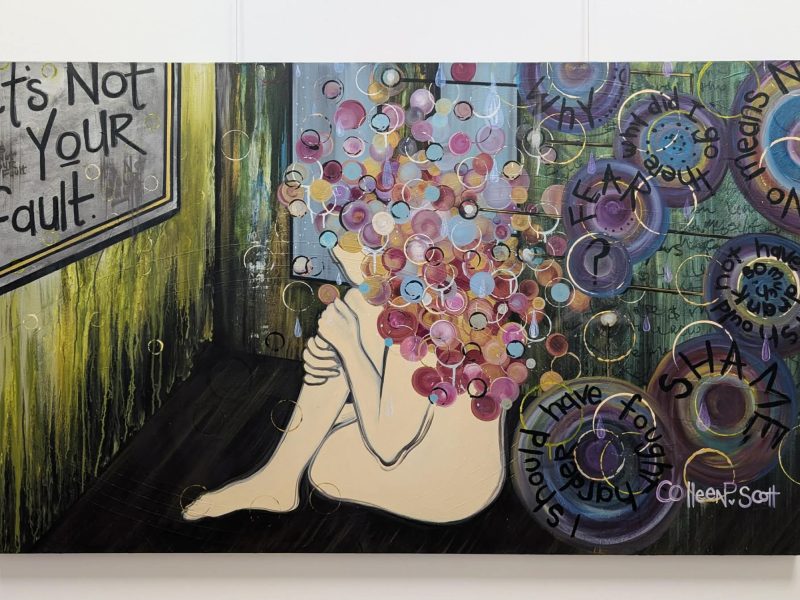
Columbus artist Colleen Scott learns how to love herself again
‘Redirected Pathways,’ which kicks off with an opening reception at the Franklin County Coroner’s Office on Thursday, April 2, centers on work created both pre- and post-sobriety, capturing a personal evolution that speaks to a range of universal concepts.
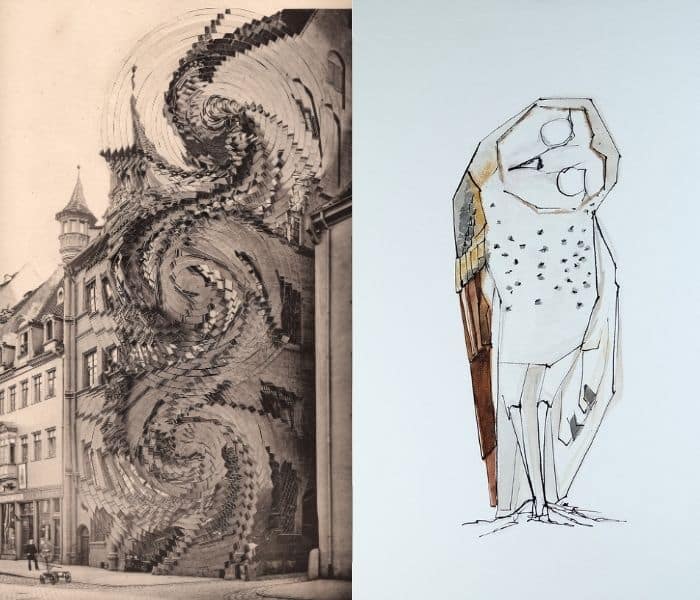
Emily Morgan and Hannah Maltry rely on instinct for ‘We Did It Wrong’
The two artists will host an opening reception for their exhibition at High Road Gallery & Studios from 6-8 p.m. on Saturday, March 28.
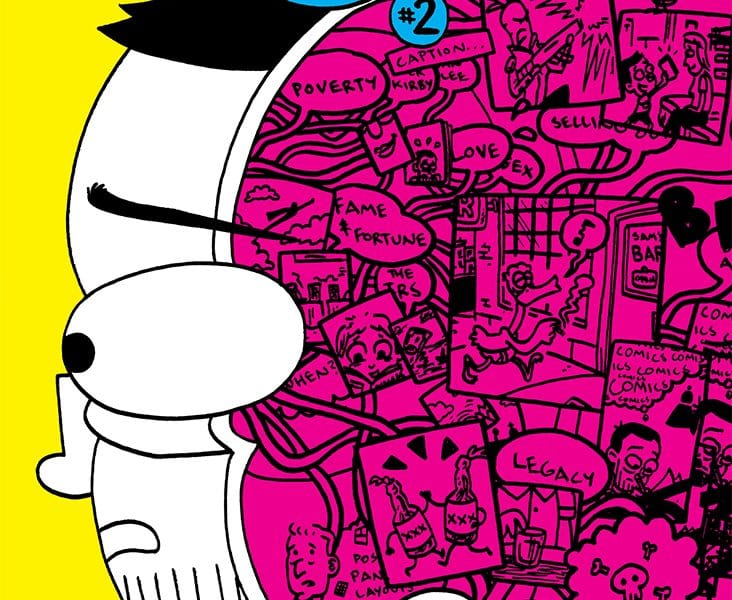
Brian Canini takes stock of 25 years in self-publishing
The Columbus comics artist will unpack lessons learned over the last quarter-century in a weekend talk at SPACE.