
Isaac Harris is ready to meet you now
The photographer and Columbus native, whose work is currently on display at Hammond Harkins Galleries, lives to document the interesting people with whom he crosses paths in the course of his day-to-day adventures.

When Isaac Harris brought his car to a mechanic for repairs a few years back, a dusty photo of a jockey riding a horse displayed on the wall of the shop caught his eye. “And it just looked beautiful, and I was like, ‘Hey, where is that?’” said Harris, a photographer and Columbus native who for the last six years has made his home in Milwaukee, Wisconsin. “And [the mechanic] was like, ‘Oh, that’s in Illinois. You pull up in a pickup truck, bring a cooler of beer, and bet on horse racing.”
The scene immediately sparked Harris’ imagination, owing to his fondness for less-polished, off-the-beaten-path locales such as dive bars and aged, oil-stained mom-and-pop auto shops. So, early in the summer of 2024, the photographer threw a camera and a cooler in his car and headed south to Illinois, pulling up on a scene that made him feel as though he’d driven more than 1,500 miles to cross the Mexican border.
“It’s in the center of Illinois, in the middle of nowhere, and as soon as I pulled up, this older guy was like, ‘Amigo, what are you doing here?’” said Harris, who found himself the lone Black person at a remote track populated entirely by Latinos. “There were no white people, no other races, and these two girls came up and asked me how I even found out about it. And I told them how, and I shot it, and it was beautiful. But there weren’t many people there, and they told me I should come back the next week, because I hadn’t seen anything yet.”
A donation powers the future of local, independent news in Columbus.
Support Matter News
And so, the next week Harris packed his car and made the return trip, greeted by a bustling site that again met him with caution. “I wouldn’t call it tension, but it wasn’t as easy as shooting the first time,” Harris said. “I think some people were like, ‘What’s this guy doing here? What’s he shooting? What’s going on?’ And I was actually asked to stop taking photos toward the end of the day.”
Among the images captured by Harris on that weekend afternoon existed a photograph of a Latino man dressed in American flag cowboy boots, his face obscured by the horse positioned at his side. “And when I was shooting him, I could tell he was maybe trying to hide his face, like he didn’t want to be in the photograph,” said Harris, who titled the resulting image “The Disappearing American” – a rare political statement from the photographer, whose body of work consists largely of personality-rich portraiture. “If you’ve seen my website, you know I’m not political in my work at all. But with everything going on with Trump, with the deportations, and then with the American flag boots and the man hiding his face, there was just so much meaning in the photograph.”
Of course, none of these ideas were present in Harris’ mind when he initially snapped the shot, which is currently on display as part of a new group exhibition at Hammond Harkins Galleries. (The gallery will celebrate part two of its grand reopening with a reception from 5-7 p.m. on Thursday, May 1.)
When President Donald Trump returned to power, however, the photographer returned to the image, struck by the ideas newly present within the frame. “I have this photo of this guy who has been living here I’m sure forever, and who is part of our country,” Harris said. “And with this administration coming in, and the mass deportations, [the photo] definitely took on new meanings. And I felt like I had to use it to say something, to speak out.”
Photography has served as an ever-changing platform for Harris since he first picked up a camera about a dozen years back, initially intent on documenting the eye-catching fashions he saw on display when he relocated to New York City from Columbus. As Harris’ interests shifted over time, he began to frame his subjects differently, often abandoning head-to-toe shots in favor of comparatively zoomed-in portraits, many of which featured an evolving and increasingly eclectic cast of characters.
“I was shooting more older people, and more people with imperfections, though I call them perfections, whether it was a scar or something else,” said Harris, who collected a number of these images in his first photo book, Bad As Can, released in 2022. “Something changed where I wanted my photos to be more artful, and I started to become more attracted to facial expressions and facial features and even the way somebody is walking.”
As one example, he recalled a trip to Las Vegas he initially booked intending to photograph newlyweds exiting the city’s neon chapels – an idea he pivoted from when he noticed a man “floating” down Fremont Street. “And he was just dancing, floating, and I was like, ‘Who is this guy?’” Harris said. “And I was immediately drawn to him, and I ran over and met him. And he was very eccentric, very interesting. And it’s still my favorite portrait from that Vegas series.”
An introvert by nature, Harris allowed that his camera has come to serve as a means to connect more deeply with the world, whether learning the ins and outs of a new city, as he did in his early days shooting fashion-forward images on the streets of New York, or engaging more deeply with people while capturing a series of increasingly intimate, personality-driven portraits.
“To be honest, right now I’m really driven by the thrill of meeting people,” Harris said. “And it’s great if I get a photo out of it, but it’s really about that interaction. It’s almost like, all right, who do I get to meet today?”
Author

Related Articles
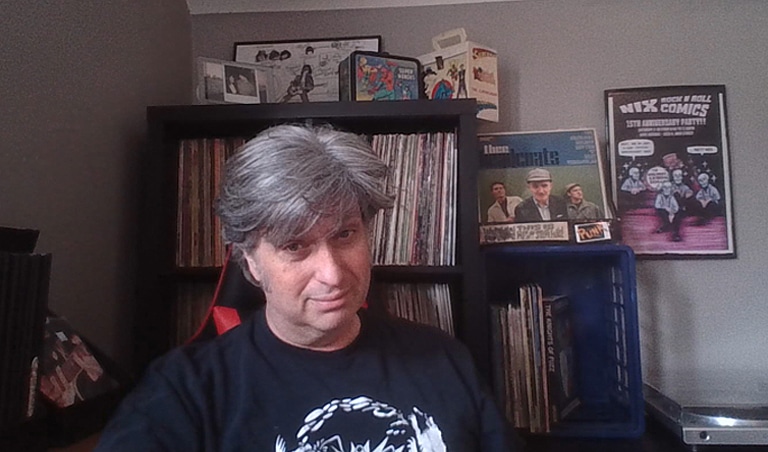
Fifteen years in, Ken Eppstein remains committed to Nix Comics
‘There’s just the improbability of 15 years, and all of the things that have to happen to end up where I am now, doing what I’ve done, and doing what I continue to do.’
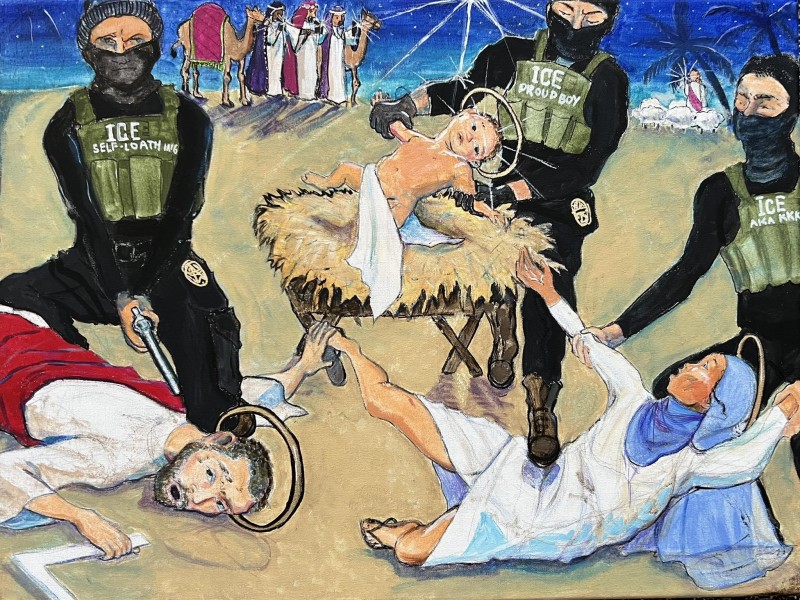
Gaye Reissland leaves no doubt about the circumstances shaping her work
The Columbus artist, who will take part in Aminah Day at the King Arts Complex this weekend, has taken to writing on the back of each canvas, explaining in detail the circumstances that gave rise to her paintings.
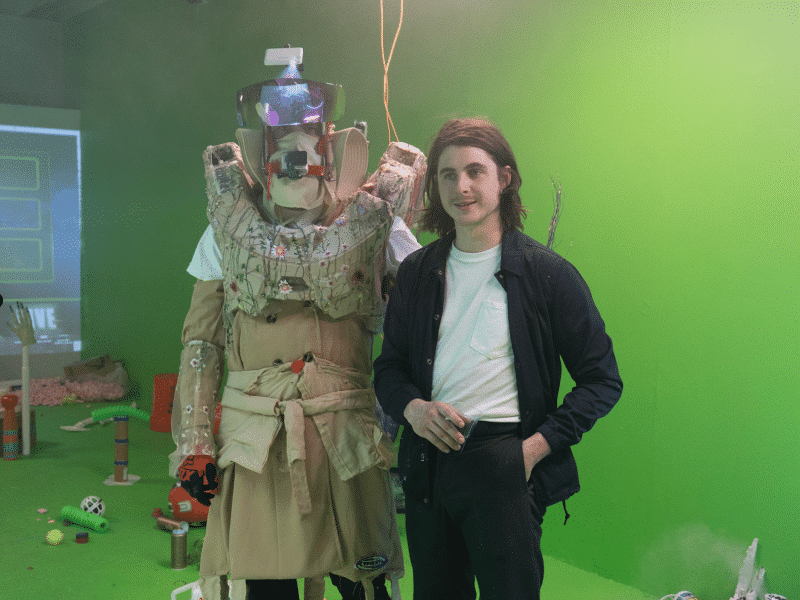
No Place Gallery turns 10
‘Between Fields and What Isn’t: A Decade Inside No Place’ will take over a pair of galleries beginning on Thursday, Feb. 12, with an opening reception running from 4-7 p.m. at Beeler Gallery and then continuing at No Place from 7-9 p.m.