
Miranda Holmes takes an intimate turn at No Place Gallery
The Columbus artist centers joy, connection and bodily pleasure in ‘Lateral Slip,’ which will remain on view at the downtown gallery through Saturday, Sept. 27.
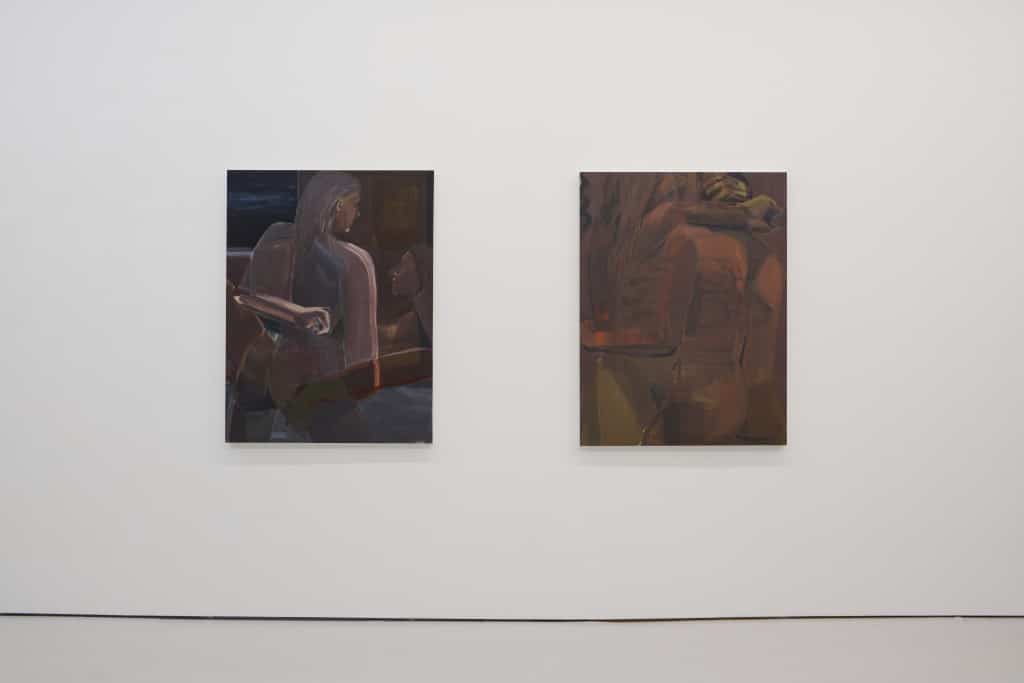
While Miranda Holmes was living in Germany on an arts fellowship last year, she began work on a series that explored concepts surrounding intimacy, leaning into then deeply color-saturated canvases as a means to interrogate the closeness of relationships and the varied ways bodies can move in and out of one another.
“And they were very layered works, where you could almost transparently see through a body into someone else,” Holmes said in mid-September at No Place Gallery, where her new exhibition, “Lateral Slip,” will remain on display through Saturday, Sept. 27.
Initially, Holmes said, these paintings developed in response to a series she completed while earning her master’s in fine arts from Ohio State University, which she described as being centered on strained figures twisted into tension-inducing poses. “I was thinking of the kind of pressure I felt being a perfectionist and really straining my body in terms of optimizing what I could do in a day,” Holmes said. “And after that, I started thinking of calmer sensations, like, okay, our environments are not just out to get us. Our environments can also be loving and caring.”
A donation powers the future of local, independent news in Columbus.
Support Matter News
With the paintings on view in “Lateral Slip,” Holmes recedes deeper into these relaxed vibes, ditching the deeply saturated reds and oranges that dominated the work she created in Berlin last year – a palette she said existed in contrast to the brutalist gray realities of daily life in the German city – pivoting into cooler blue and green tones. As a result, pieces such as “Low Heat” and “Lateral Slip” reverberate with intimacy, the details further blurred, overlapped, and abstracted, as if masked by evening shadows.
First, however, Holmes took a brief moment to address and process current social and political realities, creating a painting displayed in a room adjacent to the main gallery and centered on the ambiguity of this cultural moment. In the painting, the tense arms of male figures mirror the stripes on the United States flag, the looks on their faces distant and disillusioned, a feeling that resonated with the artist at the time.
“I needed to get out my anger, because I didn’t want to dwell on it, and I don’t want to just make work that mirrors our situation,” said Holmes, who was born and raised in State College, Pennsylvania, and moved to Columbus to attend graduate school at Ohio State. “I’m also interested in showing alternatives to help us live within it, like joy and sensuality. There’s so much brain space taken up with the news that sometimes there’s less of an emphasis on the joy we can still experience, or the kind of closeness we still need amongst people. … I don’t want to be desensitized in living my life. I really wanted to dig deep into personal relationships and enjoyment and sex. And not as a way to bury my head in the sand and hide from this political atmosphere, but rather to put the spotlight on bodily sensations and joy.”
And yet, there are places within the larger exhibition where underlying tensions still surface, most obviously in “Hinge Point,” a painting that depicts a pair of figures existent somewhere on the scale between pleasure and pain. “There’s a lot of tension, and maybe some anger where it could tip over into a fight,” Holmes said. “I’m interested in how a micro action can shift the entire atmosphere of a relationship.”
Within “Lateral Slip,” Holmes created a number of larger, figurative works painted with expressive brush strokes in which her shadow-cast figures are more easily read. These sit alongside slightly smaller scale, comparatively abstracted works in which the contortions of bodies engaged in pleasure becomes an almost unrecognizable blur in close-up – an approach the artist adopted in part to sidestep the male gaze so prevalent in many paintings of nude figures.
“I started to think of abstraction as a place where you can offer some privacy to more sexual images,” Holmes said. “It offers a place where I can show joy and pleasure without objectifying the body. … With art, it becomes what the viewer takes on, which is something I love about painting. But it can also be used for nefarious means. And that is present in the history of painting women’s bodies, where it was often for patrons of the arts to enjoy sexually. So, if I’m a painter engaging with the subject matter, I have to think critically about that history.”
At its core, though, the exhibition serves as an exploration of connection in a time when so much focus rests on the gulf that exists between us.
“I think I just have always been really interested in this separation between humans, and how close people can get versus how distant,” Holmes said. “We’re all walking around with our own internal worlds that no one else can really access. But then sometimes we can access it through music or art, or through sex, or through clubbing. … I think I was emboldened by close relationships more now than ever before, or really in any of the time I’ve been making work.”
Author

Related Articles
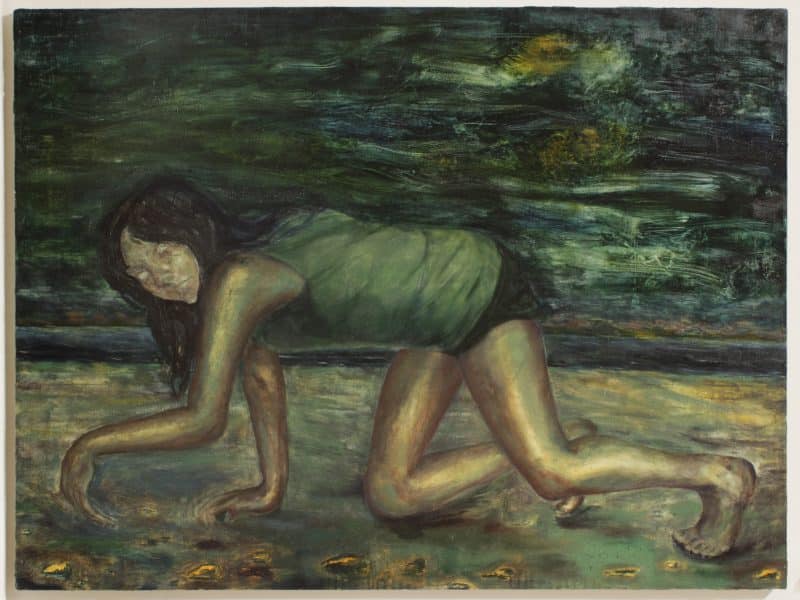
Kasmira Snyder reclaims the night in ‘Untethered’
The new exhibition from the Columbus artist kicks off with an opening reception at Wild Goose tonight (Friday, March 13).
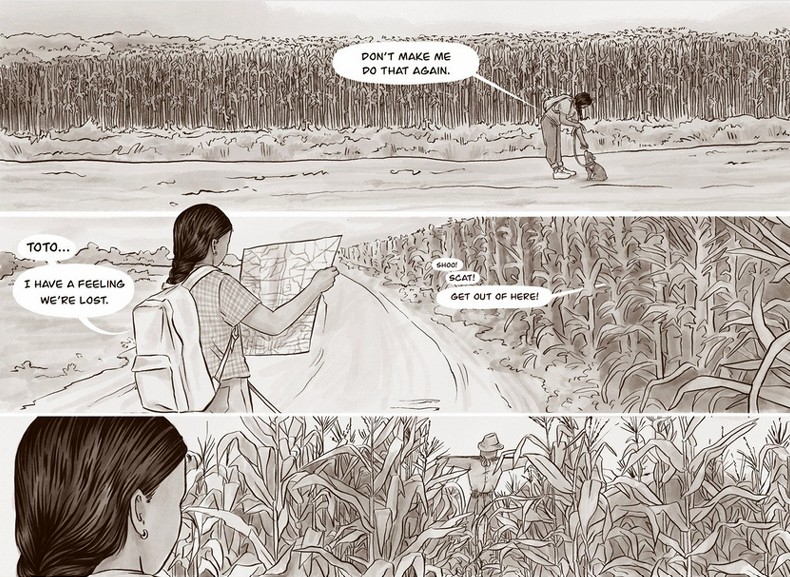
Angelo Thomas finds blue skies on the other end of the rainbow in ‘Somewhere…’
The filmmaker will join artist Rebecca Butterworth in celebrating the release of their new ‘Wizard of Oz’-inspired comic at Laughing Ogre from noon-2 p.m. on Saturday, March 14.
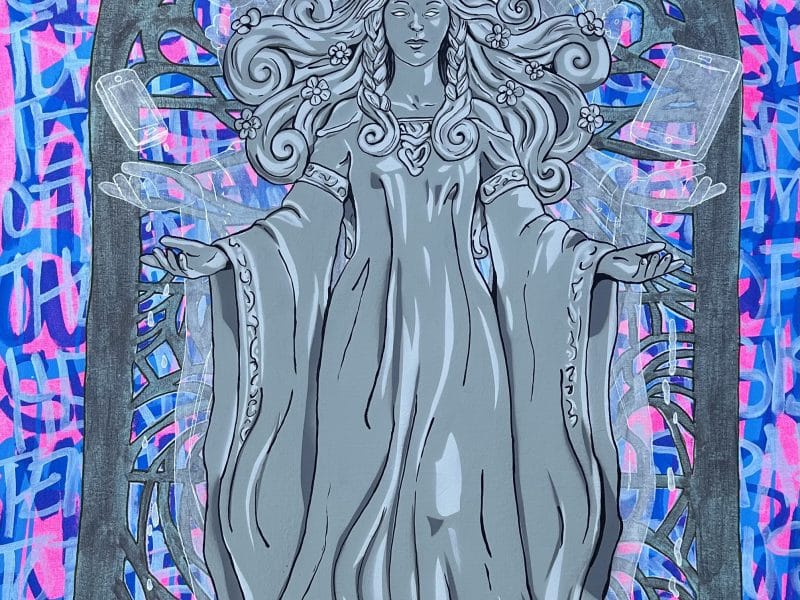
Stephanie Rond hopes to kickstart a larger conversation on AI with ‘Pink Waves’
The Columbus artist wants her new exhibition at Chaos Contemporary Craft to be the start of a bigger discussion regarding the divisive technology.