
No Place Gallery turns 10
‘Between Fields and What Isn’t: A Decade Inside No Place’ will take over a pair of galleries beginning on Thursday, Feb. 12, with an opening reception running from 4-7 p.m. at Beeler Gallery and then continuing at No Place from 7-9 p.m.
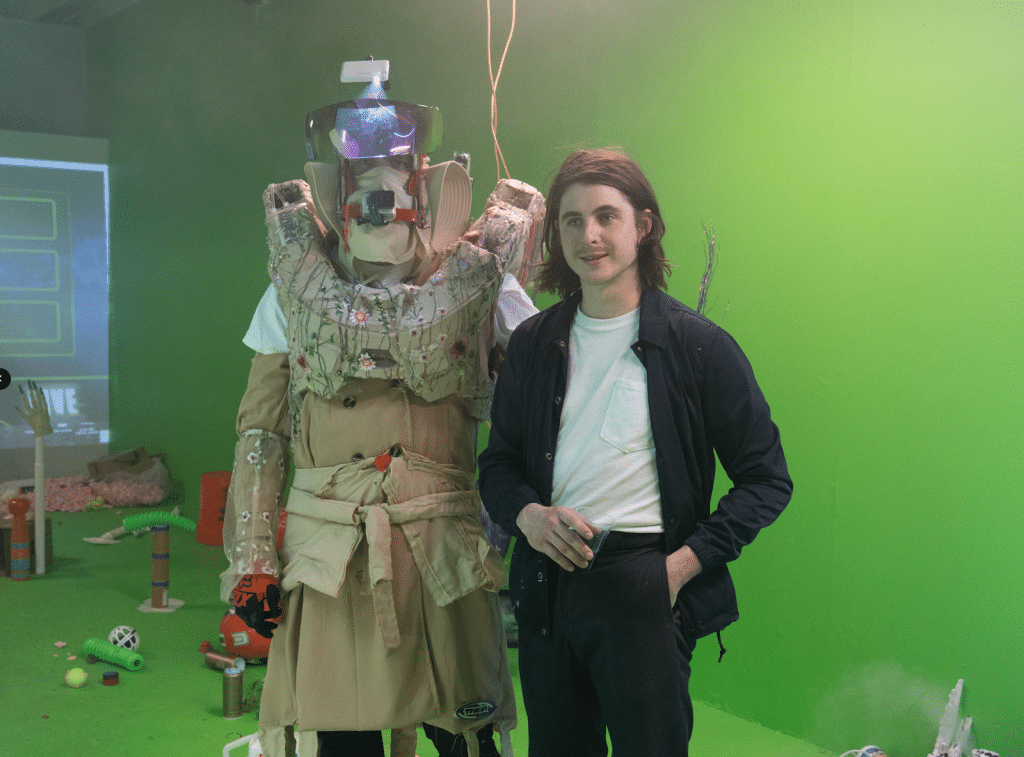
In early February at No Place Gallery, founder James McDevitt-Stredney reflected on a fireside conversation he had with a friend a few years back where the two talked about their early days at CCAD, recalling how even in school McDevitt-Stredney’s attentions often turned toward the work being created by others.
“I had such an affinity for all the things my friends and professors were doing. And I would catalog it, and I would archive the things they were saying and the images they were pulling from and displaying in their artwork,” he said. “And as we were sitting there, I was starting to realize, oh, I think I was always admiring what was happening around me. … And I was trying to curate it, in a way, and trying to understand it. I think from an early age I just loved art. I loved something that was extreme and interesting, and that broke us out of our comfort zones and made us think differently. Something that stood on the cusp of culture … and made us start to reimagine what we can do as people.”
Relayed this story in a phone call earlier this week, Cameron Granger paused. “That’s really someone who found their calling, right?” said the New York-based artist, a Columbus expat with a long history of exhibiting at No Place. (Granger once worked alongside McDevitt-Stredney to construct the wooden frame of a single-room house within the gallery for his show “Heavy as Heaven,” from 2022.) “Places like this don’t last 10 years, right? And that it has is a testament to his vision. That is why No Place has lasted this long.”
A donation powers the future of local, independent news in Columbus.
Support Matter News
That McDevitt-Stredney has been feeling a tick more nostalgic of late should come as little surprise, seeing as recent months have found the gallerist prepping for a sprawling anniversary exhibition, “Between Fields and What Isn’t: A Decade Inside No Place,” which will take over a pair of galleries beginning on Thursday, Feb. 12, with an opening reception running from 4-7 p.m. at Beeler Gallery and then continuing at No Place from 7-9 p.m.
“When I started, I was just a skate rat that wanted to make art and show his friends, and I wanted to do everything all at once,” McDevitt-Stredney said. “And now, it’s a little calmer. And I think a little more strategically about everything – about placement, about the artists I show, and about the opportunities we could have beyond the gallery.”
And yet, artist and friend Gina Ostreloh still sees echoes of that younger self embedded within the DNA of No Place. “I do get that feel of a skater – not in the literal sense, but someone who is really gutsy. Someone who does this because they love it, even though they know they’ll fall and get injured, and they’ll probably break their wrist at some point,” she said. “I mean, sometimes you just need to thread the needle to make it work. Like, he was telling me about hanging two large paintings by Florian Meisenberg, where he was shimmying two long broom poles along the back of the painting to latch it onto something. And it was like, only James. That would never happen in a museum, and that would never happen in certain blue-chip galleries, because most people would be too scared to attempt it. And he just goes for it.”
Granger echoed this idea, describing McDevitt-Stredney as someone routinely “down to clown.” “He’s not going to steer you away from the things you’re interested in, and he’s never like, ‘I don’t think we can do that here,’” Granger said. “And even when he’s not fully sure where you’re going with something, he’s willing to walk with you to get there. … He feels very much like a co-conspirator in a lot of ways, where he’s very much in service of the vision.”
It helps, of course, that McDevitt-Stredney is struck with an innate interest in people and their art – a trait he traced back through childhood and which revealed itself in the way he would so eagerly catalog the creative ventures of his classmates at CCAD. “He has that natural curiosity about how something is transformed from an idea into two- or three-dimensional form,” Ostreloh said. “And he’ll push the boundaries of what people expect of art, combining high and low, or video game aesthetics with minimalism, where it’s like almost anything goes, and there’s no discrepancy between any of those categories at all. And I know this sounds cliche, but it feels like all the art he shows is alive. It’s living and breathing.”
Initially established in 2012 as artist studio spaces in a former Merion Village mechanic shop, the gallery took its name from a sign posted over one the doors in the building, which read, “No Place Like Home.” Though selected on something of a lark, over the years the name has come to take on deeper meaning for McDevitt-Stredney, reflecting the gallery’s continued outsider status within the Columbus art scene but also the way the larger art world can sometimes view those working within the state. “As I dug my heels in, I started to realize when people think of Ohio, they don’t really pinpoint it,” he said. “And for artists, or people who are looking at artists showing here, it’s like, ‘What is that space? I mean, they’re not in a major hub. They’re elsewhere. They’re in the middle of nowhere.’”
Similar trends have also played out within the city, where McDevitt-Stredney again found himself on the outside looking in when city leaders and real estate developers hyped the creation of a new downtown arts district located a stone’s throw from No Place while casting barely a glance his way. “If you are even a little bit outside of the margins, if it’s not an easy thing to put on a billboard, then … the governing entities, the powers that be, they’re not checking for it,” Granger said. “And I think No Place will always have that outsider aspect to it, because there’s an unwillingness to compromise in a lot of ways you don’t often see in these spaces, which is impressive.”
Around 2015, McDevitt-Stredney relocated the studios from Merion Village to an industrial area on the South Side, where within the year he began hosting DIY art exhibitions, utilizing the skills he developed as an art handler and a construction worker helping build out art studios in Franklinton. “In early 2016, I cleaned up the front of the space, painted the floors, and built a weird cube installation,” McDevitt-Stredney said. “And then I invited a bunch of musicians and showed some art. And from that it was like, oh, I might be able to do this.”
From the onset, McDevitt-Stredney had a sense of ambition that stretched beyond Columbus, fueled in part by the artists he met and developed friendships with in cities such as New York, Chicago, and Los Angeles – places to which he would routinely trek by bus as one means of escaping the drudgery he felt working daily to throw up drywall in Franklinton. And as these networks expanded, McDevitt-Stredney began to find other ways to take advantage.
“I’d have friends doing art handling where they would have shuttles to New York or Chicago, and I would hop in and say, ‘Hey, I’ll help you out if you can help me bring some things back,’” said McDevitt-Stredney, who in 2021 moved the gallery to its current location downtown at 1 E. Gay St. “And then I would go to New York, pick up a bunch of work, and put on an exhibition here. And maybe I wasn’t selling anything at the time, or I might sell a thing or two. But I would put that money aside, and maybe the next time I would book a flight or stay somewhere other than a friend’s couch. And that started opening up what might be possible.”
While there have undoubtedly been challenging years, particularly the early months of the pandemic, and then again when Covid benefits ran dry and non-essential spending dropped across the board, No Place has carried on owing in part to its low overhead (McDevitt-Stredney is the sole employee, only more recently buoyed by interns from Ohio State University and CCAD) and the by-your-bootstraps mentality and skillset the gallerist developed in his early years on the DIY scene.
“It’s mind-blowing to me, because James is the art installer, and he also built the walls and installed the floors and the lighting, and he does the cleaning,” Ostreloh said. “And on one hand, he really needs that, because he’s not coming from money. … This is his only option, and there’s no turning back.”
In discussing his decision to move downtown – a location he prized for its accessibility (the space is just off major bus routes) as well as its adjacency to CCAD and the now-closed former location of Skylab, McDevitt-Stredney spoke with similar frankness.
“It was mostly just, I’m going to do it, I’m going to step off this ledge,” he said. “I mean, what else am I going to do? If it fails, it fails. I didn’t want to overthink it because I knew loosely what I was doing, and I knew the space could elevate some of the exhibitions I was thinking about. And, yeah, I was a little terrified. … And I knew it was a massive gamble. But I’d rather have gambled on the culture that exists here, and that can exist and thrive here, than have not.”
Author

Related Articles
New report recommends cutting GCAC funding to increase the Experience Columbus marketing budget
Under the current model, GCAC receives 29 percent of the funds generated by the hotel/motel tax, which a FRAC report calls for reducing to 0 percent. In return, the share allocated to Experience Columbus would rise from 43 percent to 72 percent.
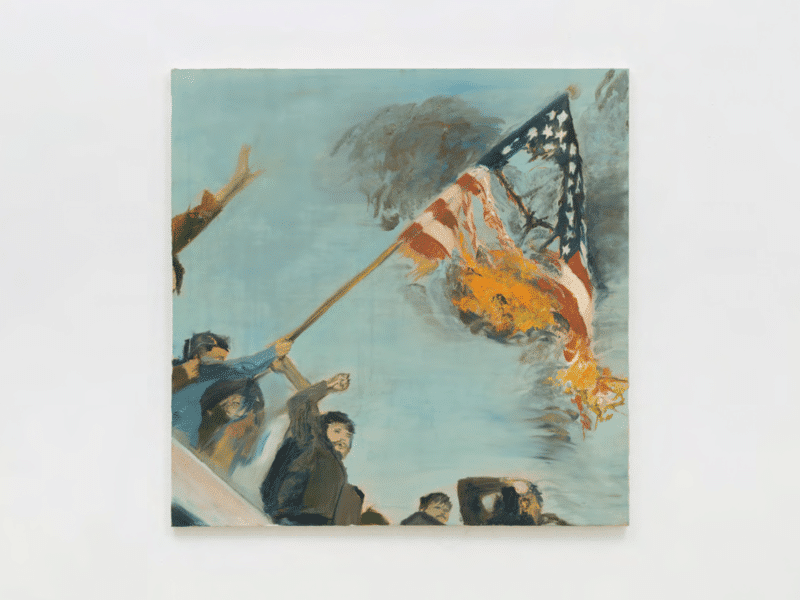
Shiva Addanki and Nikholis Planck continue the conversation in ‘American Inquisition’
The duo’s exhibition, now on view at No Place Gallery, looks both backward and forward, seeing echoes of this social and political moment in ‘the ruins of history.’
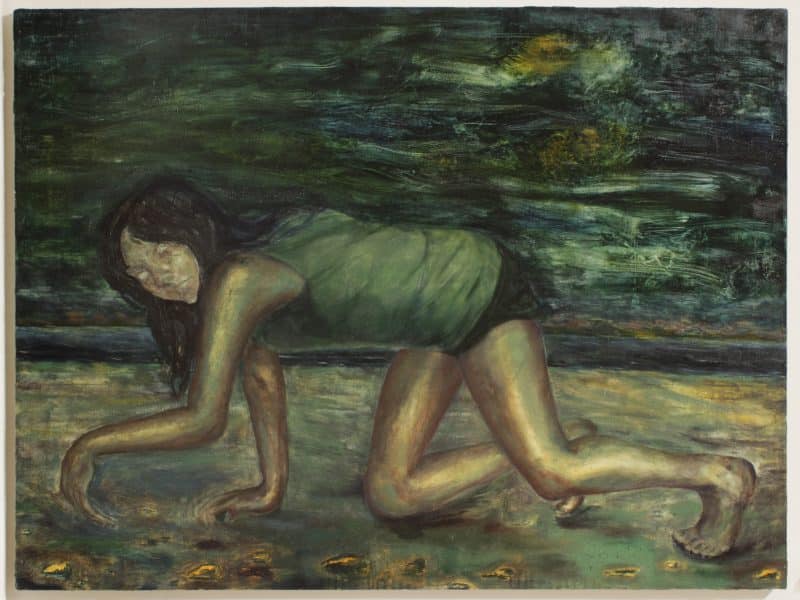
Kasmira Snyder reclaims the night in ‘Untethered’
The new exhibition from the Columbus artist kicks off with an opening reception at Wild Goose tonight (Friday, March 13).