
The evolution of artist Mark Spurgeon
The painter and Greenhorn guitarist will host a reception for his first art exhibition in two decades today (Friday, Feb. 28) at Northwood Artspace.
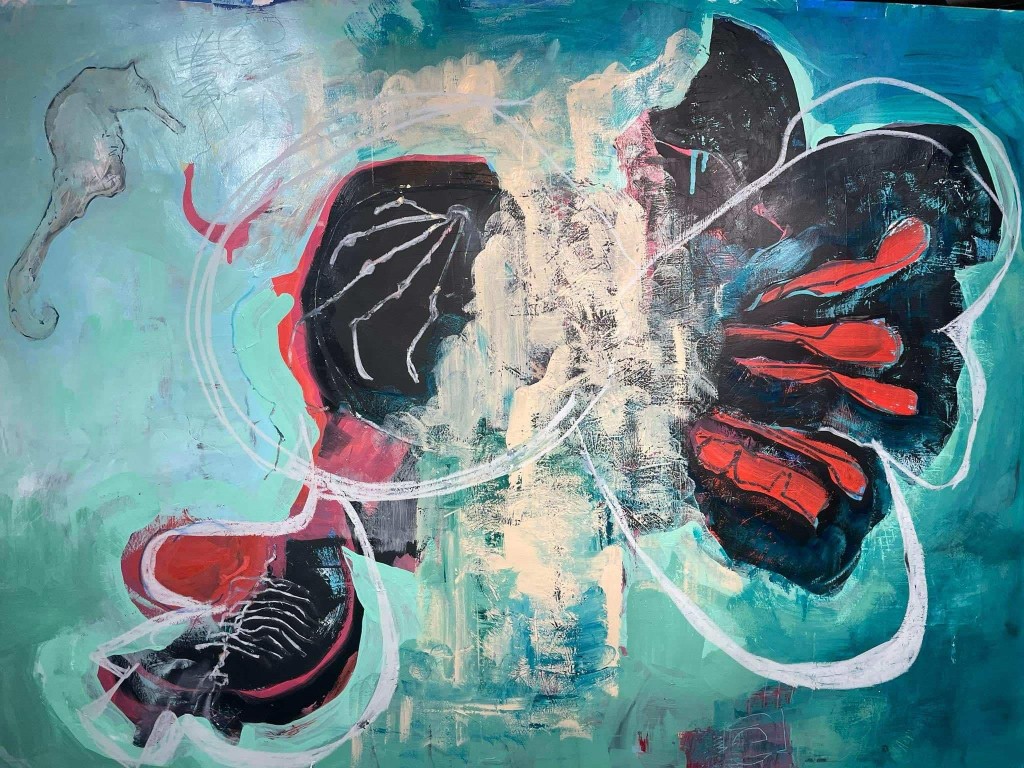
Over the years, artist Mark Spurgeon has become less active in his practice. While he never stopped painting entirely, his pace slowed and he refrained from showing his art publicly, instead shouldering into work at his former day job with Equitas Health, raising a daughter, and, on occasion, playing music in Greenhorn, the long running, sometimes-active Midwestern rock band he helped to form alongside his brother, Dan Spurgeon.
Once the Covid-driven pivot to work-from-home hit, though, Spurgeon no longer had to commute to the office, which opened up more time in his schedule and in turn reignited his interest in painting. “And it really sort of kicked my butt back into producing again,” Spurgeon said in late February at Northwood Artspace, where he will celebrate his new exhibition, “The Evolution of a Painter,” with a reception today (Friday, Feb. 28).
The work that emerged for this show – Spurgeon’s first in 20 years – felt familiar but also new, with the artist describing it in terms of his evolved musical tastes, age having distanced him somewhat from the louder, more aggressive rock of his youth and leading into realms in which he began to explore different shades and textures. “I dropped playing with a large amplifier and started experimenting with my fingers, and then gradually I became more interested in the technical aspects [of music], playing around with melody and some of those more subtle, nuanced sorts of things,” he said. “It was a sense of wanting to explore technique and theory but then also maintain that freedom from those punk rock roots, where you can really allow the sense of discovery that the music is instilled with to kind of guide you.”
A donation powers the future of local, independent news in Columbus.
Support Matter News
Spurgeon’s canvases have evolved in similar ways, maintaining the gestural, in-the-moment brushwork of his earlier paintings, which he said tended to favor big, bold, colorful strokes, but also embracing subtlety in allowing moments of stillness to develop. The bulk of the paintings on display also find Spurgeon exploring compositional balance and the ways contrasting shades can play off of one another – an interest he traced in part to being colorblind, a diagnosis he received as a child and then somehow subsequently forgot.
“When I was in art school, I was studying painting and taking all of these color theory classes, and I was bombing all of them,” Spurgeon said, and laughed. “I was doing all of this extra work, but the professor, who was wonderful, was like, ‘You’re just not getting it.’ And then I was talking to my parents about it over break or something and they were like, ‘Yeah, you’re colorblind. You don’t remember?’ And I was like, ‘Oh, yeah. Crap.’”
As time has passed, Spurgeon has learned to let go with whatever hangups he might have had about his diagnosis coming out of art school, leaning into color more purposely and entirely without reservation. “I decided to say, ‘Okay, I’m just going to paint. I’m going to use a lot of color. And I’m going to explore these relationships,’” he said. “And maybe the choices I make will be great and unexpected, or maybe they will suck. But I’m just going to keep painting. … I always felt like I was the least technically proficient musician in the bands I played in, and I didn’t have a solid grounding in musical theory, but as I listened back to what I was doing, I realized I was introducing some dissonance and picking out notes that appealed to me. … And I really started to think about that idea in relation to my art, and how I don’t care if there’s a dissonant or jarring color, or if the relationships aren’t right. I’m looking for a visceral reaction.”
In most instances, the canvases exist as comparatively formal studies of color and balance rather than reflections of either the artist’s inner life or the increasingly dark and chaotic world he sees developing around him. There are exceptions, though, including an in-progress piece titled “A Parade of Cunts” that is at least partly informed by the stream of mediocre, comically unqualified people President Donald Trump has inserted to head up various government agencies. “I’ve been thinking about the idea of social responsibility as an artist,” Spurgeon said. “And that’s something I’ve struggled with, because some artists very clearly address social justice or inequity, and they represent it very clearly in their work. … But I find sometimes I’m better at coming up with titles that capture those ideas.”
When creating a new painting, Spurgeon said he generally works quickly until he doesn’t, that initial burst occasionally giving way to comparatively painstaking revisions. Some of the displayed works at Northwood have two or three other paintings beneath them, and the artist acknowledged there are times where his attempts to preserve an aspect of a piece can bring the process to a crawl.
“My stumbling block is that sometimes I’ll get addicted, and I’ll say, ‘This beautiful scumbling and this color here, I want to keep that,’ and then I’ll try to work with it. And you know, it’s usually one of those things where it’s like, oh hell, and I finally have to release it and say, ‘This is no longer valuable to me,’” said Spurgeon, who acknowledged that letting go of these so-called darlings in most cases better serves the painting on the whole. “I will say that working together and collaborating is my favorite thing about making music, and I think it’s a similar thing happening here. It’s a balancing of all of the elements and understanding that they all play a part. It’s really weird, and it’s a fluid concept. … But I always want to create something ephemeral, something abstract. … I want it to feel beautiful, and maybe something you or I haven’t seen before. I still always want to surprise myself.”
Author

Related Articles
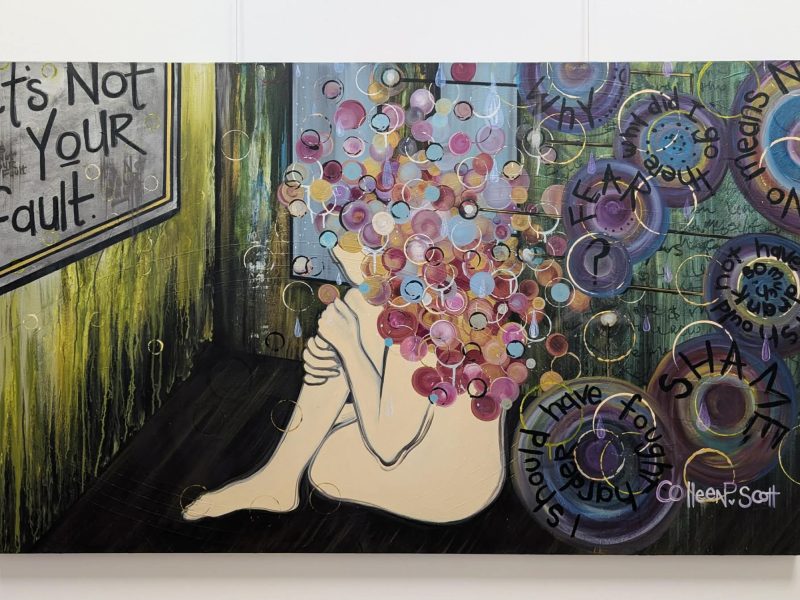
Columbus artist Colleen Scott learns how to love herself again
‘Redirected Pathways,’ which kicks off with an opening reception at the Franklin County Coroner’s Office on Thursday, April 2, centers on work created both pre- and post-sobriety, capturing a personal evolution that speaks to a range of universal concepts.
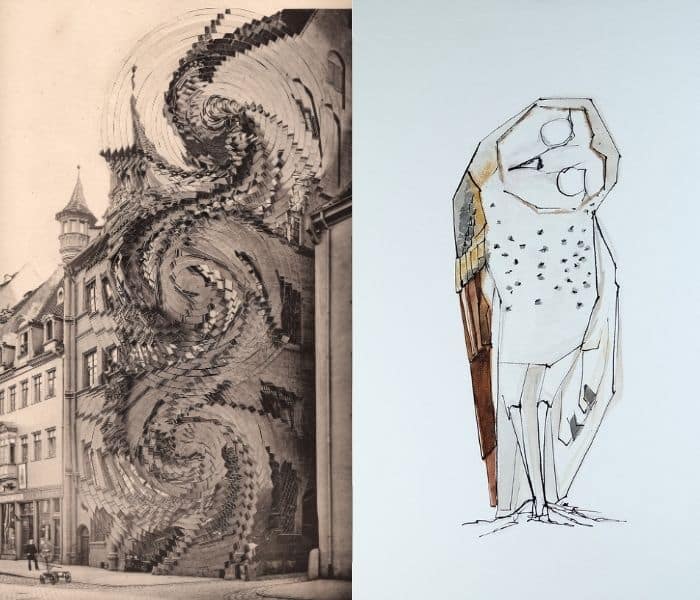
Emily Morgan and Hannah Maltry rely on instinct for ‘We Did It Wrong’
The two artists will host an opening reception for their exhibition at High Road Gallery & Studios from 6-8 p.m. on Saturday, March 28.
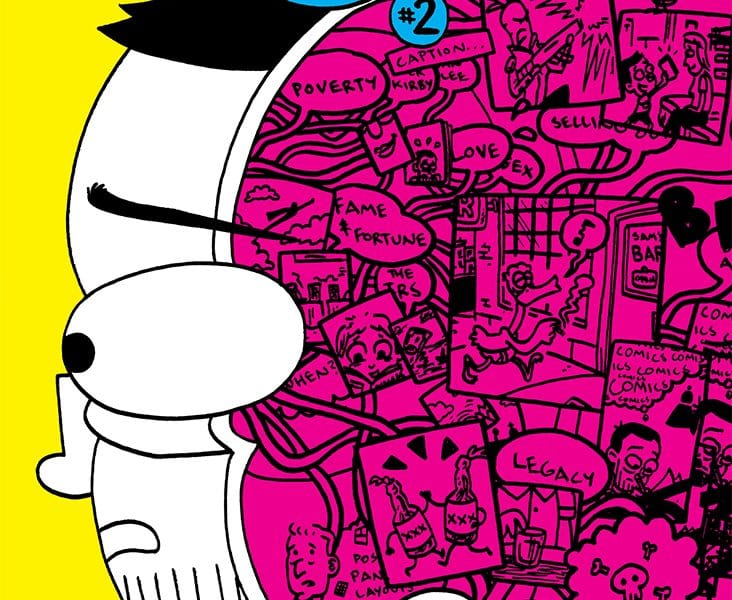
Brian Canini takes stock of 25 years in self-publishing
The Columbus comics artist will unpack lessons learned over the last quarter-century in a weekend talk at SPACE.