
‘Wild Earth’ allows Andy Rahe to revisit the months he apprenticed with Toshiko Takaezu
For 13 months beginning in 1998, the local artist worked intensely alongside the legendary ceramicist, whose work is part of a retrospective now on display at the Columbus Museum of Art.

For 13 months beginning in 1998, Columbus artist Andy Rahe apprenticed with Toshiko Takaezu, an intensive stretch during which he lived and worked alongside the late ceramicist at her rural New Jersey home.
The days were long, generally beginning at 7 a.m. and often extending past midnight, with Rahe’s routine consisting of working in the studio, working in the garden, cleaning the house, and cooking and eating meals together. “Growing vegetables, cooking, and making artwork, those were kind of the three pillars of her life, and so the work shifted between the three,” said Rahe, who recalled the house sitting on a half-acre plot dense with flower and vegetable beds. “It was a triangle where you grow the food to cook, cook the food to eat, and then you eat to have the energy to make the artwork. And then you’d go back to the beginning and work in the garden.”
For Takaezu, whose work is currently on display at the Columbus Museum of Art in “Wild Earth: JB Blunk and Toshiko Takaezu,” gardening and ceramics were deeply interconnected disciplines, both centered on harvesting something from the Earth and then transforming it into something capable of bringing pleasure or sparking a sense of wonder.
A donation powers the future of local, independent news in Columbus.
Support Matter News
“She was interested in seeing what flowers grew, and she loved beautiful things for sure, but she also loved harvesting and planting potatoes, and she would smile ear to ear and be like, ‘I love potatoes,’” said Rahe, who will take part in a panel conversation at CMA on Thursday, May 22, speaking alongside Eva Kwong, Mariah Nielson, and Rick Yoshimoto. “Because [the potato] had its mystery. It’s growing under the soil, and you don’t know what’s happening until you harvest it. … And it’s the same thing with a kiln. You can throw 1,000 pots and do that over decades, but every time you open the kiln, you don’t know. And it’s a new experience every time.”
Rahe first met Takaezu when he was an undergraduate at Skidmore College, a small, liberal arts school located roughly 40 miles north of Albany, New York. At the time, Takaezu was in her mid-70s, and Rahe said she would frequent the college to run workshops while chipping away on a series of six-foot-tall clay pots, which required a significantly larger kiln than the one in her home studio. Early on, Rahe refrained from approaching the artist, aware of her formidable reputation in the art world and content to observe how a master worked from a distance.
“When you’re in undergraduate school, I think you’re so locked in to the methodologies of how your professors do it, so it was really wonderful to see someone who was so singularly focused on the questions that were posed,” said Rahe, who also praised his mentor’s brushwork, describing her clay pieces as “three-dimensional canvases upon which a master painter had also painted.” “She was really pushing the boundaries of what she could do with the clay. I mean, when someone is in their 70s throwing six-foot-tall pieces, you might think they were just ordering a bunch of folks around, and it was actually quite the opposite. She was the first one up the steps we would make for her, standing on top of the countertop to work on the piece. … She was very much like, ‘This is my work. My hands are going to be on it.’ And it shows. You can definitely feel that every single one of her pieces has her special touch, whether it’s the subtlety of the form or something with the brushwork or the glazing. At the end of the day, I think she wanted to be in control of her own story through the artwork.”
“Wild Earth,” Rahe said, draws upon a wide swath of this story, focusing not just on Takaezu’s more colorful clay creations, but also a series of works done in comparatively muted brown tones – echoes of her appreciation for the humble potato. The exhibition also shows how she continued to experiment with closed forms throughout her decades-long career, with Rahe crediting those works for helping to shift the perception of utilitarianism in ceramics.
“She kind of got rid of the utility, right? Not that other people hadn’t closed vessels before, but she did it for 50 years. … I think the closed form was something that intrigued her, and she pushed to find as many answers for it as she could,” Rahe said.
Takaezu, for her part, appeared drawn to these enclosed vessels owing in part to the sense of mystery generated by sealing off a form. Writing in In the Language of Silence: The Art of Toshiko Takaezu, Peter Held recounted the time a Hawaiian journalist asked the artist why she chose to close off her pots. “Because the most important thing is the dark space inside,” Takaezu said.
Toward the end of her life, Takaezu, who died in 2011 at age 88, began to divest from the works in her private collection, making free donations to museums across the country, with the only prerequisite being that the institution needed to have previously taken ownership of at least one of her pieces. CMA, in turn, benefited from Rahe’s presence in the city, with the artist, who taught visual arts at Columbus Academy for 13 years, serving as a liaison between the museum and Takaezu, whose subsequent donation forms the backbone of “Wild Earth,” one in a number of worldwide exhibitions that have helped to spark fresh interest in the ceramicist’s life and art.
“It’s really been wonderful to see this renewed scholarship where shows like this one in Columbus are really continuing to put her work in different contexts,” Rahe said. “I often say this, but there’s a timeless nature to Toshiko’s work … where you cannot tell if this was made 1,000 years ago or if this was made two years ago, which really adds to the intrigue. … There’s a mysterious quality to her work where it’s up to the viewer to understand or add that meaning, and I think she would love that.”
Author

Related Articles
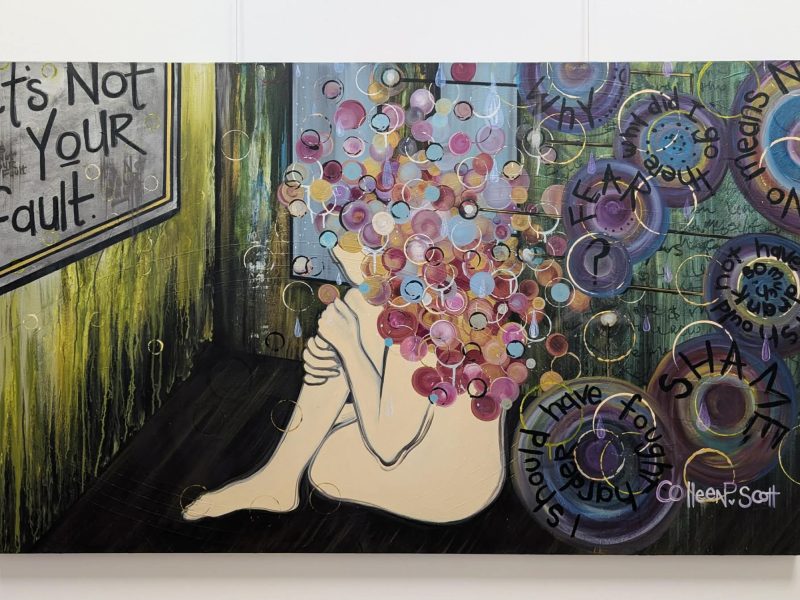
Columbus artist Colleen Scott learns how to love herself again
‘Redirected Pathways,’ which kicks off with an opening reception at the Franklin County Coroner’s Office on Thursday, April 2, centers on work created both pre- and post-sobriety, capturing a personal evolution that speaks to a range of universal concepts.
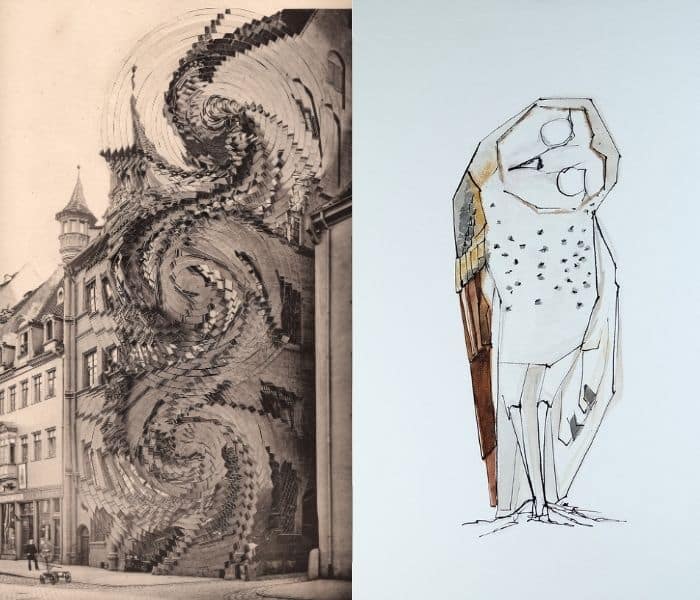
Emily Morgan and Hannah Maltry rely on instinct for ‘We Did It Wrong’
The two artists will host an opening reception for their exhibition at High Road Gallery & Studios from 6-8 p.m. on Saturday, March 28.
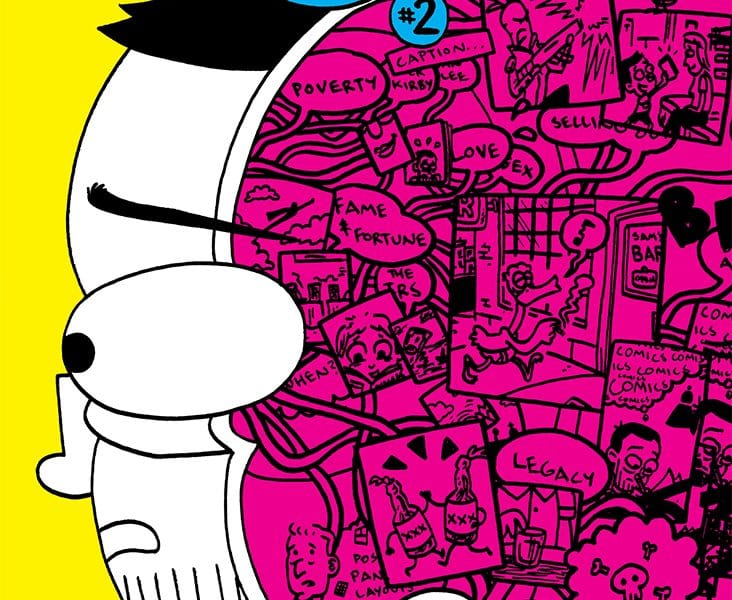
Brian Canini takes stock of 25 years in self-publishing
The Columbus comics artist will unpack lessons learned over the last quarter-century in a weekend talk at SPACE.