
DrippDaDon captures the rhythm of life in globe-trotting sound
The musician, who performs at ComFest today (Friday, June 23), finally learned to embrace the Afropop he absorbed as a child in Zambia with the infectious ‘JuJu.’
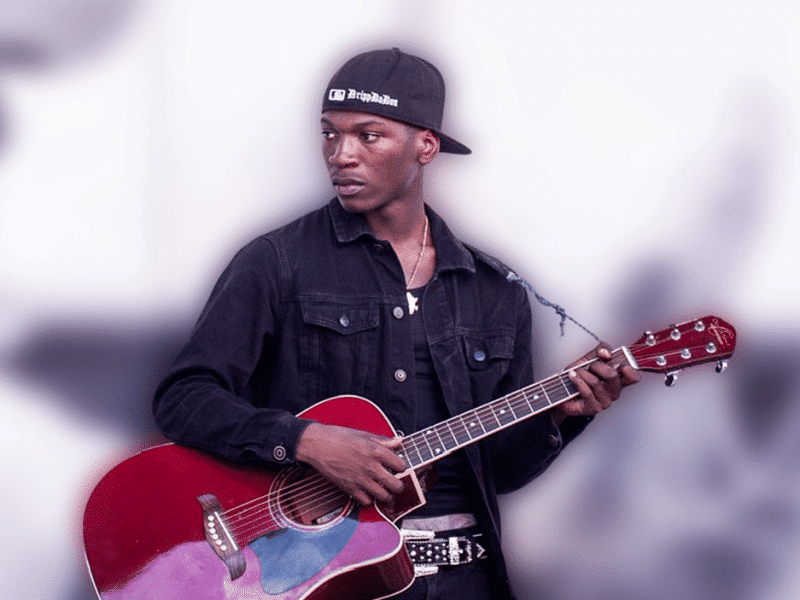
Music has always been second nature to DrippDaDon, who was born in Lusaka, Zambia, to a choir director father and grew up immersed in the artform.
“As a really, really small baby, I was in choir rehearsals, and I used to watch him work, teaching other people their parts,” said Dripp, 19, who as a child emigrated to Columbus with his family. “Even though him and my mom were divorced in the early years, being in America I still had the chance to watch him work in that music space, and whenever I picked up an instrument it was easy for me. So, I naturally gravitated to it.”
Early on, Dripp focused his energies on the drums, first learning to play while living in an African refugee camp. Even now, hearing that percussive, tribal rhythm can transport the musician back to his homeland, and to his family’s roots in Rwanda, where his ancestors lived before his mother was forced to flee to Zambia by foot when civil war erupted in the early 1990s.
“My mom is pretty honest, and she’d tell stories [about the journey], and a lot of it was, ‘I’m going to show you what we came from so you can understand what you have right now,’” said Dripp, who performs at ComFest this weekend, joining Jae Esquire on the Goodale Park stage at 1:50 pm today (Friday, June 23). “Her thing was always, ‘We’re not the same. We’re different. And you have to understand the power that holds.’”
But after relocating to Columbus, Dripp sometimes struggled with these differences. He said as a child he was “short and awkward looking,” and classmates regularly bullied him, teasing him about everything from the way he smelled to the way he dressed. “I got called every name in the book,” he said. “But my parents really instilled in us that you are who you are, and you were sent for a reason. … So, when it came to the bullying, it was like, alright, cool. You don’t like what I’m wearing? You don’t like how I look, how I smell? It’s fine. I’m going to keep doing my own thing regardless, and I’m going to stay myself.”
As Dripp struggled to fit in, he immersed himself in music as a means of finding needed comfort, recalling how he would spend his lunch breaks playing piano in the choir room at Hamilton STEM Academy. He also joined the marching band as a trombonist, drawn the flexibility offered by the instrument, and the sense of control he felt in bending and warping notes.
Running through everything, though, was that sense of rhythm that Dripp traced back to the days when he first pounded on the drums while living in the Zambian refugee camp.
“It’s all about the rhythm, and that’s something I don’t think people understand about other instruments,” Dripp said. “It’s not just about notes. When you go to a guitar, there’s a rhythm. How do you feel the beat? Is there that bounce? With everything, it’s about rhythm. And understanding that was foundational for me, because when I move to different instruments, I play them weird. Even when I play guitar, I taught myself, and I don’t play how people traditionally play. My chords, people might call them wrong, but they feel it anyway.”
Growing up surrounded by music has gifted Dripp the ability to pull melodies and rhythms from the motions of day-to-day life, with the musician recalling a time when he worked at McDonald’s and created a song around the chiming sound of the french fry timer. “It was a weird rhythm, and I kept catching it,” said Dripp, who then took out his cell phone and recorded a verse on the fly as the fryer chirped.
A turning point in Dripp’s sonic journey arose from a similarly nondescript moment, with the musician milling about in the kitchen with his mom as she pounded out the dough for a traditional African bread. “And she was smacking on it, and I heard this beat,” said Dripp, who prior to that moment had shied away from the music he absorbed as a child. “I had stayed away from Afrobeat for a second … because I felt like it would be playing into a stereotype. But once I heard my mom smacking on that bread, and I got that beat in my head, it was like, let’s try it.”
Dripp described the resulting song, “JuJu,” as his biggest to date, saying that it unlocked a new sense of fearlessness in melding the sounds of Africa with the American pop he took in listening to the radio as a teenager.
“Before ‘JuJu,’ I had no Afrobeat songs. And after, it was like, let’s go. This is a lane,” Dripp said. “This is what I love right here. This feels like home.”
Author
Related Articles
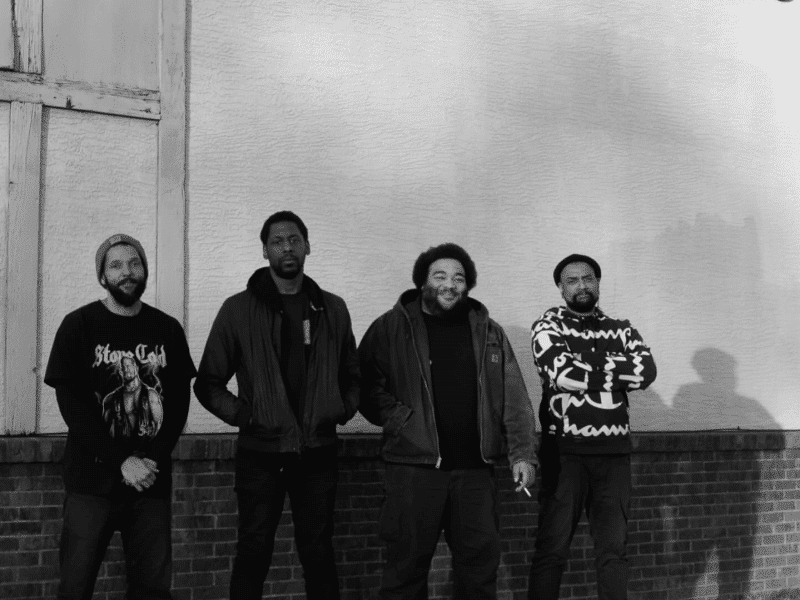
Minority Threat begins to find a new way forward ahead of Blockout Bash
The split Columbus/Cleveland hardcore quartet headlines Dirty Dungarees as part of the daylong Old North festival on Saturday, Aug. 1.
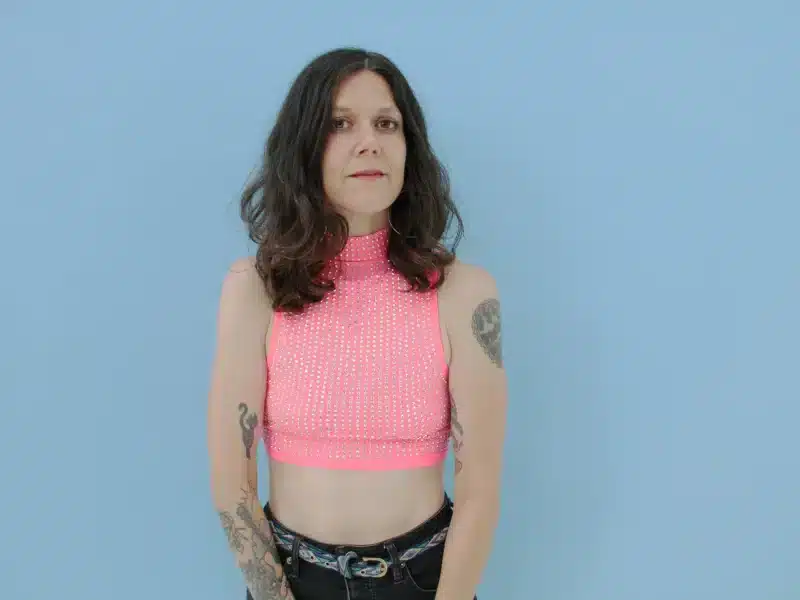
Lilly Hiatt captures the restlessness of settling down with ‘Forever’
The Nashville singer and songwriter headlines a concert at Natalie’s Grandview on Thursday, July 30.

‘The whole time we were chasing our dreams, we were actually living the dream’
Long-running Columbus power-pop band Watershed will celebrate the reissue of Joe Oestreich’s memoir ‘Hitless Wonder’ with a conversation at Used Kids Records and a sold-out concert at Natalie’s Grandview.