
Adam Remnant navigates the divide on ‘Big Doors’
The Athens musician will celebrate the release of his new full-length album in concert alongside his band the Signs at Natalie’s Grandview on Friday, Sept. 27.

Adam Remnant started on the songs that would become his new album Big Doors in the months prior to the pandemic. But when he and co-producer Jon Helm resumed work on the recordings in the wake of the long, lockdown-driven pause, the material started to take a different shape, influenced in part by the numerous ways that Covid had revealed the flaws inherent in our economic and political systems.
“I feel like it lifted the veil to some extent, and that’s certainly in the record,” said Remnant, who will celebrate the release of Big Doors in concert alongside his band the Signs at Natalie’s Grandview on Friday, Sept. 27. “It’s sort of like that movie ‘They Live’ … where the guy puts on the sunglasses and then he can see all of these different ideologies at work. … In some ways, American culture feeds us these stories. There are these religious stories about salvation and freedom after death. And then there’s this economic story with the American dream, which tells you that if you follow your passions, all of your dreams will come true. So, to me, that’s what this record is about. It’s about sort of inheriting all of these and then growing up and realizing that they’re just stories.”
Beyond the pandemic, Remnant, 43, said the songs also bear the scars of experience, recalling the sense of idealism that propelled him through his early 20s and how he had jettisoned some of that way of thinking as he reached his late 30s and some of these songs started to take shape. “As your 30s are winding down, you kind of get to see where you’re at as you’ve been chasing this thing, these goals you wanted to accomplish,” he said. “You just live long enough to see what still holds up. And, for me, a lot of that youthful way of thinking began to expire. I don’t think I’m cynical, though. And with that you hopefully start to get a deeper, richer understanding of what life is about and what you’re trying to achieve.”
A donation powers the future of local, independent news in Columbus.
Support Matter News
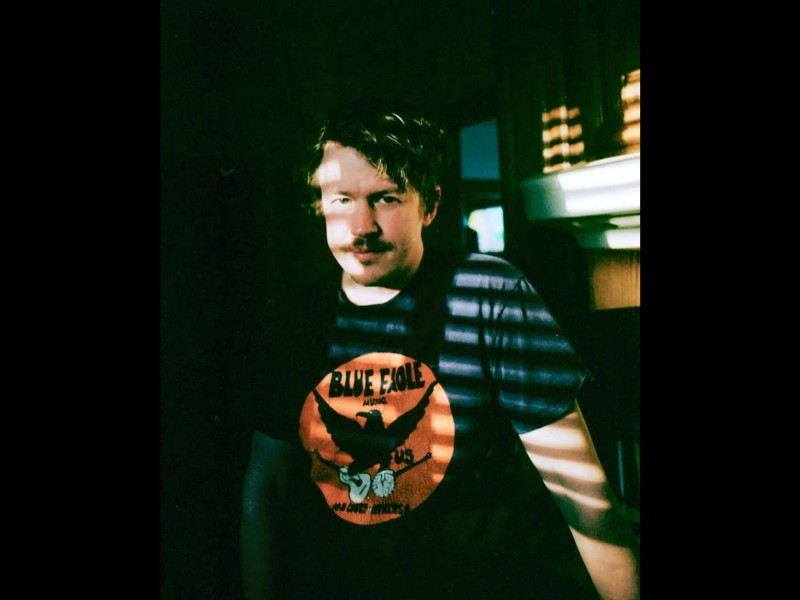
Big Doors opens with a brief instrumental (“Here”) before Remnant and Co. launch into the Old Testament-evoking “Coming Down,” which finds its narrator returning from the mount with the Good Word etched not into stone tablets a la Moses, but rather written haphazardly on their palms. “It’s like, ‘Wait, what was the wisdom revealed to me up there?’” Remnant said, and laughed. “And it’s just smearing off.”
These kinds of biblical allusions abound throughout – there are references to resurrections, baptisms and long stretches spent wandering lost in the desert – a narrative device Remnant traced to his upbringing in the church, and which continues to hold literary weight for the musician even though he no longer considers himself a believer. A similar tug exists within the characters who populate the record, the bulk of whom keep an eye on the heavens even as they drag their bodies through this earthly plane, Remnant singing: “Not a star or constellation graced the skies above West Texas”; “As I traversed those starlit skies”; “Watching the sky grow dark.”
“I think so often we’re trying to believe the stories and we want to believe the stories, and that can give us comfort and solace,” Remnant said. “I also think it’s okay to not believe it, or to feel disappointed by it. Or some days just to drudge up the energy to get through work. But because these stories are so embedded in American culture, sometimes it’s hard to say, ‘This doesn’t always feel like it’s working for me.’ … I feel like most times when people write press releases for albums, it’s all optimism, and it’s about how they’ve come through to the other side of this journey. But I don’t think that’s how life is. I’m still getting up and dealing with my own psyche and trying to put on a brave face to go meet the world and do the things I think are valuable.”
Thematically, this divide is explored in a pair of contrasting songs, with the title track more focused on the here and now – “I like to think that narrator is dealing in the material realm and just figuring out, ‘Hey, I just gotta put my head down and do the work, and whatever comes of that comes of that,’” Remnant said – and the album-closing epic “Keys to the Kingdom” addressing a number of Big Questions. “It’s the other side of the coin,” Remnant continued, “you know, asking what happens when you die, wrestling with salvation – things like that.”
Everything down to the structure of the record reflects this dichotomy. Side A kicks off with the piano-led “Here,” a relatively stoic, somber, earthbound instrumental, while Side B begins with the comparatively ethereal “Hereafter,” a mostly instrumental ditty built on acoustic guitar, celestial drones of keyboard, and a brief, angelic vocal chorus.
Indeed, there’s a noticeable gravitational shift that seems to take place within the music as the album progresses, with earlier tracks feeling weighted down or compressed by gravity and the songs on the back half achieving a sense of weightlessness, as through the molecules in the music are more easily able to expand and breathe as the band arches closer to the heavens. This is particularly true of “When You Get Back Home,” a song that counters the narrator’s dark mood and shaken belief system (“I once believed/You were all that I need/Now I know that won’t do”) with music that practically radiates light.
In some sense, exploring this space between allowed the music to open up in unexpected ways, with Remnant and his bandmates – brother and bass guitarist Jesse Remnant, drummer Jon Helm and keyboardist Mery Steel – crafting an art-damaged folk-rock world that nods to albums such as Wilco’s Yankee Hotel Foxtrot and Jim O’Rourke’s Eureka.
“I think we were just letting those themes envelop our creativity and guide us into that more unconventional way of making a record,” Remnant said. “We just allowed a lot more space when we were working to be like, ‘Let’s just see what happens.’ ‘Hereafter’ is a great example, where we went into the studio, and we didn’t even know what we were going to be working on. And I was like, ‘I have this idea.’ And so, we had the synthesizer playing this melody, and then Mery Steel came in with this beautiful arpeggio part on the Rhodes [piano]. And ‘Hereafter’ felt like the perfect title for it, because it felt like floating on a cloud. I remember being like, ‘If we were going to start a cult, this would be our song.’”
Author

Related Articles
How a Columbus trio ended up backing Tenacious D’s Kyle Gass
Mt. Air teamed with Gass for a string of Midwest dates that includes a stop at Rumba Cafe on Saturday, April 4.
Wednesday speaks for the people on the fringes at King of Clubs
Performing in Columbus on Monday, the North Carolina band displayed a knack for giving three-dimensional life to those out-of-sight folks who are often victims of circumstance.
Following extended layover, Paper Airplane again takes flight
The Columbus indie-rock quintet will celebrate the release of new album ‘In a Great Big Field’ in concert at Rambling House on Friday, March 27.