
Alejandro Escovedo takes a spin with past ghosts on ‘Echo Dancing’
The Texas singer and songwriter, who headlines a concert at Rumba Cafe on Tuesday, April 8, still believes in the power of rock and roll that helped to shape him as a younger man.
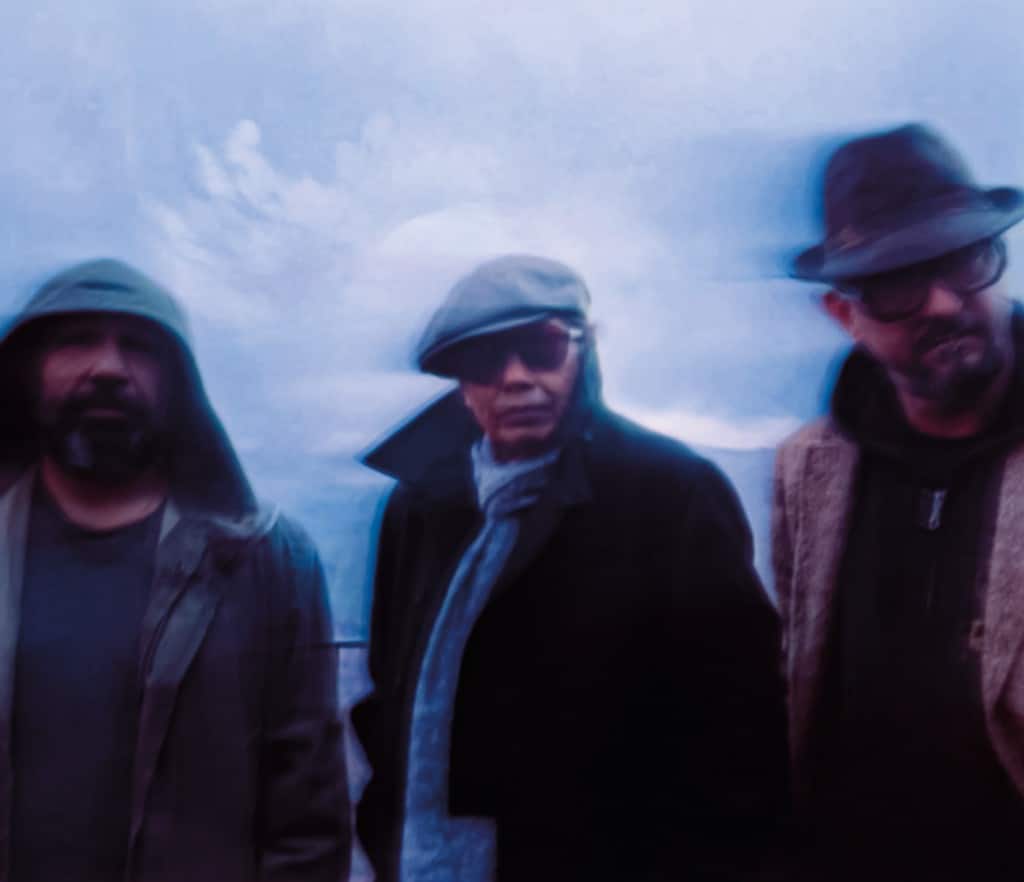
When Alejandro Escovedo set off for Italy to record what would become Echo Dancing, from 2024, he initially intended to make an album of new, improvised songs. During the lengthy overseas flight, however, as a means to pass the time the Texas-born musician revisited Por Vida, a 2004 tribute album on which musicians such as Lucinda Williams, John Cale and the Jayhawks reimagined songs Escovedo had written as a younger man, aiming to raise money for the medical bills the musician had accumulated in his near-fatal battle with hepatitis C.
Included in this collection was a version of Escovedo’s “Wave” by Calexico, which the Tuscon, Arizona band transformed into a loping, lonesome number that arrived coated in a fine layer of trail dust. “And I fell in love with what they had done with it, and suddenly it dawned on me that I wanted to get in on the action,” said Escovedo, who then embraced the sessions in Italy as an opportunity to rework songs from his formidable catalog alongside co-producer Don Giovanni, incorporating drum machines and synths that give songs such as “Bury Me” a darker, more otherworldly vibe.
In revisiting work from the last four-plus decades, Escovedo, 74, said he was struck by a realization that even his earliest tunes rippled with unexpected maturity, which he attributed to not having written his first songs until he helped formed the band True Believers at age 30.
A donation powers the future of local, independent news in Columbus.
Support Matter News
“And because I started so late writing songs, they weren’t really about boy-girl so much as man-woman,” said Escovedo, who visits Columbus for a concert at Rumba Cafe on Tuesday, April 8. “They were about the messiness of adulthood, and there were these recurring themes of home and family and the way I had grown up. My father was a Mexican immigrant, and my mother was born in Texas, but her family also immigrated from Mexico, so that aspect was always very prominent in our home. I remember I wanted to be a filmmaker early on, and I had this instructor who once told me, ‘Begin with the family, because that’s such a universal theme and language.’ And because I’ve stuck with that, the songs have always been extremely personal.”
Before turning to music, Escovedo said he wrote a number of screenplays and film treatments, and these cinematic tendencies continued to inform the work once he picked up a guitar. Witness the deeply regretful “Bury Me,” in which the narrator asks to be laid to rest alongside the many lies he’s told, in addition to assorted physical ephemera that include a gun and a photograph of his beloved.
“[Bruce] Springsteen always talked about trying to create little movies within a three-minute song, you know, and I was a student of that type of writing,” said Escovedo, who recalled how he was naturally drawn toward those types of musicians he described as “searchers,” including Springsteen, David Bowie, Neil Young and Leonard Cohen. “I always admired their strength and courage, and how they challenged us as listeners. And I learned so much from them, not just about rock and roll, but about cultural things, societal things. People always ask me, ‘How would you describe your music?’ And it’s hard for me to describe, because it’s so varied, but I always attribute it to having a great record collection.”
The decision to linger on his past also necessarily forced Escovedo to reconcile with his younger self, the musician crediting time for enabling him to mature and grow distant from the man he was once. “There are times I see that person, and I wouldn’t say I’m repulsed, but I’m taken aback by the things I was doing, or maybe the ways I was behaving, or the thoughts I might have had then about different things,” said Escovedo, who has spent recent years more ensconced in the past, recording and touring behind Echo Dancer, as well as chipping away at an in-progress memoir recalling his life in music. “It’s funny, because writing this memoir, it’s really about how there was no plan. In my life, it was a matter of falling upon things and being led by intuition and a taste for things. I grew up in a great period of time when fashion and film and rock and roll were very powerful tools for change, and I always followed that. And when I finally found the guitar in a serious way, and I found songwriting in a serious way, all of those elements really started to merge in the music.”
In reengaging with his past, Escovedo said certain songs and albums have been granted added weight by current realities, including The Crossing, which released in 2018 and centered the issue of immigration. “That album comes from that period when Trump was elected the first time,” said Escovedo, who expressed a mix of sadness and shock at how newly relevant songs such as “Something Blue” have become amid the increasingly draconian immigration policies being advanced under the second Trump administration. “It felt like in the 1960s we were on the road to an era of more progressive thinking in our society, which has obviously not been the case. And now it seems like we’re starting over, and we need to rebuild again – if we’re allowed to, and if we fight for that.”
While Escovedo acknowledged that this political moment can feel more dire than most – note his use of the phrase if we’re allowed to – he still holds tight to the idea that music can inspire world-altering change.
“We seem to be in this era where fame is more important than anything,” Escovedo said. “And because of that, it can feel difficult to find those people who are really passionate about rock and roll in its purest form as that force for change. … But I’m sure there are great bands even within your city that are saying these things. And I’d encourage those young people … to do whatever it takes to strengthen the community, because that’s what’s important.”
Author
Related Articles
Karate Coyote howls again with reunion show at Columbus Arts Fest
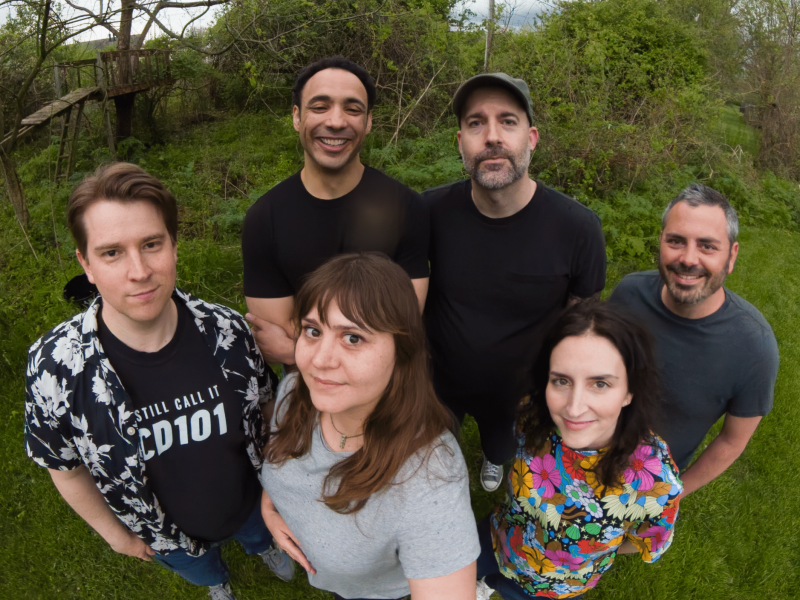
The band’s original, six-member lineup will share the stage for the first time in 13 years at the Genoa Park stage on Saturday, June 13.

Salif Sarr finds a second home in Ohio
The Columbus-based Fulani singer will perform as part of ‘Ohio Is My Second Country,’ taking place at Arts Fest on Saturday, June 13.

Xenia Shuman enters into a new creative season
The Golomb bassist recently released the first new songs she has written in nearly a decade.