
Friendship begins to blur the edges with ‘Caveman Wakes Up’
The Philadelphia four-piece visits Rumba Cafe for a headlining concert on Monday, July 7, supported by 2nd Grade and Hello Emerson.
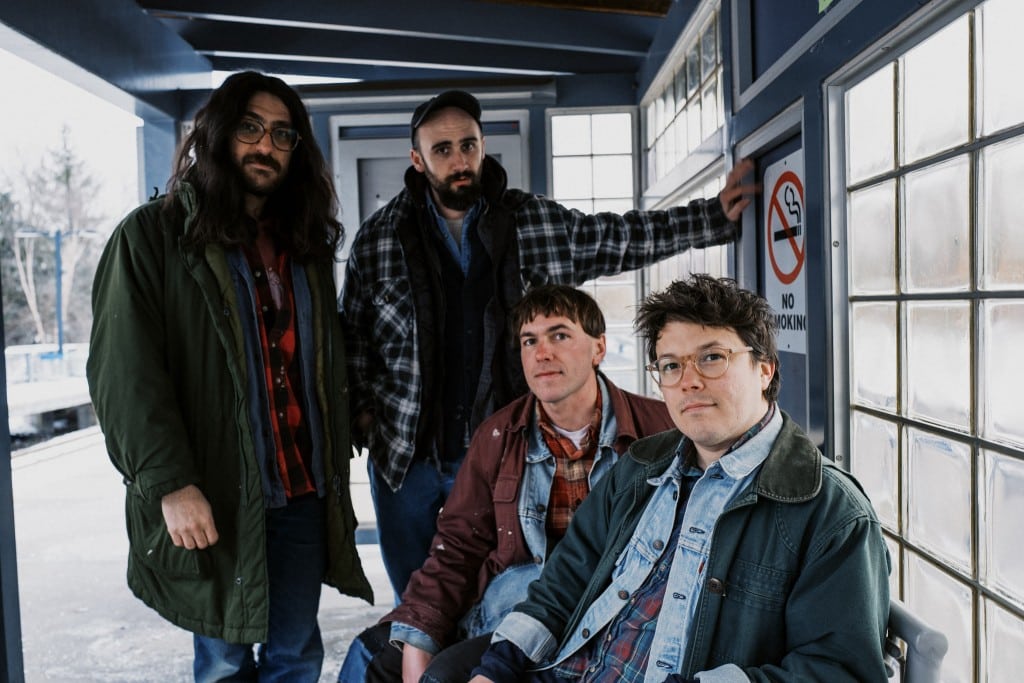
Coming into sessions for Caveman Wakes Up (Merge), the fifth full-length from ramshackle Philadelphia four-piece Friendship, singer and songwriter Dan Wriggins said he wanted to better exist within his musical surroundings.
“It’s a new hangup I have in wanting … the blend of the music and the lyrics to be a little closer to equal,” Wriggins said by phone in the midst of the band’s current tour, which visits Rumba Cafe on Monday, July 7, supported by 2nd Grade and Hello Emerson. “I mean, it’s still a vocal-heavy record, but the band is so incredible that it would be cool to have the voice sound a little more like an instrument and less like, ‘Here’s a songwriter performing these songs, and then there’s the backing music.’ … And I’m not even close to there, but I want to inch closer, because that’s what music is about, really.”
There are points on Caveman Wakes Up where Wriggins’ baritone begins to bleed like watercolors into the surrounding canvas – witness the way the singer elongates his syllables on the chorus of the motorik, violin-laced “Free Association” – but the impact is felt most cleanly in his approach to the songwriting, which is generally looser and more impressionistic than on past albums, a purposeful decision aimed at blurring some of those vocal edges.
A donation powers the future of local, independent news in Columbus.
Support Matter News
Most of these adjustments happened in the editing stage, with Wriggins sometimes removing passages that he initially viewed as bulwarks holding the entire composition together. “Editing is such a funny thing, because it’s about seeing how something you wrote could be different, which really is about imagination,” said Wriggins, who will be joined at Rumba by guitarist Peter Gill, bassist Jon Samuels, and drummer Michael Cormier-O’Leary. “There were plenty of verses where I had this realization, like, ‘Oh, this line can be taken out.’ And maybe at first it seemed like a crux, or it seemed very important, but actually, if we take it out, it turns it into a different, better thing.”
Wriggins was helped in this process by his pandemic-era decision to work toward his MFA in poetry from the Iowa Writers Workshop, leading to the 2024 release of his debut poetry collection, Prince of Grass. While the singer described the impact of these academic pursuits on the nuts and bolts of songwriting as negligible – “I don’t know that the poetry pushed it one way or another,” he said – he acknowledged that having a space in which language could exist in its sharpest form might have allowed him to take an opposing tact when stepping back into the band.
“That makes sense, and it sounds like a really good way to operate, so I hope it’s true,” said Wriggins, who recalled how he briefly adopted what he described as “internet speak,” eschewing proper capitalization and grammar in some of his earliest stabs at poetic writing in the program. “And I remember turning those in and the professor being like, ‘This is stupid.’ And initially I was like, ‘You just don’t get it.’ … And then I realized, while that is a style that can work, the stuff I wanted to write with did not really live in that world, and switching to a more conventional grammatical program was the better move for me.”
As both a poet and songwriter, Wriggins said he’s drawn toward scenes that read as true, even if the characters or events are in some ways fictionalized, which can occasionally cause confusion for audiences.
In late June, when Friendship performed in Hamden, Conn., Wriggins locked in on an audience member dressed in a St. Bonaventure sweatshirt, eventually engaging with them in a down moment. “We’ve got a song called ‘St. Bonaventure,’ and I made some joke in between songs about how it didn’t mean anything to me, and how I just needed a cathedral that rhymed with ‘forever,’” the musician said. “And some people in the audience made this disappointed sound, this type of groan, and I remember thinking, ‘All right, fucking news flash dudes, songs are made up.’”
Throughout Caveman Wakes Up, Wriggins displays an impressive knack for extracting layered meanings from everyday occurrences, whether fictionalized or not. “All Over the World,” reflective of the early pandemic years when the musician worked as a landscaper, captures the wonder of being suddenly, unexpectedly swept up in the beauty that surrounds in such a way that even time temporarily ceases to be. “When I wrote that ‘all over the world’ line I was thinking about being anywhere outdoors and having that effusive moment where you feel larger than life, and where you’re alone and connected with nature,” Wriggins said. “And then having someone … be like, ‘We have to get to the next job,’ and being totally confused about where you even are.”
Then there’s the subtly devastating “Betty Ford,” which dwells on the fragile line existent between life’s highs and lows, and which the songwriter traced to a realization he said struck him after he stumbled across a documentary on the life of the former First Lady. “It’s this idea you could be at the top of the world, in the White House, and still be messed up and have problems with drugs and booze, because of course you can,” he said. “I feel like my whole life has been about dispelling naive childhood beliefs.”
Author

Related Articles

Xenia Shuman enters into a new creative season
The Golomb bassist recently released the first new songs she has written in nearly a decade.
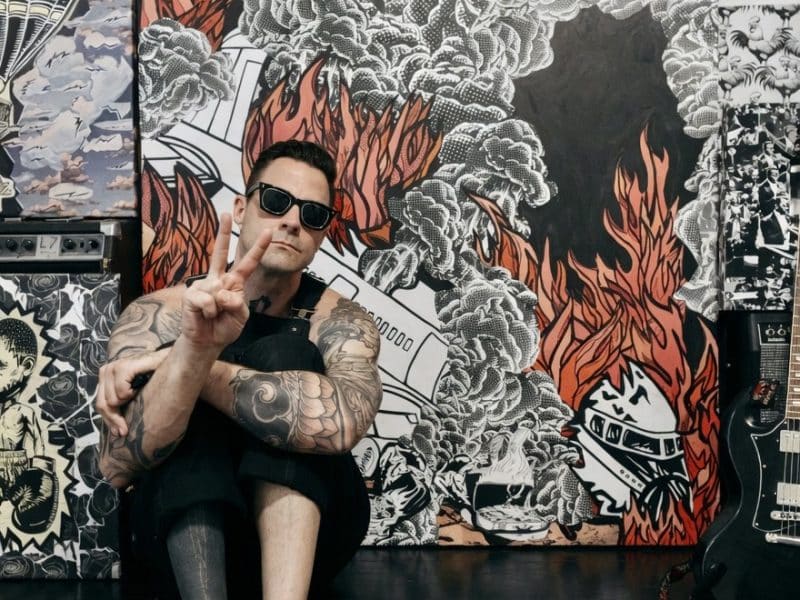
Johnny Williamson finds himself on the other side of ‘Nightmares’
In the midst of rebuilding his life for the second time, the Columbus artist and musician will host a dual album listening party and exhibition at Rehab Tavern in Franklinton on Friday, June 5.
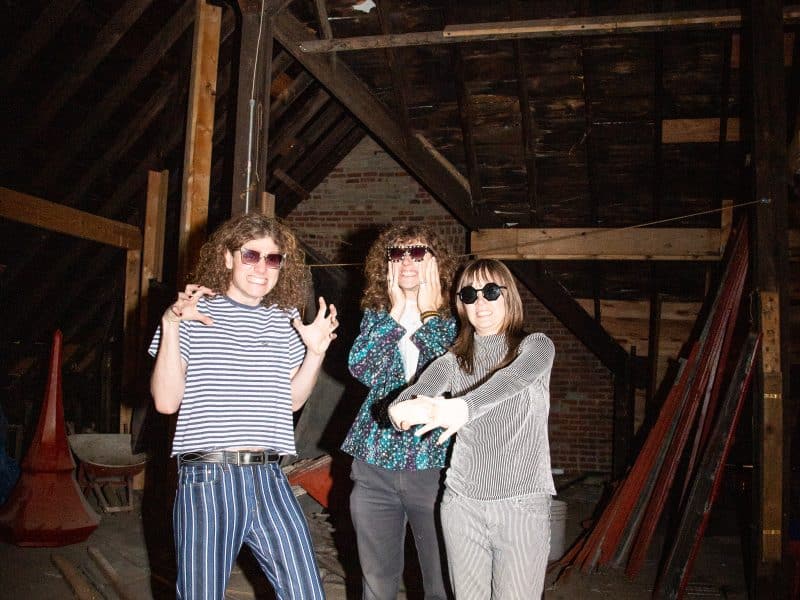
Jackoff Demons traverse heaven and hell with ‘Second Coming’
The Columbus trio will celebrate the release of its sophomore album at Cafe Bourbon Street this weekend, performing as part of the Bobobalooza anniversary show on Saturday, June 6.