
‘Hell Is Real’ finds Superdestroyer pulling tight to community in a world on fire
‘You have to remember that you’re only mad about the way the world is because you care about something or someone being harmed by it.’
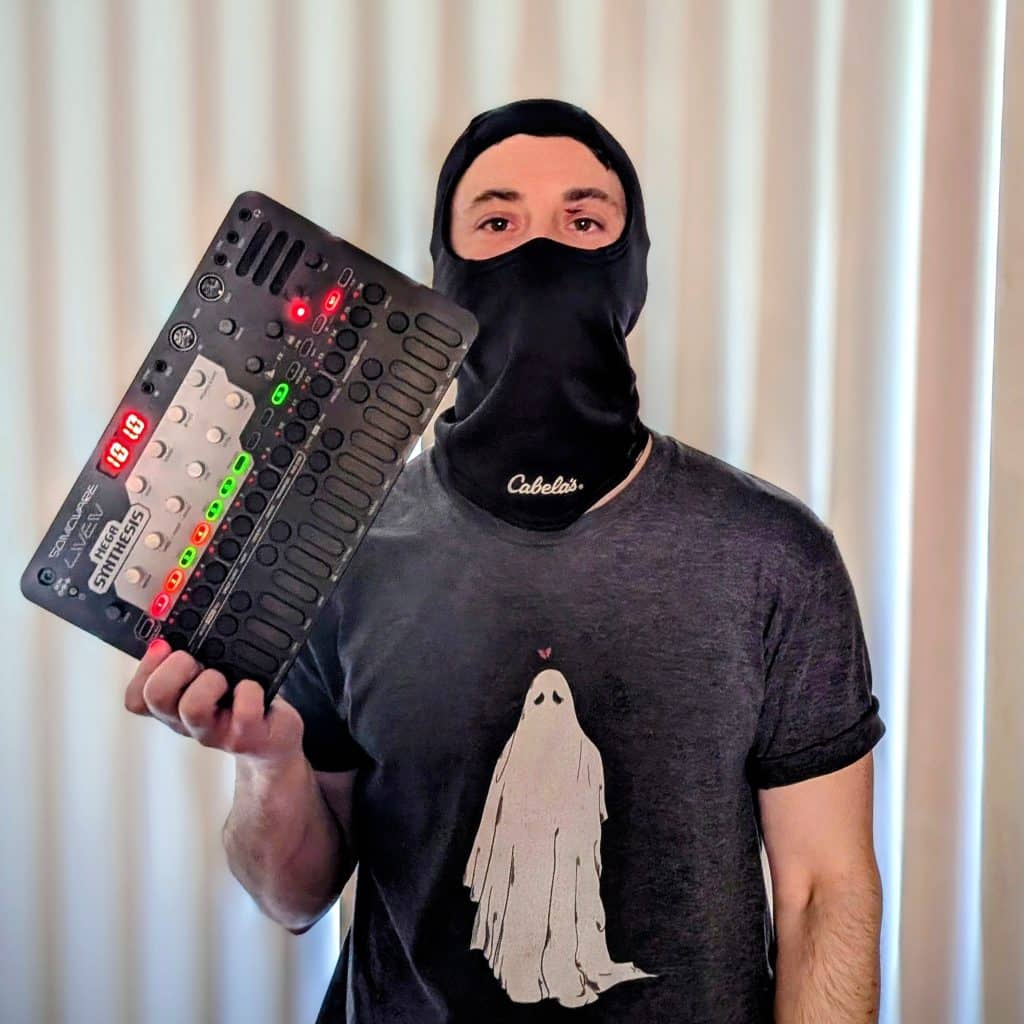
Last November, a confluence of factors led John, the semi-anonymous Columbus musician behind the continuously evolving Superdestroyer, to a boiling point, including the death of his estranged younger brother, the reelection of Donald Trump, the global indifference to the genocide in Gaza, and the challenge of watching multiple family members struggle to navigate a for-profit health care system that continuously values human life in dollar amounts.
“I was looking at various aspects of our society … and I was like, holy shit, it’s all boiling so fast,” said John, who amid this reckoning began to write and record the songs that make up the new Superdestroyer album, Hell Is Real and All Your Friends Are Here (Lonely Ghost Records), released earlier this month, and the proceeds from which will benefit Mosaic Ohio, an organization launched to “foster the success and well-being of the BIPOC transgender, gender-expansive, and nonbinary communities” in the state. “So, as all of these things were developing, I kept writing these songs. And the more I wrote, the more it became clear I was focused on the collapse of the society we knew, or the way of life that we understood. … And it became almost like a pressure release valve.”
Reflective of these uncertain times, the songs frequently arrive with more questions than answers. “Do you really want to live in a world like this?” the musician sneers on “Because, Death Is an Industry (Androids, Etc. II).” “Where people justify not helping starving kids? Where people justify demonizing the homeless? Where people die because they can’t afford expensive meds? Where pregnant people die because it’s just God’s punishment? Where evil people thrive because it’s the cost of business?”
A donation powers the future of local, independent news in Columbus.
Support Matter News
“In a lot of ways, this whole album is about the self-perpetuating industry of being an American, where you have all of these boxes and barriers to check off, all these fees you have to pay to pass go or head to the next round, but at the same time you’re having this miserable experience,” John said. “I mean, I’m displeased with my user experience, certainly. And all of these failures and breakdowns can clearly be tied back to somebody making money. Every bad thing that happens to people happens because someone at some place like Google can make money off of it. And, sure, they’ll invoke God or morality. But God and morality have no place in a bank. And that’s how I view the healthcare system, the prison system, the education system, where they’re all intertwined, and they all could be better if someone didn’t benefit from them being so poor.”
Elsewhere, Superdestroyer eviscerates the politicians who offer up feckless thoughts and prayers in the wake of each school shooting while aiming their full legislative muscle at trans kids who simply want to play sports (“Funeral Feel”), struggles to find comfort in religion (“In Jesus’ Name We Prey (Androids, Etc.)”), and lingers on the intensifying reality that our world overwhelmingly treats human life as a commodity. This is an idea to which the musician returns throughout the album, but which calcifies most intensely on “Polar Bear Club Was Right,” with Superdestroyer drawing a comparison between our treatment of people and the digital media routinely disappeared by corporations from the internet.
“It made me think of the way we dispose of people like they’re media,” John said. “This digital age has made it where nothing is real. And I think it’s important to go back to living in a real world where tangible things exist, whether somebody decides they don’t tomorrow or not. We need to get back to seeing things as real and understanding that this is a physical space we live in and share. … But instead, we continue to dehumanize people through technology. Elon Musk wants you to ask [the AI bot] Grok what you think of everything, because he can eliminate the human element, the human feeling from things. Then you can destroy reality, get rid of every physical piece of evidence that shows this thing happened, and have some internet troll-thing tell you that it didn’t.” (Recently, Grok began pedaling Holocaust denialism to users on the social media platform X, which followed on the heels of the software spamming the South African “white genocide” conspiracy to users in response to completely unrelated queries.)
On Hell Is Real, Superdestroyer embraces digital realms to explore these deeply humanist ideas, reproducing vintage Sega Genesis soundtrack samples and voices with a Mega Synthesis synthesizer, which lends the chiptune-indebted songs a propulsive, pinging feel on par with being rocketed through the arcade-rich world of “Wreck-It Ralph.”
While the themes might be heavy, Superdestroyer taking stock of a world in collapse, the music sounds anything but defeated. Throughout, John delivers the bulk of his vocals with an audible sneer and a glint in his eyes – a decision he described as purposeful. “It’s this idea that I’m going to be a smartass and smile while I say it, because I’m not going to let a bunch of incels bully me,” he said. “These guys are fucking losers. So, do what you gotta do, man. I mean, things are bad, and I don’t feel good about it, but I’m not going to let these people make me feel scared every day.”
There also exists within the music a balm for this expanding digital and societal disconnect, with Superdestroyer returning repeatedly to the idea of holding those closest to you tight and providing comfort and care to those who are most at risk within our existing systems. “You need to focus on your community,” he sings on “sOhio,” “and offer help to those who are most in need.”
“And that’s a big part of it, this idea that we need to remember to give a shit about the people around us,” John said. “You have to remember that you’re only mad about the way the world is because you care about something or someone being harmed by it. I think we all get lost in our anger, and we forget why we’re angry. And at some point, it becomes about the righteousness of my anger versus the protection that anger was supposed to encourage. And so, it’s really just about centering people and remembering you’ve got to care about the people around you.”
Author

Related Articles
How a Columbus trio ended up backing Tenacious D’s Kyle Gass
Mt. Air teamed with Gass for a string of Midwest dates that includes a stop at Rumba Cafe on Saturday, April 4.

Wednesday speaks for the people on the fringes at King of Clubs
Performing in Columbus on Monday, the North Carolina band displayed a knack for giving three-dimensional life to those out-of-sight folks who are often victims of circumstance.

Following extended layover, Paper Airplane again takes flight
The Columbus indie-rock quintet will celebrate the release of new album ‘In a Great Big Field’ in concert at Rambling House on Friday, March 27.