Nick Cave and the Bad Seeds find time for joy at the Palace Theatre
Playing in support of the album ‘Wild God,’ from 2024, Cave and his longtime backing band delivered an emotionally charged performance that was at turns wondrous, cathartic, ecstatic, turbulent, and deeply, unrelentingly human.
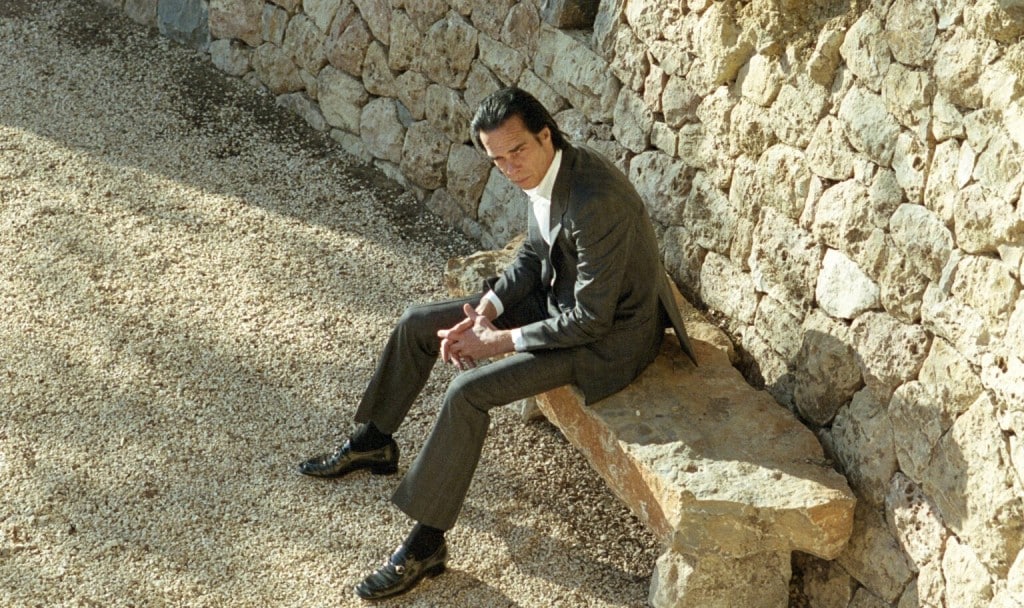
Nick Cave called for his own vibe shift while performing to a packed house at the Palace Theatre on Friday. “We’ve all had too much sorrow,” he sang on a patiently ascending “Joy.” “Now is the time for joy.”
Playing in support of the album Wild God, from 2024, Cave and his longtime backing band the Bad Seeds largely held to this promise. Augmented by a four-person choir, the musicians delivered an emotionally charged, 155-minute performance that was at turns wondrous, cathartic, ecstatic, turbulent, and deeply, unrelentingly human.
Transformative encounters abounded in the songs, Cave singing of brushes with the Higher Power, but also between partners and with death. On “Conversion,” Cave sang of a gathering of townspeople “with looks on their faces worse than grief itself.’ As the song unfolded, these people discovered a measure of respite after receiving the Spirit – the music itself beginning in a similar darkness and then moving forward into the disorienting light, urged onward by ecstatic gospel singers.
A donation powers the future of local, independent news in Columbus.
Support Matter News
Cave’s own late career has traced a similar arc in the wake of the 2015 death of his 15-year-old son, Arthur. In the years that followed this world-altering loss, Cave stowed away and crafted a series of albums shaped by anguish, speaking his pain into records such as Skeleton Tree (2016) and Ghosteen (2019), but also into the public conversations he led in his online forum, The Red Hand Files. These meditative reflections have mellowed and expanded Cave’s public image, transforming the still-intense rocker into something of a worldly, wisened grief counselor. In a May 2020 dispatch recalling his own emotional journey, Cave wrote of discovering that grief “contained many things – happiness, empathy, commonality, sorrow, fury, joy, forgiveness, combativeness, gratitude, awe, and even a certain peace.”
Both within Wild God and onstage at the Palace Theatre, Cave carried himself like a man who emerged from these tribulations having preserved the empathy and passions these events charged in him. The 67-year-old also appeared somehow physically unburdened – spry, wiry, dressed in a dark suit – as he prowled the stage, clapped, kicked the air, dropped to his knees, wandered repeatedly into the crowd, and gripped the outstretched hands of audience members like a preacher set to deliver a fervent blessing.
The Bad Seeds matched this energy lockstep, particularly Cave’s longtime sparring partner, the Gandalf-bearded Warren Ellis, who projected as the impish foil to the comparatively stoic Cave. Ellis played guitar, violin, and keyboard while alternately standing on a chair, hunching over a microphone, and rocking back in his seat, his feet kicking the air in joyous revelry.
The other band members kept a lower profile in comparison, with drummer Larry Mullins and percussionist Jim Sclavunos incorporating everything from the marimba to chimes in their intricate rhythms, while Carly Paradis layered on atmospheric keyboards that twinkled like the stars that Cave cited at one point as distant points of hope. Radiohead bassist Colin Greenwood, meanwhile, traversed a wide, rubbery terrain, layering “Song of the Lake” with buoyant, bobbing notes and then ratcheting up the menace on a rumbling “Tupelo.”
Introducing “O Children,” Cave spoke of how he wrote the song more than two decades ago while watching his young kids play and feeling “gloomy about the nature of existence and the world in general.” In the years he has performed it since, he said, there are times when it feels acutely personal and other times like now when it “speaks more to the moment,” though he didn’t offer any specifics, talking in broad terms about our society’s inability to protect its children. It was easier for the audience to draw a more direct correlation between current events and the atmospheric “Bright Horses,” a burst of cheers greeting Cave as he sang, “There is no shortage of tyrants, no shortage of fools.”
Elsewhere, Cave and Co. explored grief from a distance as they held space for broader communal mourning on “The Weeping Song,” and then zoomed in close for a remarkable “I Need You,” a heart-rending piano ballad that ended with Cave repeating the line “just breathe” as though he might somehow be able to call his loved one back from the grave. It wasn’t the concert’s only Lazarus moment, with Cave exhuming the song “Shivers,” written decades ago by his former Birthday Party bandmate Rowland Howard, and injecting it with new emotional resonance here.
The deeply introspective turn of recent albums left less space for the feral Cave who once routinely reduced stages to kindling with his presence, though the musician could still conjure his menacing side when needed. He channeled the intensity of Robert Mitchum’s “Night of the Hunter” preacher on a rollicking “Red Right Hand” and reached a vibrating, near-combustible state on “Tupelo” as the Bad Seeds musically reenacted the thunderstorms that swept through the city in the minutes before the doors opened for the concert, drums snapping like thunder claps and the guitars building to a ferocious squall that could have had at least some in the audience ready to shelter in place.
Author

Related Articles
Qamil Wright wraps a trio of slow-cooked EPs with ‘Dessert’
‘At the end of a good meal, you’re satisfied, you’re grateful. And I’m absolutely grateful, in general, to be in the most creative space I’ve ever been in throughout my career.’
Vérité strikes up a connection with the debut of June’s Room
The new bi-monthly music event makes its debut on Friday with a pair of sold-out Ginger Rabbit shows from New York-born musician Kelsey Byrne, aka Vérité.
Unemployee rages against the daily grind on ‘Cassette Tape’
Longtime Columbus musicians Bo Davis, B.J. Holesapple, and Mat Bisaro make a marvelous racket on their debut release, which will be available for preorder beginning on Saturday, Feb. 14.