
Sinkane won’t let hard times dim his joy
The Columbus expat said he discovered a new sense of resilience in the making of his community-minded new album, ‘We Belong,’ songs from which will feature in concert at Natalie’s Grandview tonight (Monday, June 30).
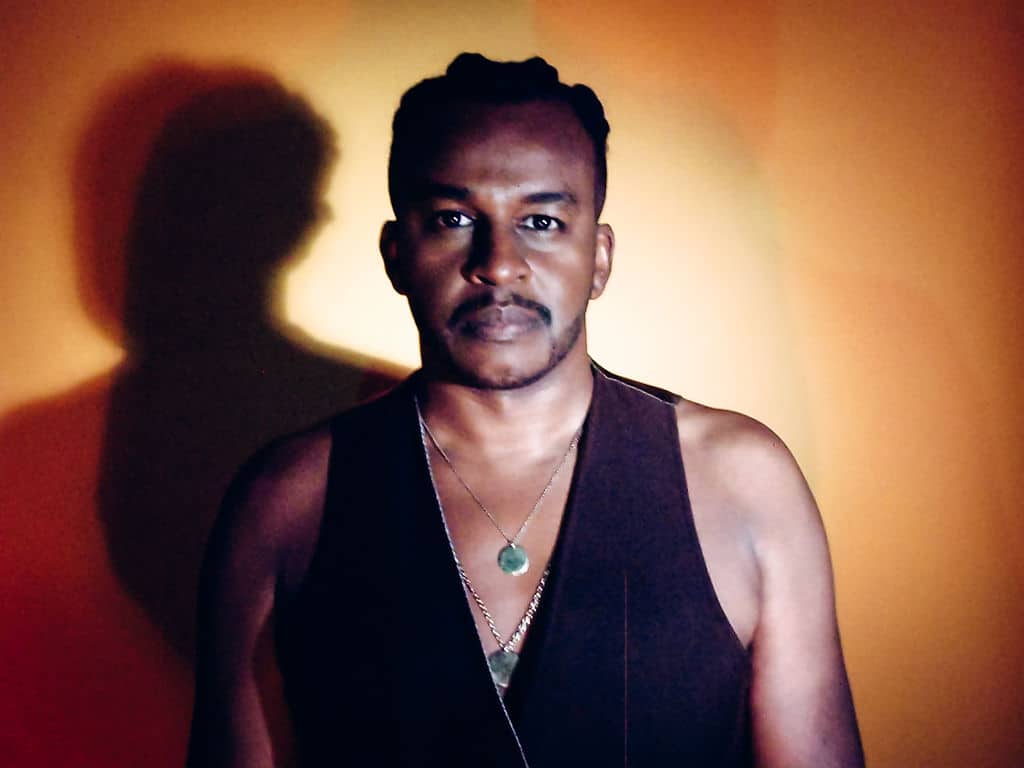
Ahmed Gallab, who records and performs under the name Sinkane, said the path to his community-oriented new album, We Belong, from 2024, began with an awareness that he first needed to work on himself.
“I feel like a lot of friends around my age, our generation, we’ve dealt with a lot of anxiety, a lot of personal trauma. And then you get to your mid-30s, and you realize these issues aren’t going to go away unless you work on them, and they’ll just continue to permeate and to snowball. And so, I really had to take a step back, zoom out, and ask, what’s going on with me?” Gallab said in late June, reached in the midst of a Sinkane tour that visits Natalie’s Grandview tonight (Monday, June 30). “And in that, there was a lot of therapy, a lot of changing my routines – eating better, being honest about my relationships, those kinds of things. … And I found the more I was resolving my own issues, the more I started to feel connected to the global community.”
Owing to this emerging sense of connection, Gallab initially wanted to title the album Ubuntu, an African proverb that translates to “I am because we are,” and which radiates in songs centering Black joy and collective power. “Greater than a sum of parts,” the musician sings on tone-setting opener “Come Together,” a Parliament-worthy slice of robo-funk. “There’s a better life to be.”
A donation powers the future of local, independent news in Columbus.
Support Matter News
This idea is reflected in the album’s rich guest roster, which stretches from the likes of Ifedayo Gatling, Bilal, and Amanda Khiri to late jazz multi-instrumentalist Casey Benjamin, a player Gallab described as “a force of nature.” These contributions surfaced naturally, often emerging as an extension of living and working within a handful of NYC music scenes, Gallab said, threads of which connect to his own, genre-hopping sound.
“I found myself sitting right in the middle of this wonderful community,” said the musician, who was born in the U.K. to Sudanese parents, spent his childhood in Africa, and later logged time in Columbus, Ohio, and Utah before settling in New York. “With this album, I was trying to connect all of these disparate musical communities, bringing together a lot of the friends I worked with in the past through indie-rock with the hip-hop, jazz-fusion friends I’ve made, and then just a lot of people in between.”
Though centered in joy, We Belong never glosses over the struggle, Gallab wrangling with systemic racial violence on songs such as “Everything Is Everything.” But more often than not, the musician counters these continued injustices with a shimmying groove and a defiant smile rather than a raised fist – a character trait he traced in part to the ongoing influence of late funk/soul icon Sly Stone.
“One of the things I really relate to about his songs, and about his way of protest and his political character, is that he held onto this idea that just because you’re oppressed it doesn’t mean you can’t have fun,” Gallab said. “There’s a meme going around Instagram right now, with a Black man saying, ‘You thought in this political situation that I wouldn’t be able to express my joy? You don’t know me very well, do you?’ And I find that to be true. One of the things that oppressive regimes try to do is to really snuff out your joy, because you’re easier to manipulate that way. And one thing we can control is how we feel on a daily basis. We can choose to be happy. And it’s not easy, but I think it’s important.”
Gallab further credited this approach to a deep well of resolve he discovered within himself in making the record, and which he said he can hear resonating in the songs returning to them nearly a year later. At the same time, the external world has also shifted drastically since the album’s release, with the Trump administration enacting a string of policies that take direct aim at the various communities in which Gallab moves.
The musician, who with his family gained residency in the United States under asylum, expressed confusion and dismay at the way the program has been stripped back under Trump, asking, “Why are we so afraid of what we used to embrace?” Meanwhile, extended attacks by the administration ostensibly aimed at ineffectual corporate DEI policies have obliterated programs designed to ensure equity and address racial inequality, reintroducing a segregationist approach to governance. Combined, these emerging social and political realities have started to draw out new dimensions in how Gallab views the record.
“I think it begins to take on more of a universal meaning than a personal one,” he said. “One of the things I really tried to do with this album was to not make it about myself, but in doing that, it took me inward. … And it went from this global understanding of togetherness – we belong – and into this self-acceptance where I realized I belonged. And now, I’ve gone back outward and realized how powerful this message is for everyone in the United States, you know, all immigrants, all people who are threatened by the current political situation. And then going even outside of that, back to where I came from in Sudan, which is … in the midst of the largest humanitarian crisis in the world. More than 8 million people have been displaced and almost a million people have been killed. And I don’t think there’s any public awareness of the situation at all.”
Collectively, Gallab said these realities have imbued his pursuits with a greater sense of purpose, the musician advocating for Sudan and overlooked, oppressed people everywhere. “I am a voice of people that need me,” he said, “and It’s important I use my outlet and my soapbox to talk about these things.”
Author

Related Articles
Tim Rutili continues to mine connection in Califone
Still on the hunt for answers to unknowable questions, the musician will join his bandmates in concert at Rumba Cafe on Saturday, April 11.
Eric Rollin finishes what he started with ‘The Ego Scout’
The Columbus rapper will celebrate the release of his new album at the Royal Oak Initiative on Thursday, April 9.
How a Columbus trio ended up backing Tenacious D’s Kyle Gass
Mt. Air teamed with Gass for a string of Midwest dates that includes a stop at Rumba Cafe on Saturday, April 4.