
Vandoliers drops its guard with ‘Life Behind Bars’
‘I think I’ve been writing as if no one is ever going to hear it, because it doesn’t matter if they do,’ said singer Jenni Rose, who will join her bandmates in concert at Rumba Cafe on Tuesday, Aug. 12.
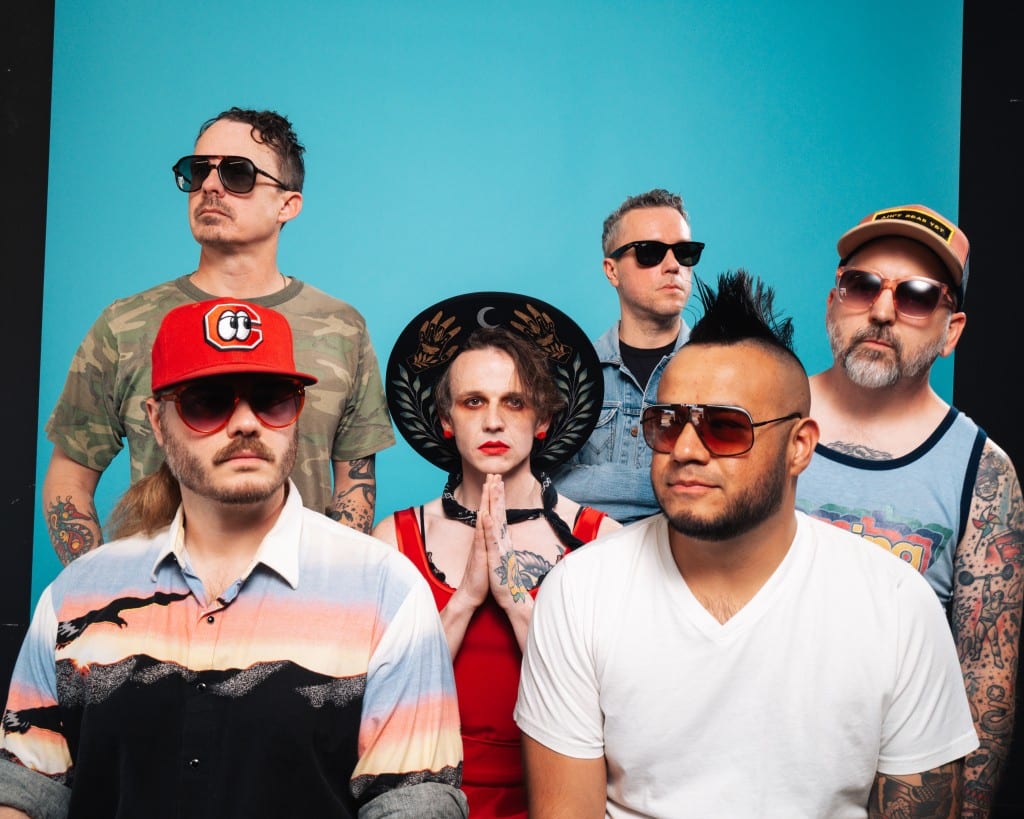
Prior to beginning work on new album Life Behind Bars (Break Maiden/Thirty Tigers), Vandoliers singer and songwriter Jenni Rose said the rollicking Texas band found itself navigating a number of uncertainties.
“We’d just finished years of touring that ended [with shows] in the U.K. and we were kind of on the edge where we didn’t know what was going to happen next,” said Rose, who joined bandmate Cory Graves for an early August interview in the midst of Vandoliers’ current tour, which stops at Rumba Cafe on Tuesday, Aug. 12. “We didn’t have a label. We really had no support outside of ourselves. And we had these opportunities that just seemed so out of reach.”
In the midst of this, Rose said the band members were also dealing with their own, personal struggles, including her battles with addiction and gender dysphoria, both of which came to a head as she entered into the process of writing the songs that would become Life Behind Bars, the title track of which confronts the idea of existing within a prison of your own making.
A donation powers the future of local, independent news in Columbus.
Support Matter News
“And I don’t know if it’s surprising, but there are four writers on that song, and we were each writing with something completely different in our minds,” Rose said. “But it came together to make this one, universal message. … Everyone feels that way about something in their life, like something is holding them back, or there’s something they’re trying to get out from under. And we’re noticing this because it’s the first song we’ve been playing in the set on this run, and as soon as we get to that first chorus (‘I spend my life behind bars’), it’s like the whole room is screaming along really cathartically. And it’s like, oh yes, because in this moment we’re all having this shared experience of trying to be free.”
Rose initially had to work to uncover these more vulnerable moments, recalling how she wrote a couple of songs early on in the process that producer Ted Hutt (Lucero, Dropkick Murphys) told her felt superficial – a criticism with which she agreed, acknowledging that they surfaced when she was still drinking, and at a time when the weight of outside expectations sometimes had an oversized impact in guiding her pen.
Life Behind Bars, in contrast, finds the musicians abandoning the idea of creating with any larger audience in mind. Speaking with Nashville Scene last month, Rose said that coming into the sessions she told Hutt “I don’t give a fuck about writing a hit single.”
“On the last two records, I was wondering how or when we were ever going to fit into country music culture,” Rose said. “I’ve had friends around us get very popular, but we’ve never had a song break a million streams, and our Spotify numbers have been low forever. … So, there was this pressure to write a song that connected. But with the last record, I felt like ‘Howlin’’ was a pop song, and so is ‘Every Saturday Night,’ and it still wasn’t enough. … And so, I just sort of let go of anyone else’s expectation of what our art should be.”
In that process, Rose began to shoulder into songs that frequently doubled as deep personal excavations, confronting her lifelong experiences with gender dysphoria (“Evergreen,” a banjo-flecked tune so emotionally vulnerable that she was initially scared to play for her bandmates), her alcohol addiction (“Dead Canary” finds the now-sober singer alone and “crying in a bottle”), and the distance she has long felt from her religious upbringing (“Bible Belt”).
“I think I’ve been writing as if no one is ever going to hear it, because it doesn’t matter if they do,” Rose said. “I feel like finding this side of me and nurturing it has allowed me to open up creatively, where before I felt like I had so many walls, and so many locks on every door leading to it. And now I feel more open to where people can really meet me in the dark spots, but also in the light, too.”
Reaching this point has required Rose to overcome a series of hurdles, first coming to a level of self-acceptance as a trans woman and then opening up about this new reality to her band, who embraced her in a way that has brought the collective significantly closer than before. In our interview, Graves relayed an experience from the previous night, when the band members were all together for a dinner out with fans. “And they were like, ‘I can’t believe the whole band is here, because usually after soundcheck everyone goes their six different ways,’” he said. “And we looked around like, yeah, I guess we eat together every night. And we hang out together all the time, more so even than on past tours. I think we’re sticking together.”
It’s a level of shared affinity that has bled over into the onstage experience, with Rose describing Vandoliers’ current run of shows as more deeply connective than any of the previous tours on which the band has embarked in its decade of existence.
“We’ve always had this really great community that legitimately likes us as people and really loves our music, but now it’s not just those people connecting with us, but it’s women, femmes, queer people, parents of trans kids,” Rose said. “And at the end of the shows, I meet all these people, and they tell me all these beautiful things, but also all of these emotionally heavy things. And that wasn’t there before when we were playing. People are really connecting with our music right now, and they’re really connecting with our journey as people. And it’s not just me. The whole band is feeling it.”
At one point in our interview, Rose briefly talked about the challenges of touring for the first time as a trans woman, but then also the importance of going out and “meeting the moment” – a heady mix of emotions that has given this run a level of urgency that Vandoliers had never before experienced on this level.
“At the shows lately, around our last song, I’ve been saying that in dark times, joy is an act of resistance,” Rose said. “And it’s true. And I feel it now in what we’re doing. It’s important and it’s urgent, maybe for the first time in our career. It’s more than just playing some songs, having some beers, selling some T-shirts. … It’s allowing people to come together and congregate and let things out. And we’re all crying in the set now, which makes it hard to sing sometimes, but it’s really beautiful. I can’t wait until we’re celebrating again, but right now we’re living.”
Author

Related Articles
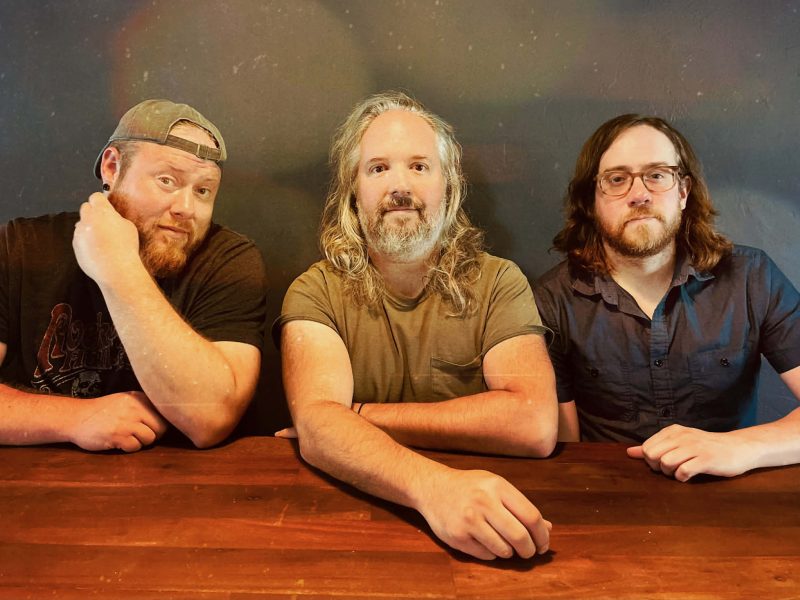
How a Columbus trio ended up backing Tenacious D’s Kyle Gass
Mt. Air teamed with Gass for a string of Midwest dates that includes a stop at Rumba Cafe on Saturday, April 4.
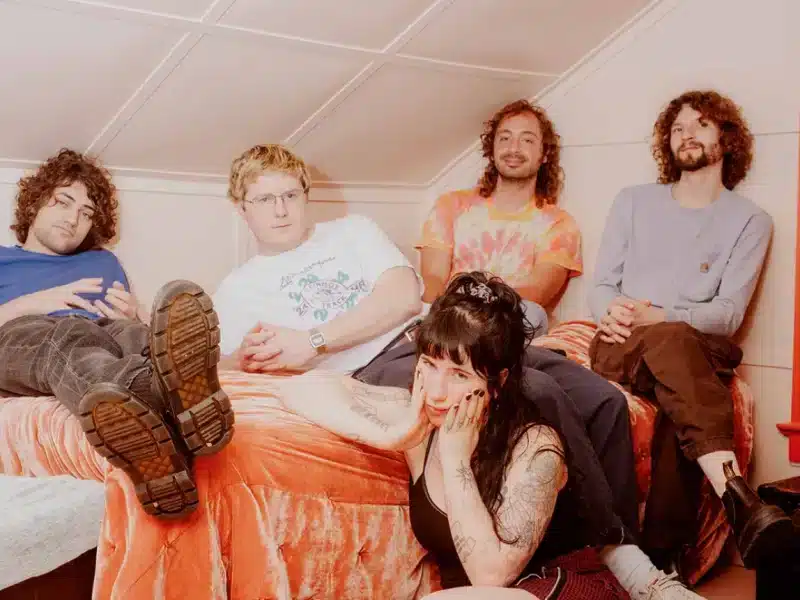
Wednesday speaks for the people on the fringes at King of Clubs
Performing in Columbus on Monday, the North Carolina band displayed a knack for giving three-dimensional life to those out-of-sight folks who are often victims of circumstance.
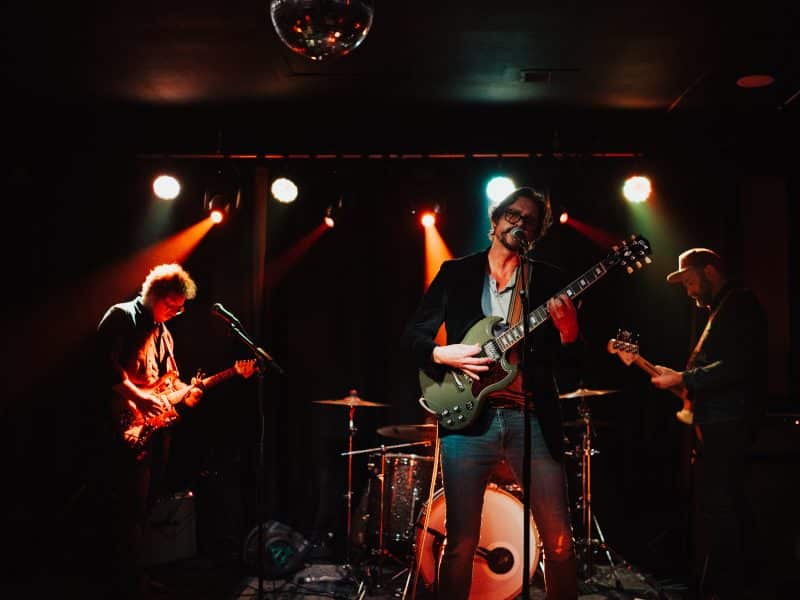
Following extended layover, Paper Airplane again takes flight
The Columbus indie-rock quintet will celebrate the release of new album ‘In a Great Big Field’ in concert at Rambling House on Friday, March 27.