
Carlotta Penn expands on the universe of ‘The Turtle with an Afro’
The third book in the series, currently in the crowdfunding phase and due for release later this year, finds the Columbus children’s author continuing to grow the world around her impressively afroed main character.
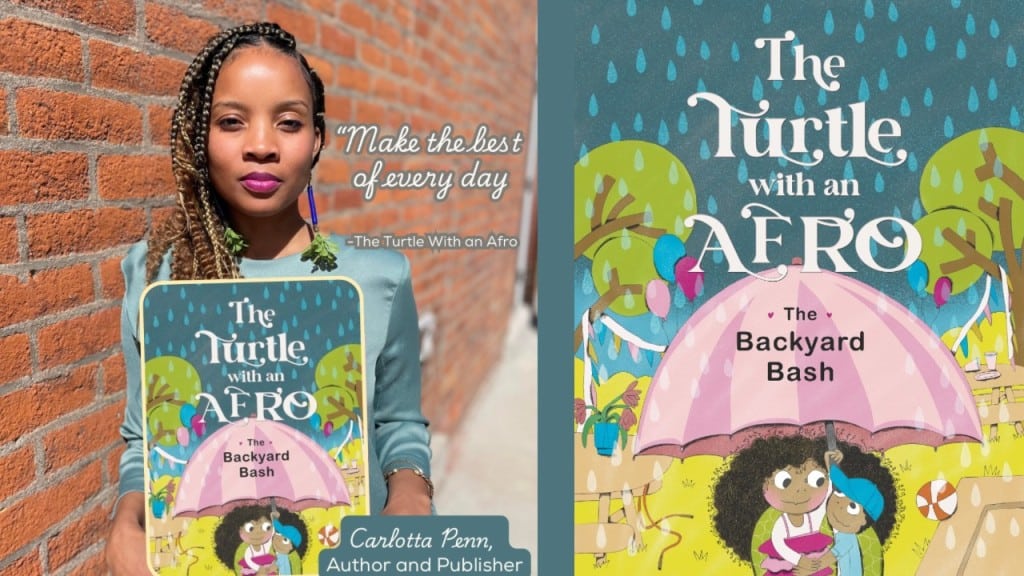
In the years before Carlotta Penn’s father died, he would often tell his daughter that she should author a children’s book, relaying that he had always wanted to publish a story “about a turtle with an afro.”
At the time, Penn had no interest in becoming a children’s author, so she generally brushed his advice aside. “The idea was just something he would say, and then he would chuckle about it,” Penn said in early February.
But after Penn gave birth to her first daughter in 2017, she decided to create a picture book in her honor, aiming to have it completed before she turned 12 months old. The process of creating and self-releasing this first book, Dream a Rainbow, awakened in Penn the desire to author more children’s books, which is when she began to kick around the concept first suggested by her father.
A donation powers the future of local, independent news in Columbus.
Support Matter News
Initially, Penn assumed her dad had simply been drawn to the playful image the words conjured in him, later learning it actually had its roots in a person he attended high school with who sported an afro and frequently dressed in turtlenecks. “So, my dad and his friends called him the turtle with an afro,” Penn said, and laughed.
In Penn’s hands, the character has continued to evolve, first emerging as a solitary figure who learns to love her hairdo in The Turtle with an Afro (Daydreamers Press), from 2020, and who more recently stepped into a larger world with The Turtle with an Afro: A Star Is Born! and the forthcoming The Turtle with an Afro: The Backyard Bash, currently in the crowdfunding stage and due for release later this year.
“The first book was more one-dimensional, and it was just this story about this turtle with an afro, and there was no one else in it,” said Penn, who authored the book and then worked alongside illustrator Audy Popoola to bring the character to full-color life on the page. “Then in those years after I first published, I started to think about how I could be more intentional with the character. And that’s when I started to spend more time on character development, asking, ‘What does her family look like? What are her hobbies? What does she like? What does her world look like?’”
As with all of her books, Penn, a mother of three who remained somehow unfazed even as one of her children clambered onto her shoulders during our interview as though she were a piece of playground equipment, found inspiration within her own home as she worked on the sequels to The Turtle with an Afro. “I wanted to show sibling relationships. I wanted to show family. And I wanted to show friends and school,” she said. “And that was definitely based on my experiences with my own children, since that’s the closest contact I have with a young person’s world.”
Though Penn had no experience authoring children’s books, she said her poetry background enabled her to adapt easily to the form, her tendency toward shorter, punchier verses naturally lending itself to the cadence and rhythm required of kids’ stories. Penn also found a willing collaborator in Popoola, who creates initial sketches of the pages for Penn to look over before drawing the final version. As the two worked on the first book, for example, an early sketch of the turtle had a tighter, curlier afro that Penn compared with Shirley Temple’s hair.
“And I thought it was cute, but [Popoola] was like, ‘You know, we already have a bias toward the cute Shirley Temple curls, the classic curls, and a lot of Black hair is kinkier,’” said Penn, who added that while afros can take on many shapes and sizes the two didn’t want to “unintentionally play into a preference for straight or wavier hair.”
Though Penn initially began publishing with her kids in front of mind, she said her background (she holds a doctorate in education with a focus on multicultural studies) and her previous work as a substitute teacher served to remind her of the historic lack of diversity in children’s books. And in the years that have passed since she founded Daydreamers Press, Penn has increasingly come to view it as a channel in which she can hopefully one day tell a greater number of “diverse stories across diversity.”
“Black writers, we tend to write the stories that haven’t been told, like non-fiction stories about justice, which are important,” Penn said, “But if a kid wants a dinosaur story or something silly, often those aren’t Black writers. So now, if our children are reading other stories, like a story about an animal character, we have The Turtle with an Afro.”
While this mission hasn’t been altered by current events, including the rollback of diversity, equity and inclusion initiatives that has taken place in the wake of an executive order signed by President Donald Trump, Penn acknowledged that legislators might be able to erect greater barriers for librarians and schoolteachers who seek to diversify their offerings, which in itself has already presented a consistent and long-running challenge.
“The canon continues to be the canon,” said Penn, who lamented that the same books continue to be offered and taught to children year after year. “We can write these books … but the problem is I don’t think they’re making it into schools and libraries. … Teachers and librarians have to be able to get away from their own first loves and be willing themselves to check out what cultures are being represented, and what new stories are worthy of being shared.”
Author

Related Articles
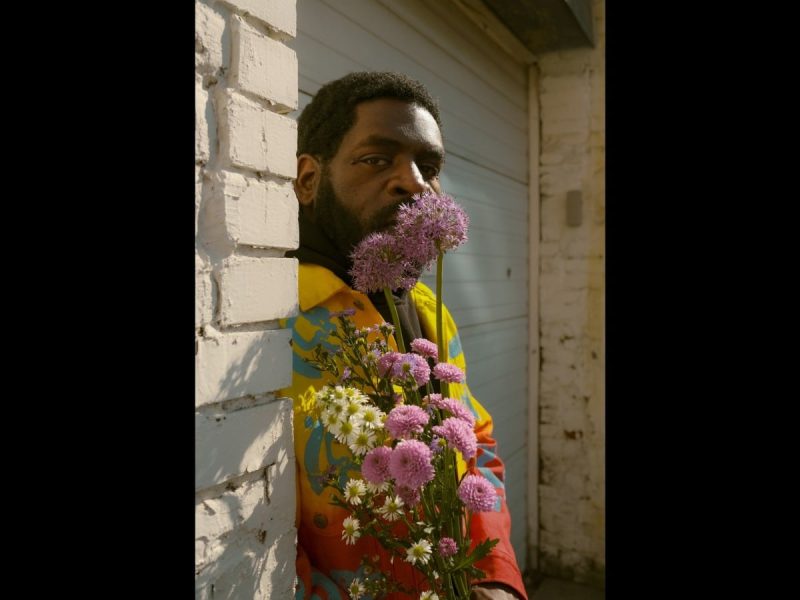
Hanif Abdurraqib named recipient of the 2026 Weston International Award
The celebrated Columbus poet and author is the latest winner of the literary award for nonfiction, given each year by the Writers’ Trust of Canada.
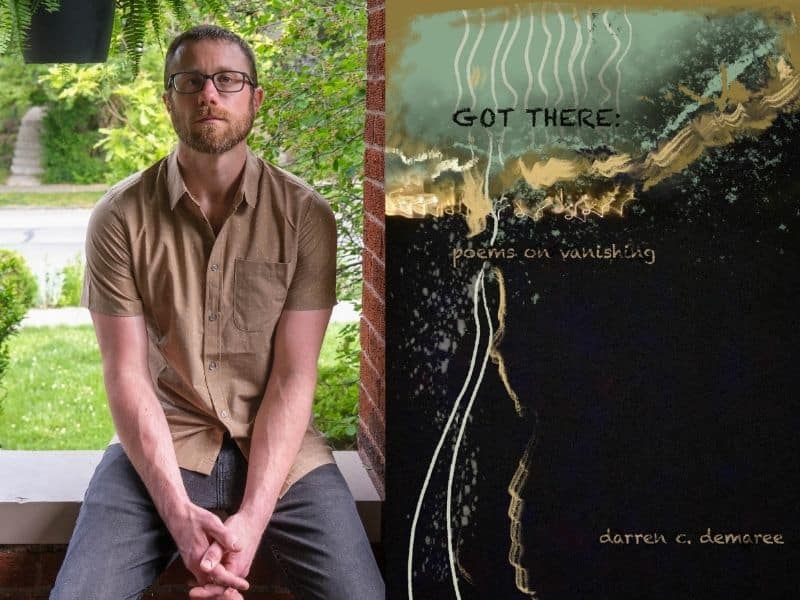
How to disappear temporarily with Darren Demaree
The Columbus poet will celebrate the release of his new collection, ‘Got There: Poems on Vanishing,’ with a reading at Prologue Bookshop on Wednesday, June 10.
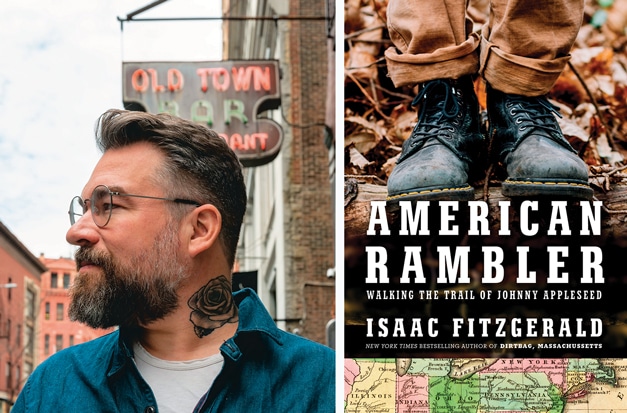
Isaac Fitzgerald finds himself on the trail of Johnny Appleseed
The author will discuss his new book, ‘American Rambler: Walking the Trail of Johnny Appleseed,’ in conversation with the poet Maggie Smith at WOSU Ross Community Studio on Tuesday, May 19.