
Refugee stories: James makes up for lost time:
After spending years in a refugee camp, the Ugandan landed in Columbus ready to start anew – once he acclimated to the cold, at least.
James wore a white T-shirt with “Los Angeles: scribbled across it and a dark baseball cap with a star. His eyes were warm beneath the brim, his gaze intense, as he settled himself in the chair in front of the audio recorder. “Of course I had a past,” he began. “But now, when I think about myself, I am a better person. I am becoming a better person every day.”
A softness affected the timbre of his voice, and his words are carefully chosen. His eyes, fixed on a single point on the table, are distant. “I had a job. … I was working with the government. I was working with the special forces,” said James, who was discharged from the Ugandan special forces pending investigations related to his sexual orientation. “I was arrested, tortured. I went through all kinds of bad things you can’t imagine.”
Fearing what would happen to him if he stayed, James fled Uganda to seek asylum in Kenya, originally planning to stay with friends with whom he had studied. “But when I reached there, they said you can’t stay in Kenya for long with your visa,” he said.
A donation powers the future of local, independent news in Columbus.
Support Matter News
James registered with the UNHCR of Kenya and was sent to the Kukuma refugee camp in the Northwest of Kenya, near the Ugandan border. “I stayed there for…” he said, trailing off and counting the years off on his fingers. “Two years. I wasted a lot of time in the refugee camp.”
Though James was protected from the state sanctioned persecution he had experienced in Uganda, the Kakuma refugee camp festered with its own dangers – particularly the day to day hostility of the camp’s other inhabitants. Faced with this antagonism, and with authorities unwilling to act, James decided to move to South Sudan, hazarding a crossing through the “very dangerous” town of Nadapal on the disputed border between Kenya and South Sudan.
“I knew if I don’t risk, maybe something was going to happen [to me] in Kakuma,” James said.
Again, he was received by the UNHCR, and this time he was kept in a safe house. Over time, however, the safe house began to resemble a prison to James. The UNHCR kept promising they would find him a durable solution, but one never came. He asked them to help him to move to a different country where he could try to seek asylum. “The UNHCR, you know they have the bureaucracy, you have to be patient,” he said. “I kept on demanding why they are keeping me. I really need to start a life.”
Meanwhile, other LGBTQ+ people were following a similar path. In the months he lived at the safe house, James said nearly 20 other people fled the Kukuma refugee camp and joined him in the protected environment. “When they got those threats … they joined me,” he said.
A year went by, then another, and finally James decided to go to the U.S. Embassy in Juba to plead his case. “I reached a time, I was like, no, I can’t wait. I am getting old. I have people back home. I have my grandmother, my brother. I have people who need help from me,” he said. “I told them everything: ‘I was denied refugee status and they kept me here. I don’t know what is going to happen with me.’”
James also told them about the circumstances in the safe house, and, finally, after nearly five years spent in limbo, James’ case began to move quickly. The U.S. Embassy coordinated with a Kenyan based organization to facilitate James’ movement to the United States.
James arrived in Columbus in December 2023 full of hope. “When I was coming here, I got a briefing. They tell you it is not perfect where you are going, but at least you will be having your freedom,” he said. “I was ready. I wanted to work. I was ready to … start a new chapter, start a new life.”
One thing the briefing did not prepare him for, however, was the cold. “Because, you see, we don’t have snow,” he said, and laughed. “It is something you get used to.”
James wanted to work, and to start making up lost time. The Community Refugee & Immigration Services of Columbus (CRIS) received James and helped him to find his footing. After so much time with so little agency over his own life, James wanted to do things for himself. “When I learned something I would say, ‘Let me now do it myself,’” said James, who quickly landed a job working in patient transport at a hospital. “I even pick up some [extra] days because I feel that I have the energy to work more.”
Though James knows some of the other people from the South Sudan safe house relocated to the U.S., he is the only one to have landed in Columbus. And while he’s made friends, he said he’s focused mostly on his own circumstances, developing plans to go back to school with an eye on one day finding work in the Justice System.
James says the experience of being a refugee is not something he would wish upon any other person, but he thinks it is important that others hear stories from refugees. “People should know what we go through, the refugees. It is tough out there. It is not something easy,” he said. “When we come here and we get this chance, we have been through a lot. … I used to have sleepless nights thinking about my life. … But at least now I think I can catch up.”
He paused, and added, “I will be able to catch up.”
This is one in a series of stories collected for a project that was funded by the Baker-Nord Center for Humanities, the Case Western Reserve University Department of English, and supported by both the United States Committee for Refugees office in Cleveland and the Community Refugee and Immigration Services in Columbus.
Related Articles
Local Politics: There’s nothing secondary about primaries
Here are the local candidates on Franklin County’s ballot this year.
‘We have no place else to go. And now we have to push back.’
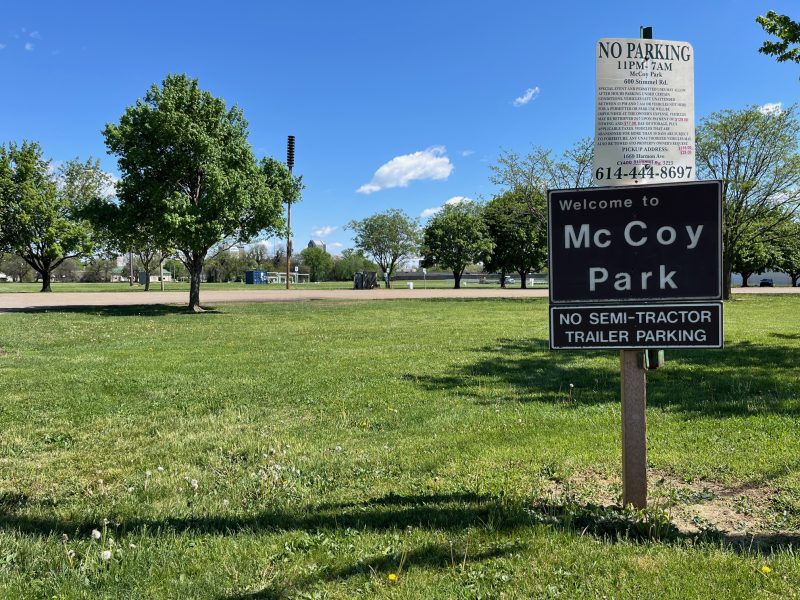
In the wake of a City Council vote clearing the way for the bulk of McCoy Park to be handed over as the training facility for a new NWSL expansion team, local residents are staging a ‘Hands Off Our Park’ rally at the Southwest Side park beginning at 4:30 p.m. on Friday, May 1.
Wexner, redacted
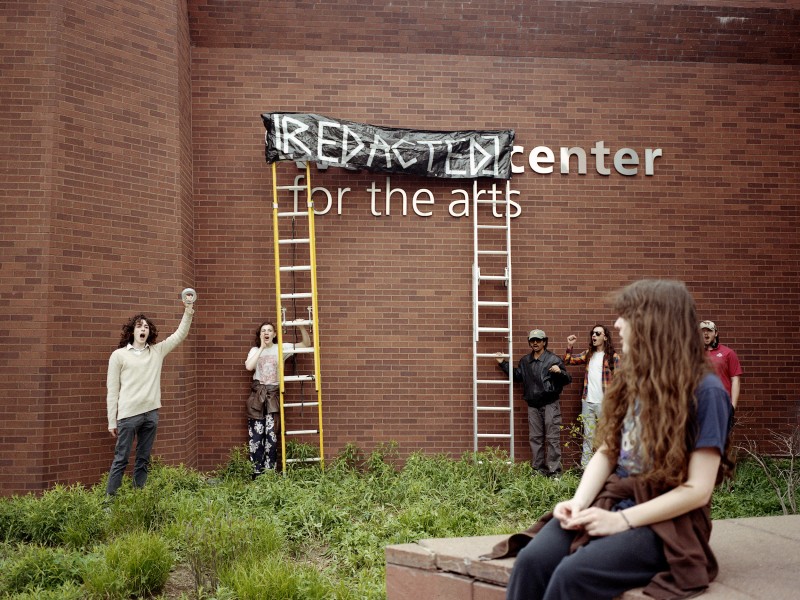
‘Walking between the Wexner Medical Center and the Wexner Center for the Arts all the time [is] just morally exhausting,’ said Murray Katkin, who helped organize an early April protest obscuring the Wexner name from the Ohio State arts center.