
Sara Abou Rashed demands action with ‘Theories of Return’
The Columbus poet will celebrate the release of her debut collection at the McConnell Arts Center on Thursday, April 30, reading alongside Mandy Shunnarah and Scott Woods.
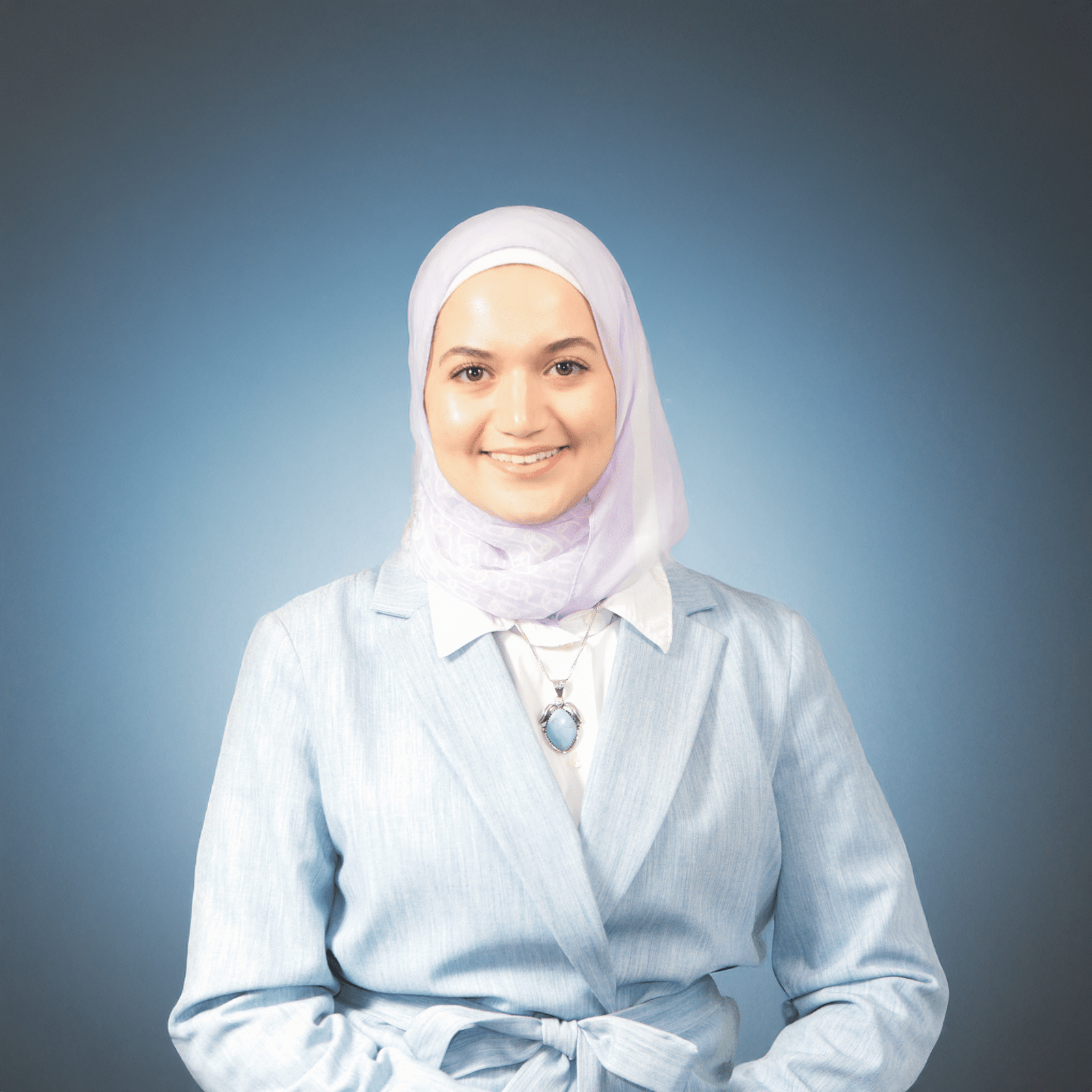
Theories of Return, the debut collection from Sara Abou Rashed, begins planted firmly on the Earth and ends in the heavens, the Columbus poet writing in “From the Sky” how on the occasion of her death she wishes to be buried among the clouds.
“And within this, we travel a long distance between the exiled, the current population, the displaced, the murdered, the living, the mothers,” Rashed said in a late April interview. “So much happens between land and sky.”
The consistently staggering work traverses more than oceans, with poems also hopping time as Rashed ventures to Palestinian villages that no longer appear on maps and are known to her only through the stories passed down by her grandmother, who as a toddler ran barefoot through orange groves in Haifa. In “No More Years of Nakba,” Rashed writes of approaching her grandmother with tape recorder in hand and asking her to recall her memories of a place that existed thousands of miles across the ocean and decades in the past – an inquiry she described as an act of preservation.
A donation powers the future of local, independent news in Columbus.
Support Matter News
“I think it came from a deep desire to not lose [that history], frankly,” said Rashed, who will celebrate the release of Theories of Return at the McConnell Arts Center on Thursday, April 30, reading alongside Mandy Shunnarah and Scott Woods. “We’re getting away from the origin story and the original experience, and it’s terrifying to think we might lose it, or lose access to it, or become the generation that says, ‘Oh, I never asked my family that.’ I want to know as much as I can. I want to document as much as I can.”
Rashed described the creation of her book as a means to help forge a sense of identity and connection with a place that has been occupied, the names of its towns changed, and their identities subsumed. “And what do you do when memory is all you have? When history is changing? When the map is changing and dissipating?” she said. “You’re losing the name war, and memory is all you have. So, what you do with that is, again, you document it. You pass it on. You become loyal to the memory.”
It’s fitting then that the word “grandmother” appears more than any other in the collection, the elder existing as the last living tie Rashed’s family has to Palestine, a place to which the poet feels an innate connection despite not yet having set foot there. “I think sometimes it shocks [my grandmother] how connected I feel, even though I’m generations away,” said Rashed, who inherited her love of poetry from her grandmother, recalling how the elder would recite verses for her as a child, and how this act inspired her to first take up writing at age 6. “And one of my earliest poems was about Palestine, and it was about Gaza, because Gaza has seen many attacks over the years, and each one deadlier than the last. I was born into this cause and this circumstance. I had no choice, truly, but to always write toward the homeland.”
The love for language Rashed has fostered from these earliest days is evident throughout Theories of Return, particularly in a series of poems born of the similarities existent between certain terms in Arabic. There are also verses that acknowledge the power of words to sustain – “I am here and well and writing – alive because I write,” Rashed recounts in “A Survivor’s Chant” – and others where this potency is felt in absentia.
“I refuse to give my horror the meaning of a name,” Rashed writes in the gutting “Against Content Warnings,” which could nod to any number of words that don’t appear within the collection but particularly “genocide.”
“And you’re right, that word does not appear. But it’s not that I don’t want it to, because I very much do,” Rashed said. “But I never wanted to be someone who wrote in the aftermath of Gaza, or someone where it’s like, ‘Oh, this is the genocide generation of Palestinian poems.’ I think this speaks beyond the current genocide. … Names are very intimate, and with ‘Against Content Warnings,’ I didn’t want to simplify the Palestinian experience and say, ‘Content warning: This poem contains references to sexual assault, to rape, to murder.’ No. Let us not name it. Let us confront it. Let us experience it.”
In that spirit, Rashed unflinchingly confronts horrors both modern (the death of Eyad al-Hallaq, an autistic Palestinian man shot and killed by the Israel Border Police in May 2020) and historic (a 1948 fire in the Palestinian village of Tirat Haifa that “swallowed acres of wheat and seventy elderly,” as the poet writes in “Let The Naïve Know How We Envy Them”), her verses often adopting a collective stance or calling attention to some larger injustice. Even “Borrowed Lover,” built on the poet’s experience of hearing another recount the death of her beloved decades earlier, is rooted in the larger idea of communal grief.
“That line, ‘You realize it is not your own,’ but it is. And it becomes about how we can insert ourselves into another person’s story,” Rashed said. “And I wish that people read themselves and their experiences and their homelands in my stories, because as personal as it is, it’s also universal.”
There also exists within the collection a deep resilience, surfaced in poems such as “No Wonder Mary Was a Palestinian,” in which Rashed writes of Palestinian men sentenced to death who would smuggle their sperm from the jails in discarded gum wrappers in the hopes their bloodline might survive even if they did not. The poet explores similar ideas within “A Theory: Marriage,” which confronts the stereotype that Palestinians tend only to marry other Palestinians. “Anything outside of you/Erases you,” she writes.
“When you have a national struggle, a national story that is as contested as the Palestinian case, I think even our most intimate choices become very much political,” said Rashed, who sees in her own poems a similar throughline, describing herself as part of the lineage of resistance writing. “My poetry is very urgent and responsive to world affairs. I would argue it demands action from the reader. It demands understanding, awareness, empathy of the Palestinian occupation. It’s not poetry that sits on the page and doesn’t do anything.”
Author

Related Articles

Barbara Fant returns to Columbus ready to leave her mark on Thurber House
The poet and newly minted executive director of the literary nonprofit will take part in a community reception welcoming her to the role on Thursday, Sept. 17.
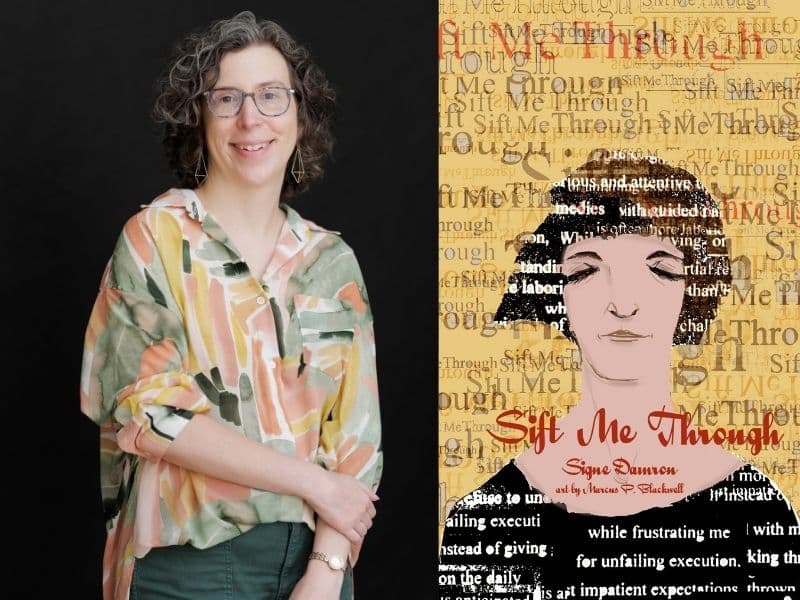
Signe Damron begins to see things more clearly with ‘Sift Me Through’
The Columbus poet said her new collection, illustrated by artist Marcus Blackwell, arrived as she began ‘processing and coming into my own.’
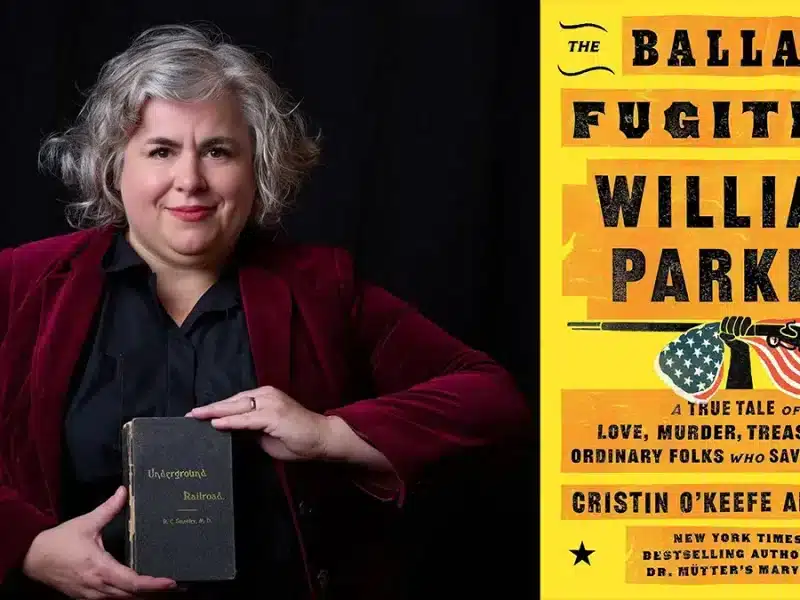
Cristin O’Keefe Aptowicz finds in history lessons for this current moment
The author will celebrate the release of her new work of historical nonfiction, ‘The Ballad of the Fugitive William Parker,’ in conversation with Ernest Cline, Hanif Abdurraqib, and Scott Woods at CCAD this weekend.