
Local Politics: There’s nothing secondary about primaries
Here are the local candidates on Franklin County’s ballot this year.
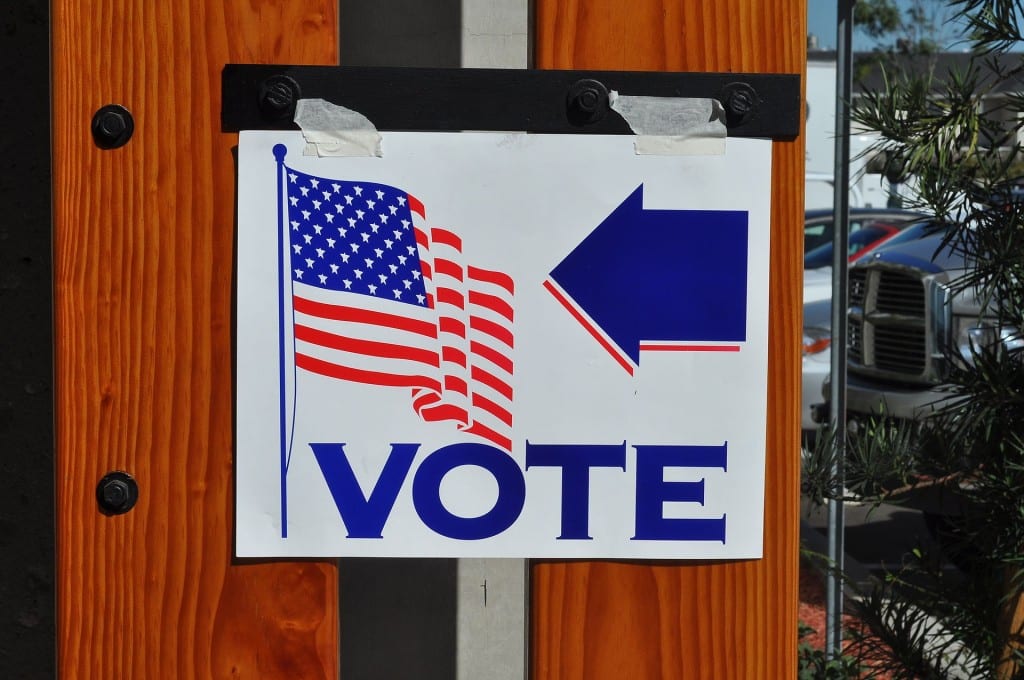
Ohio’s primary elections are coming up next Tuesday, and people across the country will be watching one race in particular. Vivek Ramaswamy, big-name biotech billionaire and Cincinnati native who ran for president in 2024, is campaigning to be our state’s next governor.
In the primaries, he’ll be competing against Republican candidates who have positioned themselves as regular people: Casey Putsch, an “America First” Ohio native who has raised $123,000 while openly courting the followers of white supremacist Nick Fuentes, and maybe Heather Hill, who was technically disqualified but says she’s still running. Ramaswamy, in contrast, has spent literal millions on his campaign. So, things are looking good for him.
That might be the most important primary race to follow if you don’t live in Ohio. But if you do, there are more than 100 other races on the ballot throughout the state next week that might be equally important.
A donation powers the future of local, independent news in Columbus.
Support Matter News
For one, all 99 seats in the Ohio House are up for reelection this year. Twenty of those are holding primary elections, including three in Columbus. Additionally, two of the three State Senate districts that cover the city are holding Democratic primaries next week to face unopposed Republican candidates in November. So are the city’s two U.S. Congressional Districts.
If you live in Columbus, these elections should be just as – if not more – important to you, because what those politicians say serves most directly as a representation of your voice. If you don’t want, for instance, a Charlie Kirk-based education bill or a trade partnership with Israel, now is your chance to say so.
Let’s start big.
The Nation
Columbus will be electing two U.S. congressional representatives this year, in the national Ohio 3rd and Ohio 15th districts. Two of the candidates are running as regular people, because they feel like politicians have done nothing but accept money from them.
The Ohio 3rd is currently represented by Joyce Beatty, who has been in Congress since 2013. Her top issue is the economy. She’ll face off against engineer and Short North resident Joe Gerard, who cares most about refusing war and fighting for accountability for law enforcement.
A big part of Gerard’s platform is that he won’t accept donations from anyone. The “Donate” button on his page literally does not let you give him money.
The Ohio 15th will choose between two Democrats to face off against incumbent Republican congressman Mike Carey in November. Veteran and former state representative Adam Miller cares most about improving public education and college affordability. Ohio State University city planning professor Don Leonard wants to “do something” for the state’s working families and believes that one job should be enough to support a person in life.
The Senate
Columbus is covered by State Senate Districts 3, 15, and 25. District 15’s Democratic candidate is unopposed by any other Democrat, so she’s not competing on Tuesday’s ballot. Districts 3 and 25 each have two Democrats in the running.
District 3, which covers much of southern Franklin County and only a bit of central Columbus, will choose between two Democratic candidates to face off against Republican incumbent Michelle Reynolds in November. Reynoldsburg city councilor Stacie Baker cares about wages, education, and funding mental health services; nonprofit worker Natasha Wheatley Caffrey cares about education, cost of living, and combatting exploitative data centers.
District 25 Democratic incumbent Bill DeMora says he has “co-sponsored more legislation that passed the Ohio Senate than any other Senator in the last three years.” He’ll be going up against Jesse Baker, whose biggest campaign point is anti-authoritarianism.
“ICE agents are outside our schools, white supremacists are marching in our neighborhoods, and far-right actors are actively working to dismantle the foundations of our democracy through direct attacks on citizen lead ballot initiatives,” Baker’s website reads. “I refuse to sit by and watch our state slip into subnational authoritarianism.”
The House
Finally, three of Columbus’s 11 State House districts are holding Democratic primaries next week.
Current District 1 incumbent Dontavius Jarrells covers the bulk of the city center. He says his biggest focus has been raising the state minimum wage to $15 per hour, for which he has filed legislation. He will face off against Chris Robbins, a small business owner who cares most about offering universal pre-K and eliminating residential property tax.
District 2 is currently represented by Latyna Humphrey, who is not seeking reelection to instead run for State Senate District 15. In her wake, District 2’s Democratic primary will choose between two candidates. Former Columbus City Schools board president Michael Cole cares about elderly Ohioans and increased investment in education (a contentious topic last year in Columbus, as the school board made a $50 million budget cut). Community leader Charity Martin King will focus on “economic vitality” issues such as job access and affordable housing.
District 7 incumbent Allison Russo will also not seek reelection. She’s running for Secretary of State against one Democrat in the primary; there’s also a Republican primary for this position, and the winners of each will face off in November.
So, District 7 gets to choose between three other Democrats: Ukeme Awakessien Jeter, the mayor of Upper Arlington; Michaela Burriss, an Upper Arlington city councilor who started a progressive political speaker series in her backyard after the Supreme Court decision that overturned abortion; and Ohio State University internal medicine specialist Zach Rossfeld. Awakessien Jeter will focus on tax relief, public schools, and local investment; Burriss and Rossfeld both list education, reproductive health, and wages as their top issues.
The candidates you choose in the primaries must represent what you want your government to do, and they must be strong enough to compete in the general election this fall. Eight of them are incumbents or long-time politicians with the experience and funds to run a campaign; seven are regular people, three of whom say they’re tired of long-time politicians taking donations more into account than actual public sentiment.
Take some time off this Tuesday to vote on which of these kinds of candidates you want to represent you. Their actions will affect you the most.
Related Articles

Derf Backderf delves into the past, finds lessons for the present with ‘The Dissidents’
The Cleveland cartoonist will celebrate the release of his sprawling, deeply engaging new book with an appearance at the Wexner Center for the Arts on Wednesday, Sept. 23.

Unpacking Vivek Ramaswamy’s plan to eliminate Ohio’s income tax
The campaign promise comes along with a $9.8 billion dollar budget gap to fund public education, health care, and public safety services across the state, according to a February report released by Innovation Ohio.

Local Politics: Drain the swampy Municipal Courthouse
Columbus wants to renovate the Franklin County Municipal Courthouse instead of replacing it. The people who work there say this very wet “derelict” building is beyond repair.