
Filmmaker continues to find hope, promise in the work of James Baldwin
Karen Thorsen, who still affectionately refers to the late author and civil rights activist as ‘Jimmy,’ will visit Columbus to screen the restored version of her 1990 documentary, ‘James Baldwin: The Price of the Ticket,’ at the Wexner Center for the Arts on Wednesday, April 23.
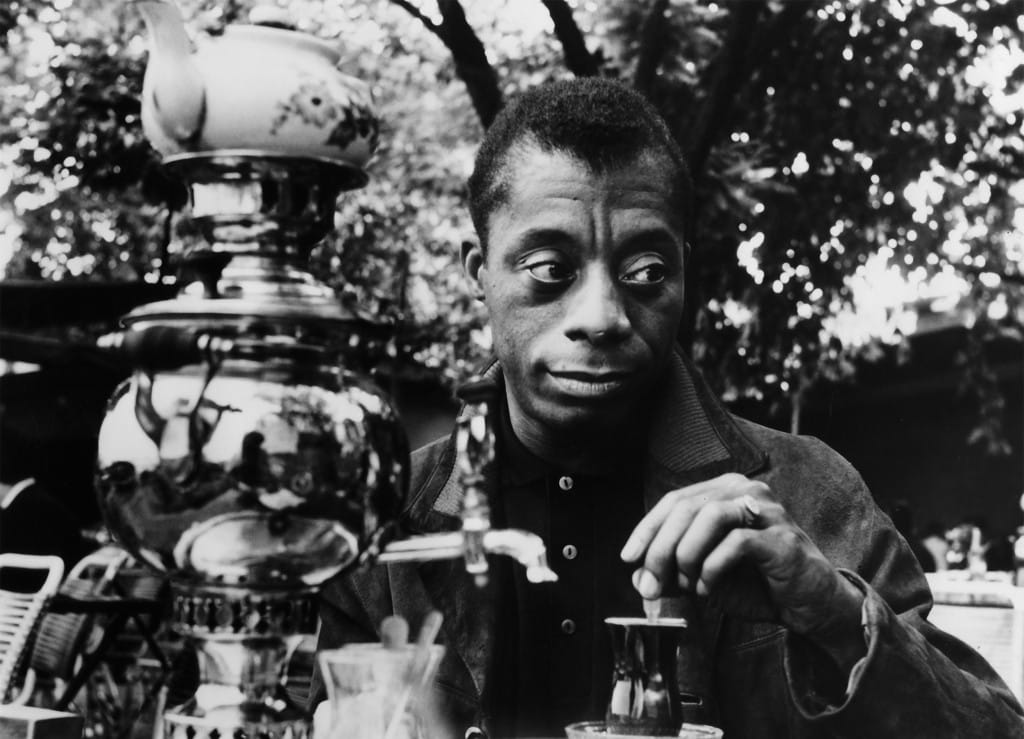
Early in her career, Karen Thorsen struggled to find her footing Hollywood, eventually taking a job in New York with documentary filmmakers the Maysles brothers (“Gimme Shelter”; “Grey Gardens”) after a different Los Angeles studio optioned one of her screenplays and then subsequently scrapped the project.
Working with the Maysles, Thorsen received a firsthand tutorial on cinema verité filmmaking – a hands-off process in which documentarians aim to capture events as they unfold with minimal intervention – developing a skillset she hoped to apply in a project centered on the renowned author and civil rights activist James Baldwin, whom she said had receded from public life at the time.
“Nobody quite knew where he was or what he was doing, but I finally found him teaching as a college professor up at UMass,” said Thorsen, who first reached out to Baldwin via fax, later convincing the author to travel to New York City for a meeting where the two shared a long, leisurely lunch at the Ginger Man. “And we met, and we liked each other, and it just grew from there.”
A donation powers the future of local, independent news in Columbus.
Support Matter News
This initial conversation led to a 20-month stretch in which the two exchanged ideas, initially intending to collaborate on a cinema verité-style documentary centered on the writing of Baldwin’s next book, Remember This House, and a trio of friends he had lost: Malcolm X, Medgar Evers, and Martin Luther King, Jr. The plan, Thorsen said, was for a camera crew to follow Baldwin as he spent time with the children of the assassinated trio, the group engaged in deep conversations about racial progress and what might be necessary for the younger generation to take the next step toward equality.
As the parties ironed out final details, rumors began to circulate that Baldwin was ill, but when the two spoke by phone in September 1987 Thorsen said the author assured her that filming could begin by the end of the year. It was the last time the two spoke, and less than two months later, Baldwin died from stomach cancer on Dec. 1.
Somewhat prophetically, the day Thorsen learned of Baldwin’s passing via a phone call from a colleague, she also received a letter from the late author, mailed from his home in France in the week that preceded his death. “And he basically wrote, ‘Dear Karen, I’m sorry to say that for reasons of health I won’t be able to participate in our film project as planned.’ Then he added a big X and in shaky handwriting, he wrote, ‘For the time being,’” Thorsen said. “And in that moment, those words for the time being made me think this project wasn’t over and he wasn’t over. And indeed, it wasn’t.”
In lieu of the planned collaboration, Thorsen began work on what would become the 1990 documentary “James Baldwin: The Price of the Ticket,” with the first day of filming taking place during the author’s early December funeral at the Cathedral of St. John the Divine in New York.
Initially, Thorsen said she was thrown for a loop by the Episcopalian Church setting, with its white robes and gold crosses. But she said things began to click for her with the addition of Babatunde Olatunji and his percussion ensemble, along with information gleaned about the Baldwin family connection to the cathedral, where she said the author’s nephew served as a lead choir boy. “So, I would say in true Jimmy spirit, the [service] was a human melding of various belief systems, of music systems, of people systems,” said Thorsen, who will be at the Wexner Center for the Arts to screen the restoration of “The Price of the Ticket” at 7 p.m. on Wednesday, April 23.
In making the film, Thorsen said she was struck most by Baldwin’s consistency, noting that the man she met late in his life remained remarkably true to the person he was in the time he first emerged into the public consciousness. “I don’t know many people who don’t shift the way the wind is blowing or contradict themselves endlessly, but he was pretty amazing in the way his core philosophy, despite all of the slings and arrows, did not shift,” she said. “He had this duality where he was able to hold this absolutely logical and justifiable anger and yet he never lost hope. … He maintained this incredible internal consistency, and this philosophical, intellectual and spiritual belief in what he thought humanity could be. He believed in our potential, and he saw what we had not yet done to love up to that potential. And he never vacillated.”
Thorsen first encountered Baldwin’s writing while studying abroad in Paris during her junior year of college, when a professor assigned the class to read his Notes of a Native Son. At the time, she said she connected with the search for identity Baldwin engaged with in the book, drawing comparisons to a similar journey of self-discovery she had embarked on at the time. “And in our society, we tend to emphasize what people are instead of going deeper into who,” said Thorsen, who allowed this idea to guide her as she worked on the documentary.
In a nod to Baldwin’s steadfast nature, Thorsen said the lessons she gleans from the film are the same today as when it first premiered decades back, though she remained struck by how the documentary’s core messages, as with the work done by Baldwin in his lifetime, continue to resonate in this current social and political era.
“It’s been extraordinary realizing how much we still need James Baldwin’s philosophy and message,” Thorsen said. “Jimmy always said, ‘If you can change the way someone sees reality, even by a millimeter, then you can change reality.’ So, my goal is to drive people to an exploration of James Baldwin. To drive them to the books and the videos and the YouTube reels, because he still has something to offer, and perhaps now more than ever.”
Author
Related Articles
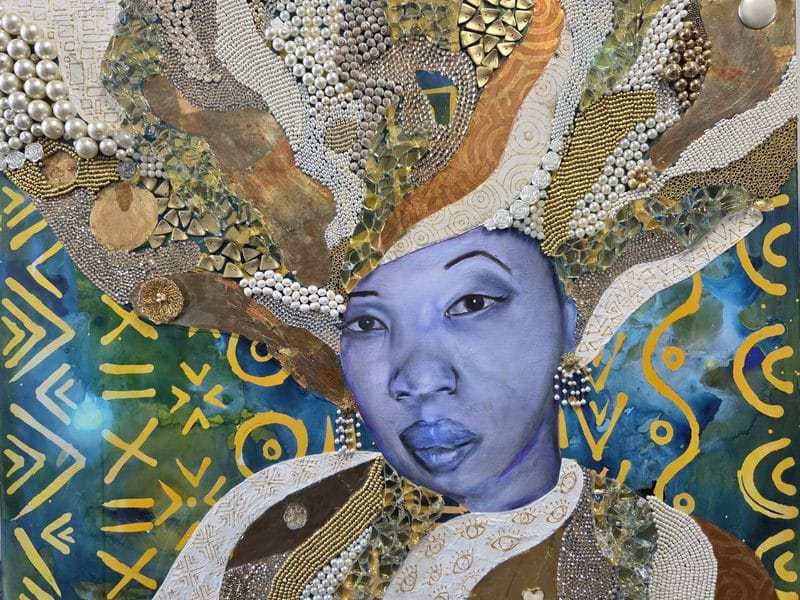
April Sunami is learning to take up space
The Columbus artist will be on hand when her new exhibition, ‘Living Mythologies,’ opens at Lindsay Gallery tonight (Friday, Nov. 6).
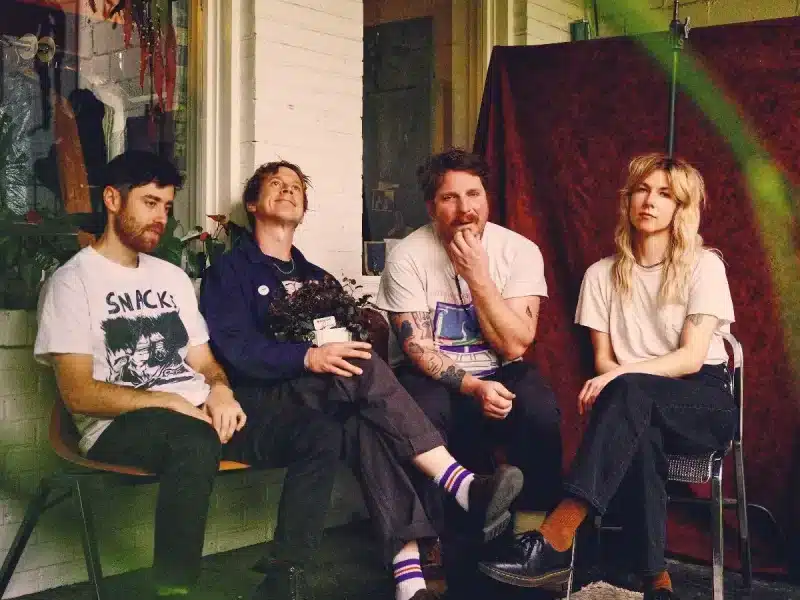
Ultra Lights frontman John Robinson is still figuring things out
The buzzworthy Atlanta band headlines a concert at Rumba Cafe on Saturday, Nov. 7.
Community takes center stage in Shelbi Toone’s ‘A Village Folk Artist’
The Columbus artist will celebrate the long-delayed opening of her new, career-spanning solo exhibition beginning with a reception from 6-8 p.m. on Thursday, Nov. 5.