
Laura Larson and Christine Hume discover collective power in ‘portraits of refusal’
Columbus photographer Larson will join writer Hume in celebrating the release of new book ‘All the Women I Know’ at the Center for Print and Collaborative Arts on Friday, Nov. 6.

Laura Larson has always been drawn toward concepts that can be difficult to capture on film, describing this challenge as “one of the animating aspects of photography for me.”
“It’s like photos can tell you so, so, so much. … Like you can see the surface of the moon or these things your eyes can’t see,” she said. “And on the other hand … there’s so much they can’t tell you, and they can be these eminently slippery things that you can’t pin down.”
As one example, the Columbus photographer pointed to her second book, City of Incurable Women, from 2022, which served in part as a response to a collection of 19th-century photographs of women diagnosed with hysteria at Pitié-Salpêtrière Hospital in Paris.
A donation powers the future of local, independent news in Columbus.
Support Matter News
“And these were taken sort of as diagnostic photographs,” Larson said by phone in late October. “And a lot of the women treated there were very poor or were experiencing some quite extreme life circumstances. … And part of what came out of that [research] was this more philosophical question: Can you really depict suffering in a photograph? We have these photographs of these women, and the doctors and photographers are telling us what they mean, but they actually don’t communicate some of the essential information. How is this person in pain? Why are they in pain? And a lot of the photographs of the women, they’re indistinguishable from a portrait.”
Larson’s latest book, All the Women I Know (Counterpath Press), done in collaboration with the writer Christine Hume, explores a similarly evasive concept, the photographer aiming to capture what she termed “portraits of refusal” by taking pictures of a diversity of women exclusively from behind.
“And it started as, can I make these photographs which are just kind of the implication of somebody turning away from the camera?” said Larson, who will join Hume in celebrating the release of their book at the Center for Print and Collaborative Arts (705 Ann St.) from 7-8:30 p.m. on Friday, Nov. 6. “And as I was developing this idea of the collective refusal of women, I think [Hume’s] questions were really taking that idea into language. And in the book, there’s this repetition of this phrase, ‘no woman I know.’ And there’s the no, as in the refusal, but then also the know, as in this knowledge or understanding.”
“No woman I know wants you to either see through her eyes or see through her. No woman I know hates her body in this game,” Hume writes. “No woman I know remembers what she was wearing. No woman I know shows her daughter how to laugh and shrug it off.”
As the book alternates between Larson’s portraits and Hume’s poetic lines, a sense of collective resistance develops, the photographed women bonded in their sense of refusal. “And that’s very much part of the book, imagining our connections to one another as sources of power and liberation,” said Larson, who held to a handful of ground rules in the capturing of these images. “The person I was photographing selected the location, so a lot of times it was a house or someplace meaningful to them. And then I couldn’t bring additional light sources, and I could only shoot half a roll, so it wasn’t like I was making the perfect portrait.”
Larson said she began to develop this body of work roughly six years ago, describing the series as well-suited to those earlier pandemic times, since the shoots could be limited to two people (photographer and subject) and done both outdoors and distanced. Stepping into the collaboration with a number of images completed, however, Larson expressed some initial concern that the project would be more reactive, worried Hume’s text might emerge exclusively in response to her photos rather than existing in more dynamic conversation.
“But what happened, and what really made it special for me, was the way … she would find these details and spin them into something else,” said Larson, who began to pursue photography after taking an introductory course in college, later supporting herself through her 20s and early 30s working as a darkroom printer for clients that included editorial fashion photographers and artists. “So, the writing is tethered, but it’s not lockstep. And the context she was creating helped to expand the palette of these images, because in some ways, it’s like, ‘It’s just a bunch of pictures of the backs of women’s heads. What’s the big deal?’ But then it’s really to make you think about what this figure is beholding. And in some ways that’s exactly what she was writing about. … And I think that helped me to look at the photographs and see things that were missing, both in a political way and in how we were putting them together.”
All the Women I Know challenges readers to similarly expand on their own perceptions, inviting them to consider not just the silhouettes of the women photographed but also the individual histories, experiences, and worldviews that exist well outside of the camera’s view.
“You’re almost standing in the shoes of the women, right?” Larson said. “And you’re put in a position where you have to begin to imagine their perspectives. And I think that’s very much where Christine’s text sort of steps in.”
Author

Related Articles
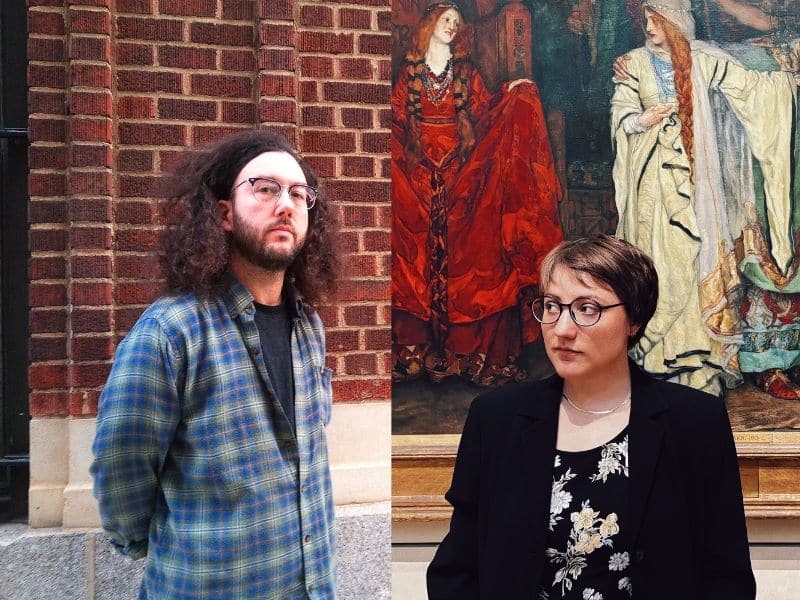
A decade later, Matthew Erman and Lisa Sterle revisit ‘Long Lost’
First released in 2016, the husband-wife duo’s first collaborative series was recently reissued as a graphic novel by Vault Comics. To celebrate, the couple will appear in-person at the Book Loft on Wednesday, Oct. 28.
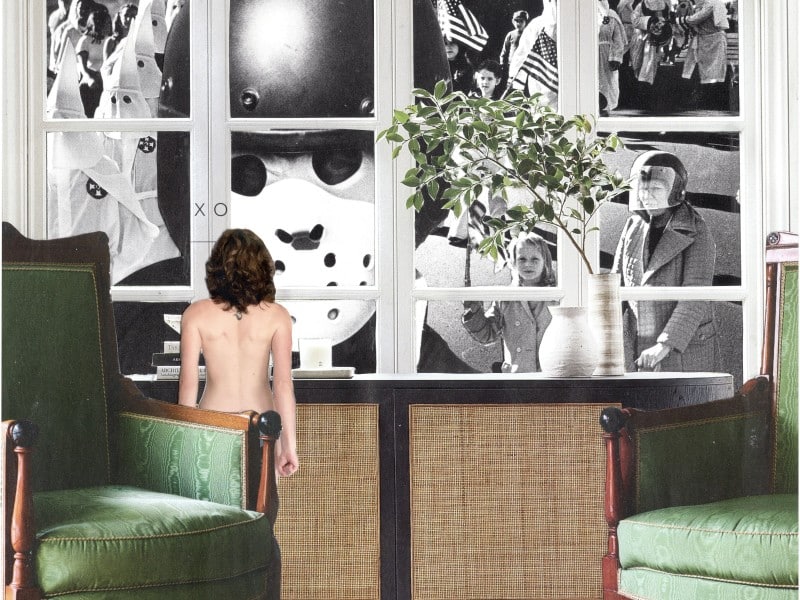
‘Pulp Stiction’ joins the resistance
A deeply compelling new collage exhibition brainstormed and curated by Emily Morgan opens at Hopkins Hall Gallery on Monday, Oct. 26.
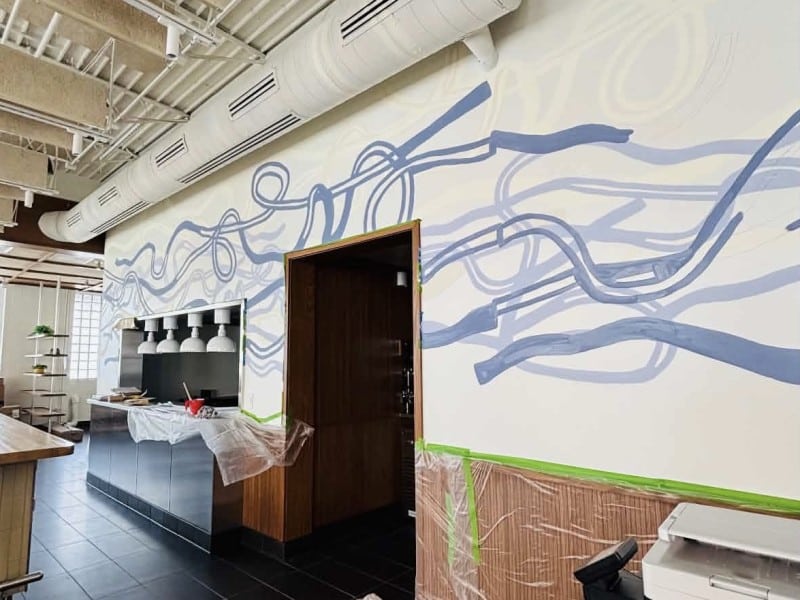
Andrea Myers comes full-circle with progressive mural at the Line
The Columbus artist once took drawing classes in the building that now houses the new restaurant and hospitality training center founded by Service!