
Stauf’s Coffee Roasters workers announce their intent to form a union
Sparked by conversations that extended from a late-January all-staff meeting, the baristas, line cooks, bakers, and warehouse staff recently announced their intent to organize with support from Unite Here Local 24.
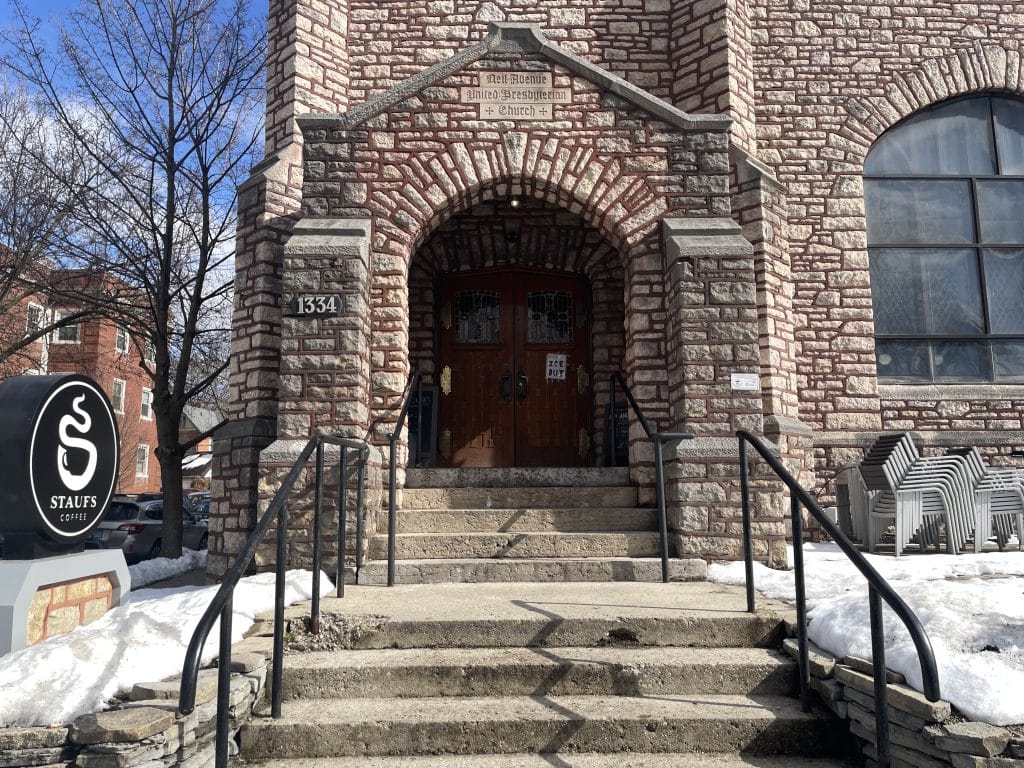
In late January, Stauf’s Coffee Roasters held an all-staff meeting to discuss the fallout from an internal memo and a since-deleted social media post in which management addressed how employees should proceed if ICE agents entered one the Columbus locations of Stauf’s or Cup O Joe (the two businesses fall under the same ownership).
“I have been asked by an employee about how to deal with a customer who is an ICE agent,” the message read. “I know there is a lot of emotion behind this situation, but I would say that our job is to serve anyone in our community regardless of their occupation.”
During the meeting, Stauf’s management apologized to the employees for their initial communications and agreed to let shops post “No ICE” signs on their doors, workers who were in attendance told Matter News in February.
A donation powers the future of local, independent news in Columbus.
Support Matter News
At the time, employees also pressed management to make a public apology as a way to inform customers of this policy update, with Stauf’s kitchen worker Evan Romero telling Matter News in early April that the fallout from the initial ICE statement led to a decrease in foot traffic at some stores and a related decline in tips for staffers. “One of the things brought up in the meeting was that people wanted compensation for lost wages,” he said, “because there were a lot of boycotts floated in the community.”
And yet, Stauf’s management has been quiet since relenting to its workers on the ICE policy, refraining from making any kind of public statement or even updating its social media accounts, with the company’s most recent posts to Facebook and Instagram having been made in late January. (Requests for comment made by Matter News both in February and early April went unanswered.)
Owing in part to this silence and sparked by conversations that originated during the January all-staff meeting, the workers at Stauf’s Coffee Roasters announced in early April their intent to unionize, the company’s baristas, line cooks, bakers, and warehouse staff organizing with support from the hospitality industry union Unite Here Local 24.
“That was one of the reasons we went public [with the unionization] announcement, because we knew through that announcement that we were re-engaging with the community about who we are,” said Stauf’s North Market employee Matthew Greene, who joined Romero and another organizing member from the Grandview Stauf’s for an early April interview.
The three said the idea of forming a union was first broached during the January meeting, sharing that the members of management in attendance, including CEO Mark Swanson, were all “receptive” to the idea. “They both put in writing and said during the meeting they would not interfere, which was a huge wind in our sails as we got started with the process,” Greene said. “I think it would be beneficial to everyone if we were able to expedite things so it’s no longer in the news and we can just go about our work.”
In a follow-up email sent the day after our April conversation, however, organizers with the proposed union said they had just learned that Stauf’s management had consulted with a law firm described by the workers as “anti-union.” “It flies in the face of everything we were told,” they wrote.
When the staff members gathered at the Grandview location for the January meeting, Greene said it was the first time he had met many of the workers from the chain’s other locations, with both he and Romero describing the company’s structure as “siloed.” These introductions proved instructive as the unionization talk expanded in the weeks and months that followed, surfacing operational differences that exist between locations and which relate to everything from employee compensation to how and when reviews are conducted. “Some people get reviews and then raises conditional upon those reviews,” Romero said. “And some people we were talking to have not been reviewed. Some people have not really gotten raises.”
If successful in unionizing, workers hope to introduce more consistency between locations, along with higher wages for employees across the board. “Trying to get everyone’s pay up is a big one,” said Greene, who expressed a desire to move away from a reliance on tips. “The more we can have our employer front our paycheck, the less we have to rely on our customer base to give us a living wage.”
While the three interviewed said a majority of the company’s 80+ union-eligible workers expressed support for the union when surveyed, some expressed hesitations about “rocking the boat,” said Greene, who noted that staffers raised concerns about how the decision to unionize could impact everything from wages and tips to the ability of employees to maintain flexible schedules.
“We’re all working here, and we like the company and want to make it better, and what if the process of trying to make it better for some reason makes it worse?” Greene said. “So, yeah, it’s scary. But at the same time, if there’s a way to give ourselves a little more agency and give ourselves more of a voice, I think Stauf’s is a really good place to do this. And if it works, maybe it’s something other people can follow, and maybe it opens up the potential for more workers to have a voice in what they do.”
Romero, for one, sees a benefit in staffers gaining a greater voice within the company, particularly as employees continue to deal with public backlash to the ICE statements released earlier this year by management, which he described as counter to the beliefs held by those he works side by side with on a daily basis. “Safety and inclusivity are definitely at the top of all the workers’ minds,” he said. “And I think people in the community deserve to hear from the employees that make up a large percentage of the company. … We would at least like to try to repair a bit of that broken connection with the community.”
Author

Related Articles

The Worker’s View: Stauf’s union campaign stalls amid lack of support, fears of retaliation
‘We’re really at a standstill,’ one barista said.
Care is a verb: Lessons in building supportive community from lifelong advocate Vince Engel
Times of uncertainty and fear can foster societies of care.

Opinion: To meet climate goals, Columbus leaders must address data centers
With the City Council presenting its draft proposal for municipal data center policy this week, residents must seize the moment to demand meaningful safeguards that will actually minimize the climate impacts of data centers.